Halifax lab team to conduct first Canadian trials for possible COVID-19 vaccine

Advertisement

Advertise with us

HALIFAX - The first Canadian clinical trials for a possible COVID-19 vaccine will be conducted by a Halifax research team that also was involved in trials that eventually led to a vaccine for the Ebola virus.

Read this article for free:


or

Already have an account? Log in here »

To continue reading, please subscribe:

Subscribe and receive a limited-edition Free Press branded hat or tote.

Digital Subscription

One year of digital access for only $205*

  • Enjoy unlimited reading on winnipegfreepress.com
  • Read the E-Edition, our digital replica newspaper
  • Access News Break, our award-winning app
  • Play interactive puzzles

*First annual payment billed as $205.00 + GST for one year. This annual subscription will automatically renew at $233.00 + GST every 52 weeks (10% off the regular annual price of $259.35). Offer available to new and qualified returning subscribers only. Cancel any time.

To continue reading, please subscribe:

Add Free Press access to your Brandon Sun subscription for only an additional

$1 for the first 4 weeks*

  • Enjoy unlimited reading on winnipegfreepress.com
  • Read the E-Edition, our digital replica newspaper
  • Access News Break, our award-winning app
  • Play interactive puzzles
Start now

*Your next Brandon Sun subscription payment will increase by $1.00 and you will be charged $17.95 plus GST for four weeks. After four weeks, your payment will increase to $24.95 plus GST every four weeks.

Hey there, time traveller!
This article was published 17/05/2020 (2329 days ago), so information in it may no longer be current.

HALIFAX – The first Canadian clinical trials for a possible COVID-19 vaccine will be conducted by a Halifax research team that also was involved in trials that eventually led to a vaccine for the Ebola virus.

Health Canada has approved trials that will be conducted at the Canadian Centre for Vaccinology at Dalhousie University.

The centre’s director, Dr. Scott Halperin, says the lab was one of several in Canada and the U.S. whose work starting in 2014 eventually saw an “emergency release” of an Ebola vaccine that was used in West Africa before a third phase of clinical trials had been completed.
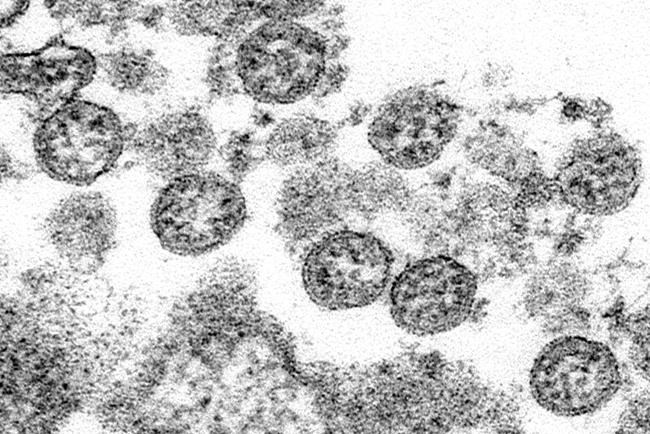
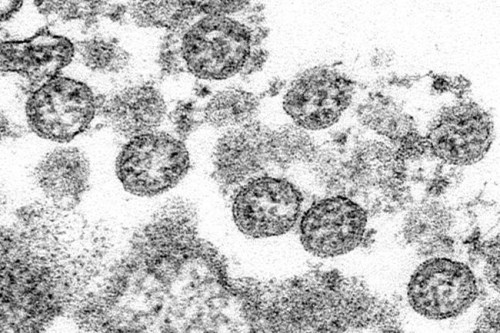
This 2020 electron microscope made available by the U.S. Centers for Disease Control and Prevention image shows the spherical coronavirus particles from the first U.S. case of COVID-19. A recent study sparked some worry last week when it revealed a mutation
This 2020 electron microscope made available by the U.S. Centers for Disease Control and Prevention image shows the spherical coronavirus particles from the first U.S. case of COVID-19. A recent study sparked some worry last week when it revealed a mutation "of urgent concern" in the virus responsible for COVID-19. But experts say more research is needed to determine what that really means.The preliminary, non peer-reviewed study from the Los Alamos National Laboratory in New Mexico indicated that a COVID-19 strand containing a specific mutation — on the spike protein D614G — is emerging as the dominant form of the virus. THE CANADIAN PRESS/AP-C.S. Goldsmith, A. Tamin/ CDC via AP

Halperin said each lab did slightly different studies in order to get the right type of information before quickly moving to the second phase and then the third.

“The Phase 1 studies were done and within six months the data were available and the phase three studies were started in West Africa which then helped to actually stop the epidemic,” he said in an interview.

Halperin said it’s possible the same emergency release could happen in Canada with a potential COVID-19 vaccine if it shows potential and is deemed safe, expediting a process that usually takes a number of years to complete — anywhere from five to seven years under normal circumstances.

“That would be something that Health Canada and the Canadian government would have to decide whether they wanted to do that. But it is certainly one of the options in the tool kit of things they can do to expedite the process if this or any other vaccine is looking promising.”

Halperin pointed out that despite its early use during testing, the Ebola vaccine wasn’t actually licensed as a regular marketed vaccine until late last year.

However, he cautions there’s much work to be done before a COVID-19 vaccine could be approved for use.

The Halifax researchers will be following up work by Chinese manufacturer CanSino Biologics, which is already conducting human clinical trials for the vaccine.

Halperin said the first phase trial should be underway within the next three weeks once final approval is given by the centre’s research ethics board.

Phase 1 will involve fewer than 100 healthy volunteers between the ages of 18 and 55 who will be followed over the next six months.

“We want to make sure that the vaccine is safe first in younger individuals before we go into people who may be at higher risk,” Halperin said.

The participants are given a dose of the vaccine and are clinically monitored through a series of blood tests. They are also asked to record their symptoms in a diary so the researchers can have even more information.

“We collect any type of symptoms they might have whether they think it’s related to the vaccine or not,” said Halperin.

Each participant will make between nine and 13 visits to the centre during the first phase of the study.

If the initial test group shows a safe immune response to the vaccine, Halperin said researchers will quickly transition into an expanded second phase study before the first phase is even completed.

That would involve hundreds of people of all ages, including those aged 65 to 85, and would be administered by several other research centres across the country that are part of the Canadian Immunization Research Network.

Halperin said the network was set up by the federal government in 2009 as part of the response to the H1N1 pandemic. He said the intent was to create the necessary infrastructure to respond rapidly to an emergency and to do early phase clinical trials so vaccines would be available in Canada.

“This is a good test of that (network),” Halperin said of clinical trials that will be the first of “many more to come.”

This report by The Canadian Press was first published May 17, 2020.

Report Error Submit a Tip

More Stories

Sisters relieved hospital takes accountability after mother’s death

Scott Billeck 5 minute read Preview

Sisters relieved hospital takes accountability after mother’s death

Scott Billeck 5 minute read 6:39 PM CDT

Eight months after losing their mother, two Winnipeg sisters say an internal hospital review has finally given them something they had been seeking since her death: accountability.

Chelsea Mann and Samantha Burns said St. Boniface Hospital officials acknowledged mistakes were made in the care of their mother, Judy Burns, during a recent meeting to discuss the findings of a critical incident review into her death.

The acknowledgement marked a significant departure from an earlier meeting with hospital officials, when they felt their concerns were largely dismissed.

Burns, 68, died on Jan. 21, three days after being admitted, after experiencing rectal bleeding.

Read
6:39 PM CDT

Robot study gives seniors say in era of AI

Conrad Sweatman 4 minute read Preview

Robot study gives seniors say in era of AI

Conrad Sweatman 4 minute read 8:15 PM CDT

It’s no longer the stuff of sci-fi: AI sidekicks that simulate emotional support and guide routines.

Robot companions are increasingly becoming part of everyday life for seniors, with certain U.S. states even subsidizing such devices for personal use through public health-care programs.

Among the many ethical questions this raises: what’s to be done with these robots, and all the secrets and personal data they carry, after the owner dies?

“We don’t know the answers. That’s why I’m running a study. It’s a participatory study with seniors,” said Clara Xie, a PhD student in computer science at the University of Calgary, who is conducting research at the University of Manitoba.

Read
8:15 PM CDT

Hero fought to remember children lost at residential school

Niigaan Sinclair 5 minute read Preview

Hero fought to remember children lost at residential school

Niigaan Sinclair 5 minute read Tuesday, Sep. 29, 2026

The story of the gravesites of students who attended the Brandon Indian Residential School underneath the Turtle Crossing Campground is truly a Manitoba tragedy.

Read
Tuesday, Sep. 29, 2026

Ferraro gets call-up to the Jets

Mike McIntyre 6 minute read Preview

Ferraro gets call-up to the Jets

Mike McIntyre 6 minute read Updated: Yesterday at 6:56 PM CDT

Landon Ferraro vividly recalls the moment his NHL career came to an extremely painful end — Oct. 20, 2017, in downtown Winnipeg.

“My last play was a breakaway on Connor Hellebuyck,” Ferraro told the Free Press this week.

“I tried to poke the puck past the first D. It was me and (Dustin) Byfuglien chasing it down. I thought he was going to throw me across the ice, so I tried to cut in on him, and he moved. I overextended, and I literally ripped my abductor off the bone and gave myself a hernia.”

Ferraro — at the time playing forward for the visiting Minnesota Wild — said he managed to get off a weak shot that hit the Jets goaltender square in the chest. But his 77th appearance in the big leagues would be his last following previous stops with Detroit (which drafted him 32nd overall in 2009) and Boston.

Read
Updated: Yesterday at 6:56 PM CDT

Health minister warns $1.2 billion in annual federal funding set to expire in March

Scott Billeck 4 minute read Preview

Health minister warns $1.2 billion in annual federal funding set to expire in March

Scott Billeck 4 minute read 6:58 PM CDT

Manitoba’s health minister is warning of possible cuts to health care with $1.2 billion in annual funding from Ottawa set to expire next year.

“We’re very concerned that what would be the largest cut to health care in a generation is right in front of us,” Health Minister Uzoma Asagwara said Thursday at the Manitoba legislature. “It means that services that Manitobans depend on will be in jeopardy and be at risk.

“Any reductions, any cuts from Canada, will have direct impacts on the health outcomes of Manitobans.”

Asagwara, who serves as the provincial and territorial health minister lead, chaired a virtual meeting Tuesday with provincial and territorial health ministers to discuss federal funding for health care, mental health care and substance use services, which is scheduled to expire March 31, 2027.

Read
6:58 PM CDT

Around the NSL: Silano’s spectacular strike; Rapid treading water; Post-season posturing

Grace Anne Paizen 5 minute read Preview

Around the NSL: Silano’s spectacular strike; Rapid treading water; Post-season posturing

Grace Anne Paizen 5 minute read 6:24 PM CDT

And just like that, the Northern Super League playoffs are nearly set with only fourth place — and home-field advantage, of course — up for grabs.

AFC Toronto is on a tear, and the Wild continue to terrorize the post-season race. Week 23 was a wild ride — pun intended.

With three weeks of the regular-season schedule remaining, the crystal ball of who has the best chance of taking the Diana B. Matheson Cup has never been cloudier.

And with a pivotal Friday night matchup, here’s an early edition of View from Row Z.

Read
6:24 PM CDT