Helping women find their voice
Workshops offered by traumatologist will focus on redefining self-esteem

Advertisement
Read this article for free:
or
Already have an account? Log in here »
To continue reading, please subscribe:
Digital Subscription
One year of digital access for only $1.44 a week*
- Enjoy unlimited reading on winnipegfreepress.com
- Read the E-Edition, our digital replica newspaper
- Access News Break, our award-winning app
- Play interactive puzzles
*Billed as $5.77 plus GST every four weeks. After 52 weeks, price increases to the regular rate of $19.95 plus GST every four weeks. Offer available to new and qualified returning subscribers only. Cancel any time.
To continue reading, please subscribe:
Add Free Press access to your Brandon Sun subscription for only an additional
$1 for the first 4 weeks*
- Enjoy unlimited reading on winnipegfreepress.com
- Read the E-Edition, our digital replica newspaper
- Access News Break, our award-winning app
- Play interactive puzzles
*Your next Brandon Sun subscription payment will increase by $1.00 and you will be charged $17.95 plus GST for four weeks. After four weeks, your payment will increase to $24.95 plus GST every four weeks.
Read unlimited articles for free today:
or
Already have an account? Log in here »
Hey there, time traveller!
This article was published 16/04/2019 (2744 days ago), so information in it may no longer be current.
In the fall of 2017, when reverberations from the #MeToo movement were just starting to be felt around the world, Liz Wolff realized her work wasn’t finished.
After a 35-year career as a marriage and family therapist, registered social worker and clinical traumatologist, Wolff, 71, could have put her feet up in retirement and no one would’ve blamed her. Instead, she found renewed purpose, and under her new banner, Redefine Your Life, she’s helping women find their voice.
Beginning Wednesday, Wolff will offer a six-week series of workshops focused on women and self-esteem. Twenty-five women have registered so far, and those interested can still register at redefineyourlife.ca.
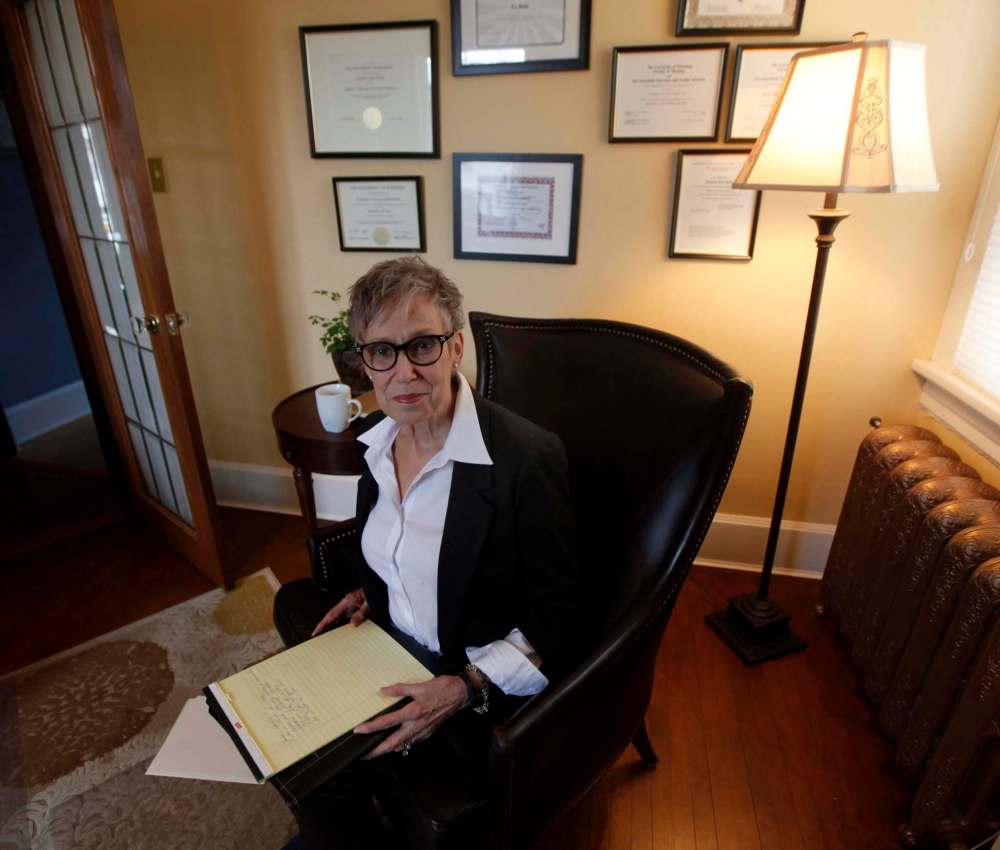
“In my years of practice, one of the things I see all too often is women whose sense of self has been diminished by early life experiences, by school experiences, by terrible relationships, by circumstances at work,” she says. “And then, the most recent thing that occurred, was the #MeToo movement. Talking to women — women friends and friends of my daughter — we started to ask, ‘Why were women afraid to speak out when so clearly what was going on was wrong and was impacting women?’
“The final straw for me was the movement, and how can I help women speak out in work settings — but then it became more generalized: how can I help women overcome all these experiences they’ve had that led them to feel diminished and lead lives of quiet desperation and sadness?”
It’s been a long time, but Wolff remembers what it’s like to live that way. The never-ending deluge of horrifying stories triggered by the #MeToo movement brought up past traumas from her own life.
“I am a survivor of childhood sexual abuse,” she says. “I grew up in a family with alcoholism and mental-health issues. I was in a marital relationship that was abusive. I survived cancer and had to deal with a medical system that was pretty nasty. I battled with depression and anxiety. I don’t think these are uncommon experiences to women. So, for women to know that other women live with these things and have survived them and gone on to feel great about themselves, that’s powerful.”
And contrary to what wellness culture may have you believe, feeling great about yourself doesn’t require changing everything about yourself. Wolff helps women recognize and find strength in the positive qualities they already possess, but are often eclipsed by the negative beliefs they hold about themselves. “I help women reframe a position they hold about themselves that might be societally influenced and inaccurate,” she says.
Indeed, how we define ourselves is often shaped by other people and experiences, and often early in life. Wolff recalls a woman she worked with who was the product of rape, and grew up with a mother who hated her. “That affected her profoundly,” she says. She’s also worked with women who were bullied as girls and teenagers, which had a devastating effect on who they believe they are.
Those early life experiences can also influence partner selection, Wolff says. “For women whose self-esteem is low, the potential for choosing a partner who’s controlling or cruel and diminishes them further is high.”
To that end, the sessions will teach women how to distinguish between toxic and nourishing relationships, as well as how to communicate and assert themselves effectively. But, just as vitally, the sessions will also focus on how women talk to and treat themselves. As Wolff says, “negative self talk can be just as abusive as the bullying that comes from outside of us.”
Wolff acknowledges how intensive this work is. “The process of redefining your self-esteem, your self-concept, is a journey,” she says. “It’s not going to happen in a six-week workshop series, but the seeds will be planted and strategies will be given.”

So, too, will hope.
“Trauma really significantly influences a woman’s self-esteem, but the really good news in all of this is we can recover,” she says.
“The scars heal over. And we can redefine our lives to be survivors and not victims.”
jen.zoratti@freepress.mb.ca
Twitter: @JenZoratti
Jen Zoratti is a columnist and feature writer working in the Arts & Life department, as well as the author of the weekly newsletter NEXT. A National Newspaper Award finalist for arts and entertainment writing, Jen is a graduate of the Creative Communications program at RRC Polytech and was a music writer before joining the Free Press in 2013. Read more about Jen.
Every piece of reporting Jen produces is reviewed by an editing team before it is posted online or published in print – part of the Free Press‘s tradition, since 1872, of producing reliable independent journalism. Read more about Free Press’s history and mandate, and learn how our newsroom operates.
Our newsroom depends on a growing audience of readers to power our journalism. If you are not a paid reader, please consider becoming a subscriber.
Our newsroom depends on its audience of readers to power our journalism. Thank you for your support.
Jen Zoratti is a columnist and feature writer working in the Arts & Life department, as well as the author of the weekly newsletter NEXT. A National Newspaper Award finalist for arts and entertainment writing, Jen is a graduate of the Creative Communications program at RRC Polytech and was a music writer before joining the Free Press in 2013. Read more about Jen.
Every piece of reporting Jen produces is reviewed by an editing team before it is posted online or published in print – part of the Free Press‘s tradition, since 1872, of producing reliable independent journalism. Read more about Free Press’s history and mandate, and learn how our newsroom operates.
Our newsroom depends on a growing audience of readers to power our journalism. If you are not a paid reader, please consider becoming a subscriber.
Our newsroom depends on its audience of readers to power our journalism. Thank you for your support.
Advertisement Advertise With Us
Advertisement Advertise With Us
History
Updated on Tuesday, April 16, 2019 6:09 AM CDT: Adds photo