Is it time to simplify and eat more like Grandma did?

Advertisement

Advertise with us

Food can have many different meanings.

Read this article for free:


By clicking the button above, an account will be created and you will begin to receive some of our recommended newsletters. You may opt out of any newsletter by visiting your Email and Communication Preferences page or by clicking "unsubscribe" at the bottom of any email.

or

Already have an account? Log in here »

To continue reading, please subscribe:

Digital Subscription

One year of digital access for only $1.44 a week*

  • Enjoy unlimited reading on winnipegfreepress.com
  • Read the E-Edition, our digital replica newspaper
  • Access News Break, our award-winning app
  • Play interactive puzzles

*Billed as $5.77 plus GST every four weeks. After 52 weeks, price increases to the regular rate of $19.95 plus GST every four weeks. Offer available to new and qualified returning subscribers only. Cancel any time.

To continue reading, please subscribe:

Add Free Press access to your Brandon Sun subscription for only an additional

$1 for the first 4 weeks*

  • Enjoy unlimited reading on winnipegfreepress.com
  • Read the E-Edition, our digital replica newspaper
  • Access News Break, our award-winning app
  • Play interactive puzzles
Start now

*Your next Brandon Sun subscription payment will increase by $1.00 and you will be charged $17.95 plus GST for four weeks. After four weeks, your payment will increase to $24.95 plus GST every four weeks.

Opinion

Hey there, time traveller!
This article was published 12/04/2019 (2755 days ago), so information in it may no longer be current.

Food can have many different meanings.

Depending on the person or situation, it can be nourishing, delicious, prescriptive, cultural, an obsession, difficult to access or a combination of all these things.

As a dietitian with 25 years of experience, I have encountered many aspects and meanings of food and approaches to eating. I also have seen the messaging around food and nutrition become complicated, confusing and even contradictory. That said, eating and feeding yourself or your family does not have to be complex. What if we got back to basics and ate similarly to how your grandma (or great grandma) did?
Paul Chiasson / The Canadian Press files
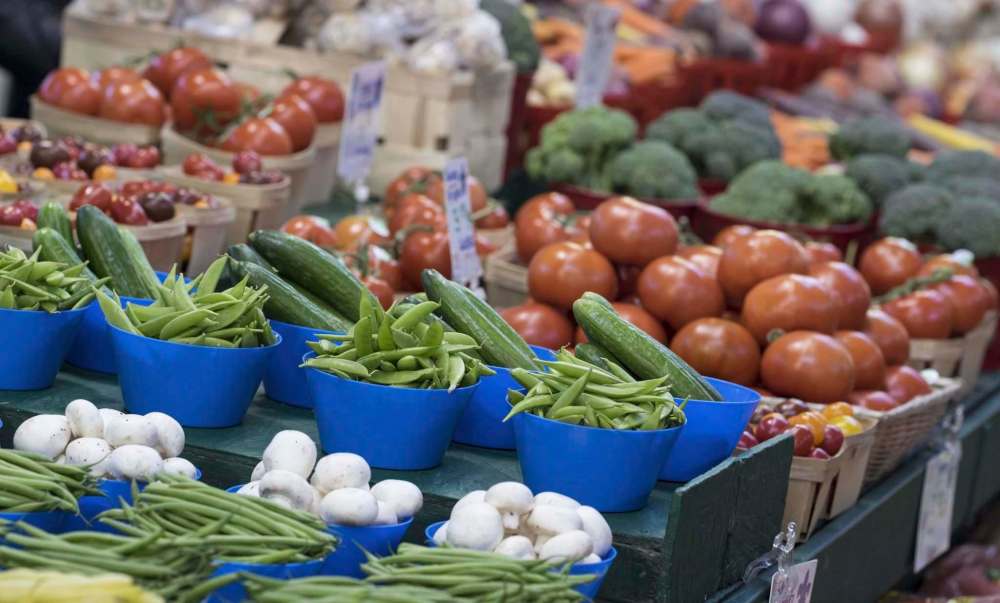
Grandma’s food choices were more seasonal, limited and, at times, even scarce.
Paul Chiasson / The Canadian Press files Grandma’s food choices were more seasonal, limited and, at times, even scarce.

I’m not advocating for cooking in lard and eating only from a canning jar. Grandma’s food choices were more seasonal, limited and, at times, even scarce. There is also something to be said for modern-day conveniences such as ready-to-use chopped lettuce or store-bought bread and advances in science and medicine. I am advocating for people to eat nourishing, wholesome food and meals prepared, eaten and enjoyed more often at home in the company of others around a family table. It’s time to simplify eating.

These food fundamentals my grandma taught me still align with current evidence and practice. In fact, some have emerged in the new Canada’s Food Guide eat-well messaging:

• Stick with what you know. Our bodies are made to eat food, not food-like substances. Grandma used recipes and techniques her ancestors taught her. She did not stock her cupboards with foods that have long, unrecognizable ingredient lists. She also did not need some new media headline, nutritional trend, food marketing or celebrity to tell her what to eat or not to eat. More and more evidence is showing it is not necessary to eliminate certain foods or conform to a single dietary pattern to achieve a healthy diet.

• Prepare foods with thought and care. Grandma needed to budget and meal-plan. All parts of plants and animals were used at some point; often canned or frozen for later use. Today, many fruits and vegetables don’t even make it onto store shelves because they’re not perfectly appealing. In 2017, the National Zero Waste Council conducted research on household food waste in Canada and found 63 per cent of the food Canadians throw away could have been eaten.

• Serve and eat just enough. Portions were smaller and she ate servings that were personally satisfying. Grandma may have wanted others to “eat, eat,” but she didn’t count calories. Instead, she tuned into the eating experience and her own body’s intelligence about how much to eat. Today, this concept is called mindful eating and is supported in the new Food Guide. Mindful eating has been shown to improve meal satisfaction, decrease binge eating, decrease non-hunger eating, promote sustained weight management and improve blood-sugar control.

• Eat local and seasonal. Grandma grew it, raised it, used the corner store or knew the farmer down the road. She probably didn’t realize she was strengthening the local economy and supporting the environment. Her diet may have been less varied due to availability — not from extreme eating or concerns about hormones or “best-before” dates.

• Understand food skills are important life skills. Grandma didn’t rely on restaurants, “on-the-go” eating or meal delivery but rather was a role model who took opportunities to teach and share food skills — including eating within a food budget. In the International Journal of Consumer Studies, 2018, local dietitian and researcher Joyce Slater determined there are critical food-literacy competencies (food knowledge, values and skills) required by youth as they transition to independent adulthood. Many youth today are lacking these competencies.

If your eating patterns have become complex and you’d rather rediscover eating based on the simpler style of Grandma, speak with a registered dietitian.

Dietitians are a phone call away by calling Dial-a-Dietitian toll free 1-877-830-2892 or 204-788-8248 in Winnipeg. Registered dietitians are passionate about the potential of food to enhance lives and improve health.

Coralee Hill is a registered dietitian with the Provincial Health Contact Centre’s Dial-a-Dietitian program located at Misericordia Health Centre.

History

Updated on Friday, April 12, 2019 6:40 AM CDT: Adds photo

Report Error Submit a Tip

More Stories

One-day conference for health-care technology

Free Press staff 1 minute read 2:01 AM CDT

Indigenous leaders and bioscience professionals are gathering this week to promote health-care technology in northern communities.

Ceramic artist brings double-edged works to exhibition

AV Kitching 5 minute read Preview

Ceramic artist brings double-edged works to exhibition

AV Kitching 5 minute read 2:00 AM CDT

Drawing on her Afro-Jamaican and Red River Métis heritage, Winnipeg-based ceramic artist PJ Anderson’s richly ornamented sculptural works explore adornment as a form of protection, resistance and self-definition.

Her pieces are currently being shown in the After the Island: Caribbean Canadian Ceramics exhibition at the Gardiner Museum in Toronto.

The exhibition is a collaboration between the museum, Black Artists’ Networks in Dialogue (BAND) and the Museum of the African Diaspora (MoAD) in San Franciso, resulting in two shows presented concurrently at the Gardiner and MoAD.

Anderson is the only artist featured in both shows who was not born in the Caribbean.

Read
2:00 AM CDT

Connor Hellebuyck breaks silence after trade from Jets

Mike McIntyre 8 minute read Preview

Connor Hellebuyck breaks silence after trade from Jets

Mike McIntyre 8 minute read Saturday, Oct. 24, 2026

It took until the very end of his introductory news conference Saturday — right around the 15-minute mark — before Connor Hellebuyck was finally asked the question that hockey fans back in Winnipeg were likely waiting for.

“Is there anything you’d like to say to Jets fans?” a reporter who covers Hellebuyck’s new team, the New Jersey Devils, put to him during the session held inside the Prudential Center in Newark.

A short pause followed.

“I mean, there’s a lot. There’s a lot that I need to say,” Hellebuyck began, no doubt raising plenty of eyebrows around here and the hockey world in general.

Read
Saturday, Oct. 24, 2026

School safety patrol struck by car, sent to hospital

1 minute read Yesterday at 7:29 PM CDT

A school safety patrol from Sargent Park School was sent to hospital after being hit by a car on Monday afternoon.

The student was struck by a vehicle at the intersection of Dominion Street and Sargent Avenue around dismissal time, Winnipeg School Division Supt. Matt Henderson told the Free Press.

“There was a multi-car collision where one of the cars was bumped and it did collide with one of our patrols,” Henderson said. “The staff obviously went into high gear and supported the child until paramedics came.”

He said the child, who is not being identified for privacy reasons, was conscious when taken to hospital.

Is it time to simplify and eat more like Grandma did?

Coralee Hill 4 minute read Preview

Is it time to simplify and eat more like Grandma did?

Coralee Hill 4 minute read Friday, Apr. 12, 2019

Food can have many different meanings.

Depending on the person or situation, it can be nourishing, delicious, prescriptive, cultural, an obsession, difficult to access or a combination of all these things.

As a dietitian with 25 years of experience, I have encountered many aspects and meanings of food and approaches to eating. I also have seen the messaging around food and nutrition become complicated, confusing and even contradictory. That said, eating and feeding yourself or your family does not have to be complex. What if we got back to basics and ate similarly to how your grandma (or great grandma) did?

I’m not advocating for cooking in lard and eating only from a canning jar. Grandma’s food choices were more seasonal, limited and, at times, even scarce. There is also something to be said for modern-day conveniences such as ready-to-use chopped lettuce or store-bought bread and advances in science and medicine. I am advocating for people to eat nourishing, wholesome food and meals prepared, eaten and enjoyed more often at home in the company of others around a family table. It’s time to simplify eating.

Read
Friday, Apr. 12, 2019

Police probe weekend vandalism spree as dozens of school buses taken out of service

Chris Kitching 5 minute read Preview

Police probe weekend vandalism spree as dozens of school buses taken out of service

Chris Kitching 5 minute read Updated: Yesterday at 4:57 PM CDT

Vandals used fire extinguishers to damage dozens of Winnipeg School Division buses and an elementary school in a pair of weekend break-ins, disrupting transportation or lessons for potentially hundreds of students.

Several buses were taken out of service, resulting in cancellations or delays on some routes Monday, after 45 parked vehicles were damaged in a lot on Selkirk Avenue, west of Keewatin Street.

“We occasionally will have a fire extinguisher stolen or a little bit of damage, but this was certainly the largest-scale vandalism that we’ve seen in our (transportation) yard,” said Matt Henderson, superintendent of Manitoba’s largest school division.

“The result of that was a number of bus routes had to be cancelled (Monday), which is really problematic. There’s an added stress on families to get their children to school.”

Read
Updated: Yesterday at 4:57 PM CDT