Shared smoking breaks, broken rules: What led to Nunavut’s first COVID-19 cases?
Advertisement
Read this article for free:
or
Already have an account? Log in here »
To continue reading, please subscribe:

Digital Subscription
One year of digital access for only $205*
- Enjoy unlimited reading on winnipegfreepress.com
- Read the E-Edition, our digital replica newspaper
- Access News Break, our award-winning app
- Play interactive puzzles
*First annual payment billed as $205.00 + GST for one year. This annual subscription will automatically renew at $233.00 + GST every 52 weeks (10% off the regular annual price of $259.35). Offer available to new and qualified returning subscribers only. Cancel any time.
To continue reading, please subscribe:
Add Free Press access to your Brandon Sun subscription for only an additional
$1 for the first 4 weeks*
- Enjoy unlimited reading on winnipegfreepress.com
- Read the E-Edition, our digital replica newspaper
- Access News Break, our award-winning app
- Play interactive puzzles
*Your next Brandon Sun subscription payment will increase by $1.00 and you will be charged $17.95 plus GST for four weeks. After four weeks, your payment will increase to $24.95 plus GST every four weeks.
Read unlimited articles for free today:
or
Already have an account? Log in here »
Hey there, time traveller!
This article was published 03/05/2021 (1909 days ago), so information in it may no longer be current.
IQALUIT – Broken isolation rules, shared cigarettes and fear of extended isolation periods are some of the findings in a report that sheds light on how Nunavut’s first cases of COVID-19 suddenly appeared last November.
For eight months, while outbreaks erupted across the country, Nunavut remained free of infection, with the exception of some cases among mine workers from outside the territory.
That was partly because Nunavut has some of the tightest public health measures in the country. In March 2020, the territory restricted travel to residents only and required anyone who left to complete a 14-day isolation period in a hotel outside Nunavut before returning.
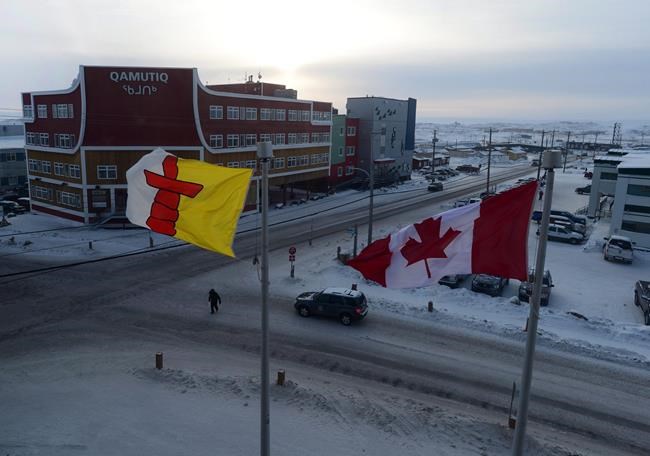
But health officials repeatedly warned that it was not a matter of if, but when COVID-19 would show up.
On Nov. 6, 2020, Nunavut reported its first case of the novel coronavirus in Sanikiluaq, a Hudson Bay community of about 850 people. It soon appeared in other communities, including Arviat, where an outbreak swelled to 339 cases in the community of about 2,800.
Health officials confirmed the first cases came from Nunavummiut who had completed 14 days of isolation down south, but there were no further details.
The isolation hubs are in Yellowknife, Edmonton, Winnipeg and Ottawa. They are funded by the territorial and federal governments. Day-to-day operations are run by Qikiqtaaluk Corp., a Nunavut-based company offering sanitary services and contracted by the territory.
Nunavut’s Health Department determined the infected people had completed isolation at Winnipeg hotels in October and November. The government ordered a third party to review what had happened.
That report, obtained through a Canadian Press access-to-information request, looks at five guests and one security guard who tested positive.
It says some guests at one Winnipeg hotel didn’t report their symptoms, while some were asymptomatic. One guest had symptoms the day after checking in, but was not tested until eight days later.
The review also found that some guests shared things like cigarettes and lighters while on smoking breaks outside. To resolve that, the Health Department recommended a smoking break schedule be developed.
Guests must stay in their rooms for most of the isolation period, but are allowed to go outside for smoke breaks and to get fresh air and exercise.
“The process for communicating expectations to guests regarding their stay was ineffective … which decreased the likelihood of compliance with isolation hub expectations,” the report says.
The review also found some guests were “fearful of having their isolation stays extended” beyond the 14 days. That “led to guests not reporting their symptoms, which increased the likelihood of guests unknowingly having COVID-19.”
As a result, voluntary COVID-19 testing was put in place at all of Nunavut’s southern isolation hubs.
Another concern outlined in the report is that the protocol for managing positive cases was “unclear.” That led to guests being admitted “without the appropriate safety protocol.”
At one point, guests were sent back to the isolation hub after their flight to Nunavut was cancelled, which led to potential exposure between guests, the report says.
Isolation guests are called by a public health nurse once a day and a temperature check is done before guests are cleared to fly.
Some guests also faced cultural and language barriers that could have increased the chance of COVID-19 going undetected.
“Many staff did not have a comprehensive understanding of the cultural aspects of care, which led to misinterpretation of guest body language (and) increased the likelihood that symptoms would be inaccurately captured.”
The report also says interpretation services were not readily available.
Dr. Anna Banerji, an infectious disease specialist at the University of Toronto, said standard operating procedures, consistent messaging and proper cultural safety training is essential in Nunavut’s isolation hubs.
“If someone has an exposure or has symptoms, and they can’t communicate that or they don’t understand the isolation, there are some significant problems,” Banerji said.
“They need people working there who speak the language … and people who are able to enforce the isolation.”
Banerji also said the isolation period loses its purpose if guests don’t distance themselves from others while outside.
“If there are people there who have COVID and they are mingling with each other, then this isolation hub loses its effectiveness.”
Testing at isolation hubs is critical, especially when people are asymptomatic, Banerji added.
“COVID is a very hard disease to manage because it can be transmitted with no symptoms … If you’re trying to prevent outbreaks in the community there should be mandatory testing.”
The Canadian Press reached out to Nunavut’s Health department for an interview but did not receive a response.
This report by The Canadian Press was first published May 3, 2021.
___
This story was produced with the financial assistance of the Facebook and Canadian Press News Fellowship.
Related Articles
Nunavut suspends travel from N.W.T.

Advertisement Advertise With Us
Advertisement Advertise With Us