Singing therapy is music to their ears… and lungs
Advertisement
Read this article for free:
or
Already have an account? Log in here »
To continue reading, please subscribe:

Digital Subscription
One year of digital access for only $205*
- Enjoy unlimited reading on winnipegfreepress.com
- Read the E-Edition, our digital replica newspaper
- Access News Break, our award-winning app
- Play interactive puzzles
*First annual payment billed as $205.00 + GST for one year. This annual subscription will automatically renew at $233.00 + GST every 52 weeks (10% off the regular annual price of $259.35). Offer available to new and qualified returning subscribers only. Cancel any time.
To continue reading, please subscribe:
Add Free Press access to your Brandon Sun subscription for only an additional
$1 for the first 4 weeks*
- Enjoy unlimited reading on winnipegfreepress.com
- Read the E-Edition, our digital replica newspaper
- Access News Break, our award-winning app
- Play interactive puzzles
*Your next Brandon Sun subscription payment will increase by $1.00 and you will be charged $17.95 plus GST for four weeks. After four weeks, your payment will increase to $24.95 plus GST every four weeks.
Read unlimited articles for free today:
or
Already have an account? Log in here »
Hey there, time traveller!
This article was published 08/07/2013 (4805 days ago), so information in it may no longer be current.
LONDON — In a third-floor room of a London hospital, roughly a dozen people gathered recently to sing songs, including folk music from Ghana and Polynesia.
While the participants were drawn to the session by a fondness for music, they also had an ulterior motive: to cope better with lung disease. The weekly group is led by a professional musician and is offered to people with respiratory problems including asthma, emphysema and chronic obstructive pulmonary disorder (COPD).
Doctors at London’s Royal Brompton Hospital started the program after reasoning that the kind of breathing used by singers might also help lung patients.
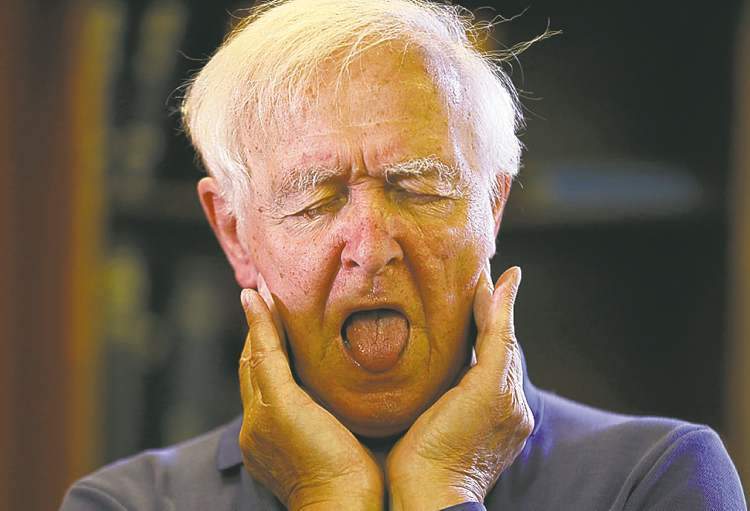
“Since many people enjoy singing, we thought it would help them associate controlling their breathing with something pleasant and positive rather than a standard physiotherapy technique,” said Dr. Nicholas Hopkinson, the hospital’s top chest physician. “It’s almost accidental that they learn something about their breathing through singing,” he said.
People with COPD have damaged lungs, which limits how much air they can breathe in and out. “Some people start to breathe very rapidly, which aggravates the problem,” Hopkinson said. “They take many rapid, shallow breaths and that makes it even harder for them,” he said. Hopkinson said learning to sing gives patients better posture and teaches them to breathe at a more manageable rate.
Still, two trials on the singing therapy conducted by Hopkinson and colleagues haven’t found much improvement in patients’ performance on breathing tests. “The lung function test doesn’t change because the underlying disease hasn’t changed,” he explained. Hopkinson said that in a study comparing patients who went to the singing class versus those who attended a film discussion group, only the patients who sang reported feeling physically better afterwards, even if it couldn’t be measured objectively.
Some experts said singing would probably only appeal to a minority of patients and emphasized it could not replace traditional treatments. “Not everybody wants to sing but everybody can learn exercises to help them,” said Julia Bott, a spokeswoman for Britain’s Chartered Society of Physiotherapy. She said other activities like yoga and tai chi had breathing techniques similar to the types of physio exercises respiratory patients are usually taught.

Bott also said the breathing techniques used for singing would probably only be helpful for people with mild problems. “If you’ve got severe disease, it will be pretty hard to sing if you’re panting and out of breath,” she said. Bott said the songs would have to be basic. “No one is going to be singing any Wagnerian operas after this.”
John Cameron Turner, 77, is convinced the singing classes have helped him. Diagnosed with severe emphysema in 2002, Turner has tried various medicines but said none has really helped. “I have damaged lungs, but singing helps me use as much of them as possible,” he said.
Since he started coming to the singing classes five years ago, Turner says he is able to do more things. He said he used to have to stop repeatedly during the half-mile walk from his home to the subway station to catch his breath. “Now I don’t do that because I’m breathing better,” he said.
Turner said it was hard to know if he was breathing easier just because of the singing but thought more people with lung difficulties should sing. “It’s turned me into a social animal and the songs are great fun,” he said. “It’s such an easy thing to do that you might as well give it a try.”
— The Associated Press