Statistics Canada considered delaying this year’s census to 2022 due to pandemic
Advertisement
Read this article for free:
or
Already have an account? Log in here »
To continue reading, please subscribe:

Digital Subscription
One year of digital access for only $205*
- Enjoy unlimited reading on winnipegfreepress.com
- Read the E-Edition, our digital replica newspaper
- Access News Break, our award-winning app
- Play interactive puzzles
*First annual payment billed as $205.00 + GST for one year. This annual subscription will automatically renew at $233.00 + GST every 52 weeks (10% off the regular annual price of $259.35). Offer available to new and qualified returning subscribers only. Cancel any time.
To continue reading, please subscribe:
Add Free Press access to your Brandon Sun subscription for only an additional
$1 for the first 4 weeks*
- Enjoy unlimited reading on winnipegfreepress.com
- Read the E-Edition, our digital replica newspaper
- Access News Break, our award-winning app
- Play interactive puzzles
*Your next Brandon Sun subscription payment will increase by $1.00 and you will be charged $17.95 plus GST for four weeks. After four weeks, your payment will increase to $24.95 plus GST every four weeks.
Read unlimited articles for free today:
or
Already have an account? Log in here »
Hey there, time traveller!
This article was published 08/03/2021 (2009 days ago), so information in it may no longer be current.
OTTAWA – Newly released documents show Statistics Canada considered delaying this year’s census until 2022 over pandemic-related health concerns that could erode the quality of data relied on by policymakers across the country.
An agency document noted the plan for the 2021 census was developed in a “normal operating context” where tens of thousands of staff and temporary hires would interact with each other and Canadians.
In a pandemic, the document noted, that plan had “a high probability of failure.”
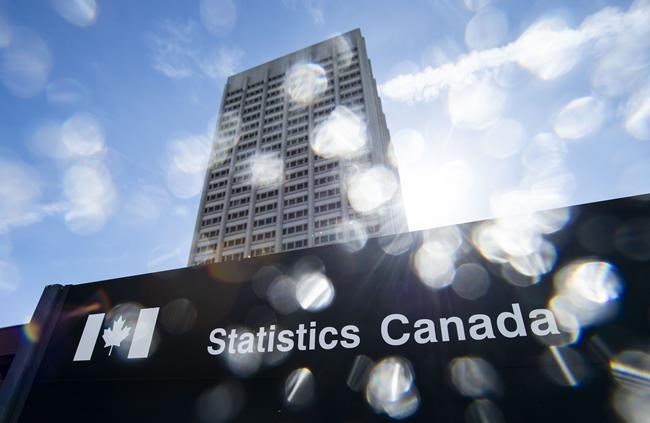
The behind-the-scenes look at how Statistics Canada rethought this year’s census operation is contained in 50 pages of internal reports and presentations obtained by The Canadian Press under the Access to Information Act.
The agency ultimately decided to forge ahead with the census for this year using a plan that relies more heavily on Canadians filling out census forms online than on face-to-face interactions.
Jan Kestle, president and CEO of Environics Analytics, said the census needed to go ahead as planned this year to get a baseline reading on how families, communities and businesses are faring to guide decision-making for a post-pandemic recovery.
“It’s not like we’re in a period where there’s something weird for a month. We have lived for a year (with the pandemic) and we’re going to live with the implications of this for a long time,” she said.
“Having a census that’s as good as it can be, is extremely important to the economic recovery, and the health of Canadians.”
Census results can help reshape electoral ridings and determine federal funding to provinces for health care, and to cities for infrastructure. Local officials use the census to decide where to plan new transit services, roads, schools and hospitals.
A census takes seven years between the start of planning to the release of data.
“This is a large piece of machinery that does not turn on a dime,” said Michael Haan, an associate professor of sociology from Western University, and director of the school’s Statistcs Canada Research Data Centre.
“If they were going to shift courses by perhaps extending the census for a year, or whatever they may have chosen to do, they needed to have those deliberations well in advance of the census moment.”
Waiting until 2022, after the widespread distribution of vaccines, could lead to a more “normal” operation , officials wrote in one document, adding that results would better reflect typical trends rather than “an atypical year of widespread societal disruption.”
But it would also miss some impacts of COVID-19, including connecting detailed income data from the Canada Revenue Agency to different neighbourhoods to see the full effects of pandemic aid programs.
“We have a bit of a sense of this already, but nothing as accurate and as complete as the census for giving a true picture of how much hardship the (Canada Emergency Response Benefit) may have saved us,” Haan said.
In July, officials said no to adding any pandemic-specific questions to the census form because it was “not the right vehicle” for collecting the information. As well, adding a question on short notice could be problematic since every question has to be thoroughly tested.
“When you introduce new subject matter into a questionnaire, you run the risk of changing the way people respond to other questions,” Haan said.
It also takes the agency months before it can release the data for public consumption, meaning the information could be far out of date by 2022 given the fluidity of the pandemic.
Statistics Canada’s plan for this year’s census relies more on online responses and telephone follow-ups than going door-to-door, opening up the internet option to everyone in the country for the first time.
Geoff Bowlby, director general at Statistics Canada responsible for the census, said the agency expects about eight in every 10 people to respond to the census online.

Enumerators going door-to-door will be masked and get responses from outside the home rather than inside as in previous census cycles, Bowlby said.
Hundreds of workers hired as administrators for enumerators are going to work from home rather than temporary office space, he added.
Some work can’t be done remotely, such as in the scanning centres that turn paper returns into digital data. Bowlby said the agency has adjusted the number of workers in the facility, split them into cohorts, and put in a health and safety plan that includes the provision of N95 masks.
“At the end of the day, we do expect to have high response to the census and that data will be of high quality, the same quality that Canadians expect from the census, and it will be a safe operation,” he said.
This report by The Canadian Press was first published March 8, 2021.