Despite COVID-19, census shows population grew at fastest rate in G7, topping 36.9M

Advertisement

Advertise with us

OTTAWA - Canada's population grew at a faster rate than many of its peers, rising to over 36.99 million on census day last year despite a historic slowdown caused by COVID-19.

Read this article for free:


or

Already have an account? Log in here »

To continue reading, please subscribe:

Subscribe and receive a limited-edition Free Press branded hat or tote.

Digital Subscription

One year of digital access for only $205*

  • Enjoy unlimited reading on winnipegfreepress.com
  • Read the E-Edition, our digital replica newspaper
  • Access News Break, our award-winning app
  • Play interactive puzzles

*First annual payment billed as $205.00 + GST for one year. This annual subscription will automatically renew at $233.00 + GST every 52 weeks (10% off the regular annual price of $259.35). Offer available to new and qualified returning subscribers only. Cancel any time.

To continue reading, please subscribe:

Add Free Press access to your Brandon Sun subscription for only an additional

$1 for the first 4 weeks*

  • Enjoy unlimited reading on winnipegfreepress.com
  • Read the E-Edition, our digital replica newspaper
  • Access News Break, our award-winning app
  • Play interactive puzzles
Start now

*Your next Brandon Sun subscription payment will increase by $1.00 and you will be charged $17.95 plus GST for four weeks. After four weeks, your payment will increase to $24.95 plus GST every four weeks.

Hey there, time traveller!
This article was published 09/02/2022 (1672 days ago), so information in it may no longer be current.

OTTAWA – Canada’s population grew at a faster rate than many of its peers, rising to over 36.99 million on census day last year despite a historic slowdown caused by COVID-19.

Statistics Canada said the national population grew by 5.2 per cent between 2016 and 2021, almost double the rate of any other G7 nation and faster than the preceding five-year stretch.

The agency said the main reason for the slowdown in growth from a historic high to its lowest rate in a century was border restrictions that, while meant to slow the spread of COVID-19, also slowed the pace of newcomers arriving in Canada, who have been, and remain, critical to maintain growth.
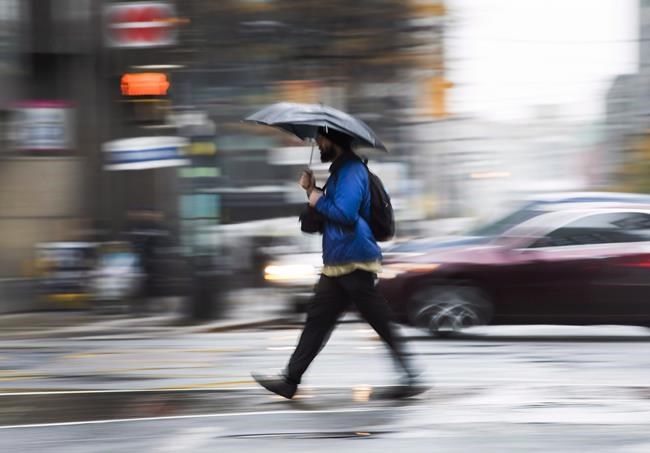
People cross the road in downtown Toronto on Friday, Nov. 2, 2018. THE CANADIAN PRESS/Nathan Denette

Statistics Canada said there were about 1.8 million more people calling the country home in 2021 compared with 2016, with four in every five being immigrants.

Federal immigration plans call for 411,000 new permanent residents this year, rising to 421,000 in 2023. Michael Haan, an associate professor at Western University’s sociology department, said those historically high targets would mean the population curve would really take off.

Immigration has been key to driving population growth as the birthrate has declined, but the agency notes that rate in 2021 hit its lowest level of record as part of a notable decline since 2008.

The number of children per woman hit 1.4 in 2020, the most recent year the agency provided, a record low that falls short of the 2.1 mark needed for births to offset deaths, which is linked to maintaining a thriving economy.

Statistics Canada said some of that slowdown might be pandemic-induced, but warned it could get worse in the future. An agency study late last year noted adults under 50 wanted to have fewer children than previously planned.

At this point, Canada isn’t headed to a situation where deaths outnumber births like in Italy and Japan — at least within the next 50 years. The key to avoiding that fate is the number of new immigrants who boost population numbers, but also domestic birthrates.

“If you attract immigrants, you’re going to grow and if you don’t attract immigrants, there’s a high chance you’re going to eventually go into population decline,” said Doug Norris, chief demographer at Environics Analytics who spent 30 years at Statistics Canada, including work on the census.

The pandemic is expected to have an effect on census results, although experts suggest the country may have to wait a few years to learn whether COVID-19 caused a permanent or temporary shift in the portrait of the population.

“We’ll need to monitor trends in the coming years, probably until census 2026, to definitely draw a conclusion,” said Laurent Martel, director of Statistics Canada’s centre for demography.

“Certainly, the pandemic has accelerated some of these trends that we were already seeing in the data.”

The first findings released Wednesday from the 2021 census, taken against the backdrop of the COVID-19 pandemic, showed that the Maritimes grew faster than the Prairies for the first time since the 1940s, largely on the back of immigration. Newfoundland and Labrador was the lone province to see a decline.

The largest share of the population still resides in Ontario. But to its west, British Columbia watched its slice of the population pie grow and the Prairies saw its share rise to its highest level since 1951.

To Ontario’s east, Quebec’s share of the population continued to decline, as did the Atlantic provinces.

Immigrants typically settle in urban centres. The largest cities got bigger between 2016 and 2021 with Edmonton and Ottawa cracking the one-million mark, and the number of cities with more than 100,000 people growing to 41 from 35. Rural areas, too, grew, albeit at a far slower pace than their metropolitan cousins.

“It continues to show that we need to be planning our urban centres better to make them more livable, make them more walkable, and make them more connected, at the same time make them more affordable,” said Dan Huang, president of the Canadian Institute of Planners.

“That is the paradox of planning, I guess, and policy-making in the country, which there’s no easy answer to.”

Statistics Canada plans to add more flourishes to the paint-by-numbers exercise as the year rolls on to reveal more information about changes among Indigenous populations, and working during the pandemic.

The next release date is scheduled for late April when Statistics Canada will outline census findings on how the country has aged, types of housing and, for the first time, gender identity.

This report by The Canadian Press was first published Feb. 9, 2022.

Report Error Submit a Tip

More Stories

‘We belong… and we are giving back”: Sikh celebration enlivens downtown Winnipeg

Melissa Martin 3 minute read Preview

‘We belong… and we are giving back”: Sikh celebration enlivens downtown Winnipeg

Melissa Martin 3 minute read Sunday, Sep. 6, 2026

Downtown Winnipeg came alive with vibrant sights, sounds, and scents on Sunday, as Manitoba’s Sikh community flocked to Memorial Park to celebrate its annual Nagar Kirtan procession and festival.

This year marked the 422nd anniversary of the completion of the Guru Granth Sahib, the holy scripture central to the Sikh faith. Shortly after 1 p.m., a palanquin bearing a copy of the scripture was led in parade through downtown Winnipeg, with musical accompaniment.

“This is a chance to tell the public and the whole community where we come from and who we are,” said volunteer Prabh Grewal shortly before the procession got underway. “In a community there are people from every race and every country, and our main objective is to have everybody live in peace and harmony together.”

Before, during, and after the procession, the park hummed with life. As many as 55,000 people converged on the site, with the majority dressed in festive traditional attire. Near the height of the day’s 30 C heat, families relaxed in patches of shade, enjoying plates of Punjabi cuisine dished out for free at dozens of tents sponsored by local businesses.

Read
Sunday, Sep. 6, 2026

U of M study shows female entrepreneurs have it tough on dating market

Jen Zoratti 6 minute read Preview

U of M study shows female entrepreneurs have it tough on dating market

Jen Zoratti 6 minute read Yesterday at 10:00 AM CDT

Xiumei Li had a friend who had been on the dating scene for a while.

He’d been seeing an impressive woman, a startup founder building a successful business. She was a good conversationalist. She was interesting.

She sounded great. So why didn’t it work out?

Some gentle prodding revealed he was intimidated by her, but also felt that “there was a gap between what he expected for a partner versus what this female entrepreneur had to offer,” Li says.

Read
Yesterday at 10:00 AM CDT

Man injured in downtown shooting

1 minute read Sunday, Sep. 6, 2026

A man in his 20s is in critical condition after he was shot in downtown Winnipeg early Sunday morning.

The Winnipeg Police Service's major crimes unit is investigating and no arrests have been made.

Police responded to the area of Portage Avenue and Balmoral Street, near the University of Winnipeg campus, at about 4:20 a.m. Sept. 6 for the report of a male suffering a gunshot wound. Police provided first aid to the victim, who was taken to hospital.

Trump’s trade war with Canada is becoming a ballot box issue ahead of U.S. midterms

Kelly Geraldine Malone, The Canadian Press 6 minute read Preview

Trump’s trade war with Canada is becoming a ballot box issue ahead of U.S. midterms

Kelly Geraldine Malone, The Canadian Press 6 minute read Updated: Yesterday at 12:01 PM CDT

WASHINGTON - As the United States braces for pivotal midterm elections this November, there's a new and unexpected issue on voters' minds in many states: President Donald Trump's escalating trade war with Canada.

"Canada is our friend, our closest ally and our biggest trading partner," Maine Republican Sen. Susan Collins told Politico in an interview published last week.

"This is not China that we are talking about. This is not an adversarial country. And … our economies are so linked, if you try to hurt one you end up hurting Maine."

Collins has long been a political force in her border state but Trump's unpopular policies — including his tariff campaign against Canada — have put her seat in jeopardy.

Read
Updated: Yesterday at 12:01 PM CDT

Manitoba doctor denies working to revive Carberry ER in response to recruitment lawsuit

Erik Pindera 4 minute read Preview

Manitoba doctor denies working to revive Carberry ER in response to recruitment lawsuit

Erik Pindera 4 minute read Sunday, Sep. 6, 2026

A Manitoba doctor has denied he was working as a recruiter after an Ontario doctor accused him of misleading him about a position at the Carberry hospital.

Dr. Klevis Iliriani, who worked at the hospital in Carberry from May to August 2024, filed his statement of claim in Court of King’s Bench earlier this year.

Iliriani, who lives in an Ottawa suburb, has alleged recruiters negligently misrepresented the job at the Carberry hospital and breached the terms of his contract, which resulted in less pay than promised.

His court filing names defendants Dr. Dave Maharajh and Barry Banek as the recruiters.

Read
Sunday, Sep. 6, 2026

Enrolment up at alternative schools

Maggie Macintosh 5 minute read Preview

Enrolment up at alternative schools

Maggie Macintosh 5 minute read Yesterday at 10:02 AM CDT

Independent schools are preparing to welcome a record number of students as more families pay for faith-based instruction and secular alternatives.

The overwhelming majority of Manitoba children — 200,000 — are starting in the public school system this fall. Since 2000, the percentage of students enrolled elsewhere — in homeschools, funded and non-funded independent schools — has nearly doubled, to 12 per cent from seven per cent.

“If money was no object, we could fill dozens and dozens more classrooms with the demand for independent education,” said Andrew Micklefield, executive director of the Manitoba Federation of Independent Schools, who is a former Tory government house leader.

The King’s School, Dasmesh School, Springs Christian Academy, Beautiful Saviour Lutheran School, Steinbach Christian School and IQRA Islamic School have all either upscaled at some point over the last five years or are actively in the process of expanding their footprint.

Read
Yesterday at 10:02 AM CDT