Sweden ends COVID-19 testing as pandemic restrictions lifted
Advertisement
Read this article for free:
or
Already have an account? Log in here »
To continue reading, please subscribe:

Digital Subscription
One year of digital access for only $205*
- Enjoy unlimited reading on winnipegfreepress.com
- Read the E-Edition, our digital replica newspaper
- Access News Break, our award-winning app
- Play interactive puzzles
*First annual payment billed as $205.00 + GST for one year. This annual subscription will automatically renew at $233.00 + GST every 52 weeks (10% off the regular annual price of $259.35). Offer available to new and qualified returning subscribers only. Cancel any time.
To continue reading, please subscribe:
Add Free Press access to your Brandon Sun subscription for only an additional
$1 for the first 4 weeks*
- Enjoy unlimited reading on winnipegfreepress.com
- Read the E-Edition, our digital replica newspaper
- Access News Break, our award-winning app
- Play interactive puzzles
*Your next Brandon Sun subscription payment will increase by $1.00 and you will be charged $17.95 plus GST for four weeks. After four weeks, your payment will increase to $24.95 plus GST every four weeks.
Read unlimited articles for free today:
or
Already have an account? Log in here »
Hey there, time traveller!
This article was published 09/02/2022 (1672 days ago), so information in it may no longer be current.
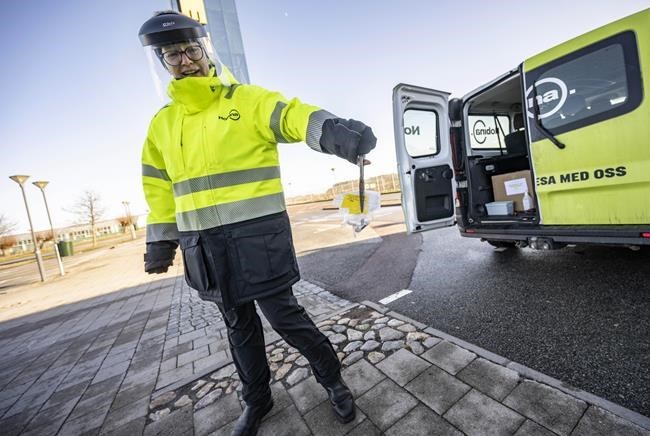
STOCKHOLM (AP) — Sweden has halted wide-scale testing for COVID-19 even among people showing symptoms of an infection, putting an end to the mobile city-square tent sites, drive-in swab centers and home-delivered tests that became ubiquitous during the pandemic and provided essential data for tracking its spread.
The move puts the Scandinavian nation at odds with most of Europe, but some experts say it could become the norm as costly testing yields fewer benefits with the easily transmissible but milder omicron variant and as governments begin to consider treating COVID-19 like they do other endemic illnesses.
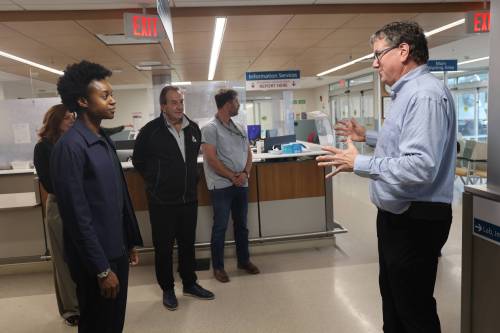
“We have reached a point where the cost and relevance of the testing is no longer justifiable.” Swedish Public Health Agency chief Karin Tegmark Wisell told the national broadcast SVT this week.
“If we were to have extensive testing adapted to everyone who has COVID-19, that would mean half a billion kronor a week (about $55 million) and 2 billion a month ($220 million),” Tegmark Wisell added.
Starting Wednesday, only health care and elderly care workers and the most vulnerable will be entitled to free PCR testing if they are symptomatic, while the rest of the population will simply be asked to stay home if they show symptoms that could be COVID-19.
Antigen tests are readily available for purchase in supermarkets and pharmacies, but those results aren’t reported to health authorities. Private health care providers can also perform tests and offer certificates for international travel, but the cost won’t be reimbursed by the state or health insurance.
High vaccination rates in Sweden are creating optimism among health officials and a late 2020 study released Tuesday showing antibodies present in 85% of samples.
Dr. Bharat Pankhania, a senior clinical lecturer at the University of Exeter Medical School in Britain, said that with a substantial percentage of people vaccinated, “an informed, educated and knowledgeable population” can be trusted to isolate if they show symptoms without the need for “wholesale testing that is not going to be value for money.”
“Sweden is leading the way, and other nations will inevitably follow,” Pankhania said. “We don’t need extensive testing for the sake of testing, but we must look nevertheless in sensitive settings such as hospitals, nursing homes and other sensitive places where there are very vulnerable people.”
In 2021, the region of Stockholm alone spent the equivalent of more than $320 million on PCR tests, money the government says could be better spent elsewhere.
For most of the pandemic, Sweden stood out among European nations for its comparatively hands-off response. It never went into lockdown or closed businesses, largely relying instead on individual responsibility to control infections. While coronavirus deaths were high compared with other Nordic countries, they were lower than many other places in Europe that did implement lockdowns.
Also Wednesday, the country scrapped as of midnight its limits on how many people may gather at events or in restaurants, vaccine certificates can no longer be required and reduced operating hours have been canceled for bars and eateries.
Announcing the reopening last week, Prime Minister Magdalena Andersson said that “the pandemic is not over but has entered a totally new phase,” and while infection rates have risen, it is not overly burdening hospitals.
That tracks with what’s been happening in countries across Europe recently as authorities relax coronavirus restrictions that have dominated the continent for the past two years.
Yet testing remains widespread on the continent, even for people showing no symptoms. Schoolchildren and teachers in Greece, for example, are required to test twice a week, and many countries still require a COVID-19 passport or a negative test to enter restaurants, cinemas and other indoor venues.
In Britain, instead of dropping all testing requirements, authorities are relying on testing, in addition to vaccination, to help enable people to return to normal life. Even as it relaxed most of the remaining COVID-19 restrictions in late January, the government said testing remained a “vital tool” for exiting the pandemic and said infected people could end their isolation after just five days with two negative results on rapid tests over two consecutive days.
The government has also made rapid tests freely available, including via home delivery, and encouraged people to test themselves before potentially risky gatherings, hoping that knowing their status will curb COVID-19 transmission.
Some providers of private COVID-19 lab tests have seen a steep fall lately in the numbers of people seeking tests since British authorities dropped the requirement for vaccinated travelers to provide a negative test upon entering the country, starting this Friday.
On Wednesday, British Prime Minister Boris Johnson signaled his intention to remove the need to isolate after a positive COVID-19 test at the end of February. People would still be advised to self-isolate.
“Provided the current encouraging trends in the data continue, it is my expectation that we will be able to end the last domestic restrictions –including the legal requirement to self-isolate if you test positive — a full month early,” he said.
“We’re seeing fewer people with COVID and so fewer people are getting tested,” said Quinton Fivelman, chief scientific officer of London Medical Laboratory, “which is obviously a good sign even though that means less demand in that market.”
As vaccination rates increase across Europe and millions recover from winter omicron infections, a similar lack of demand for testing could lead to them being phased out, rather than government policy.
Denmark said that the number of PCR tests will drop from 500,000 per day to 200,000 to “match the current stage of epidemic development,” and the Scandinavian country’s free government-funded capacity for quick tests is to set to close by March 6, while centers offering PCR tests would continue as long as needed.

“Vaccines and easy access to tests have been our Danish super-weapons throughout the epidemic,” Danish Health Minister Magnus Heunicke said last month, adding that “this has been positively reflected in the number of (hospital) admissions and now allows us to scale down our large testing capacity.”
___
Associated Press writers Maria Cheng in Toronto, Jan M. Olsen in Copenhagen, and Derek Gatopoulos in Athens, Greece, contributed to this report.
___
Follow AP’s pandemic coverage at https://apnews.com/hub/coronavirus-pandemic