Music sparks emotions, engages brains of those with dementia
Advertisement
Read this article for free:
or
Already have an account? Log in here »
To continue reading, please subscribe:

Digital Subscription
One year of digital access for only $205*
- Enjoy unlimited reading on winnipegfreepress.com
- Read the E-Edition, our digital replica newspaper
- Access News Break, our award-winning app
- Play interactive puzzles
*First annual payment billed as $205.00 + GST for one year. This annual subscription will automatically renew at $233.00 + GST every 52 weeks (10% off the regular annual price of $259.35). Offer available to new and qualified returning subscribers only. Cancel any time.
To continue reading, please subscribe:
Add Free Press access to your Brandon Sun subscription for only an additional
$1 for the first 4 weeks*
- Enjoy unlimited reading on winnipegfreepress.com
- Read the E-Edition, our digital replica newspaper
- Access News Break, our award-winning app
- Play interactive puzzles
*Your next Brandon Sun subscription payment will increase by $1.00 and you will be charged $17.95 plus GST for four weeks. After four weeks, your payment will increase to $24.95 plus GST every four weeks.
Read unlimited articles for free today:
or
Already have an account? Log in here »
Hey there, time traveller!
This article was published 17/03/2015 (4210 days ago), so information in it may no longer be current.
CHICAGO — For more than 60 years, Bert Rose was a celebrated pianist, who played at numerous benefits and weddings and accompanied Ann-Margret, Debbie Reynolds and Brooke Shields at glittering venues.
But now, at age 90, Rose remembers almost none of it. For the last two years, he has lived at Autumn Leaves, a suburban Chicago facility for people with dementia, which has stolen his ability to manage the most basic tasks of daily living.
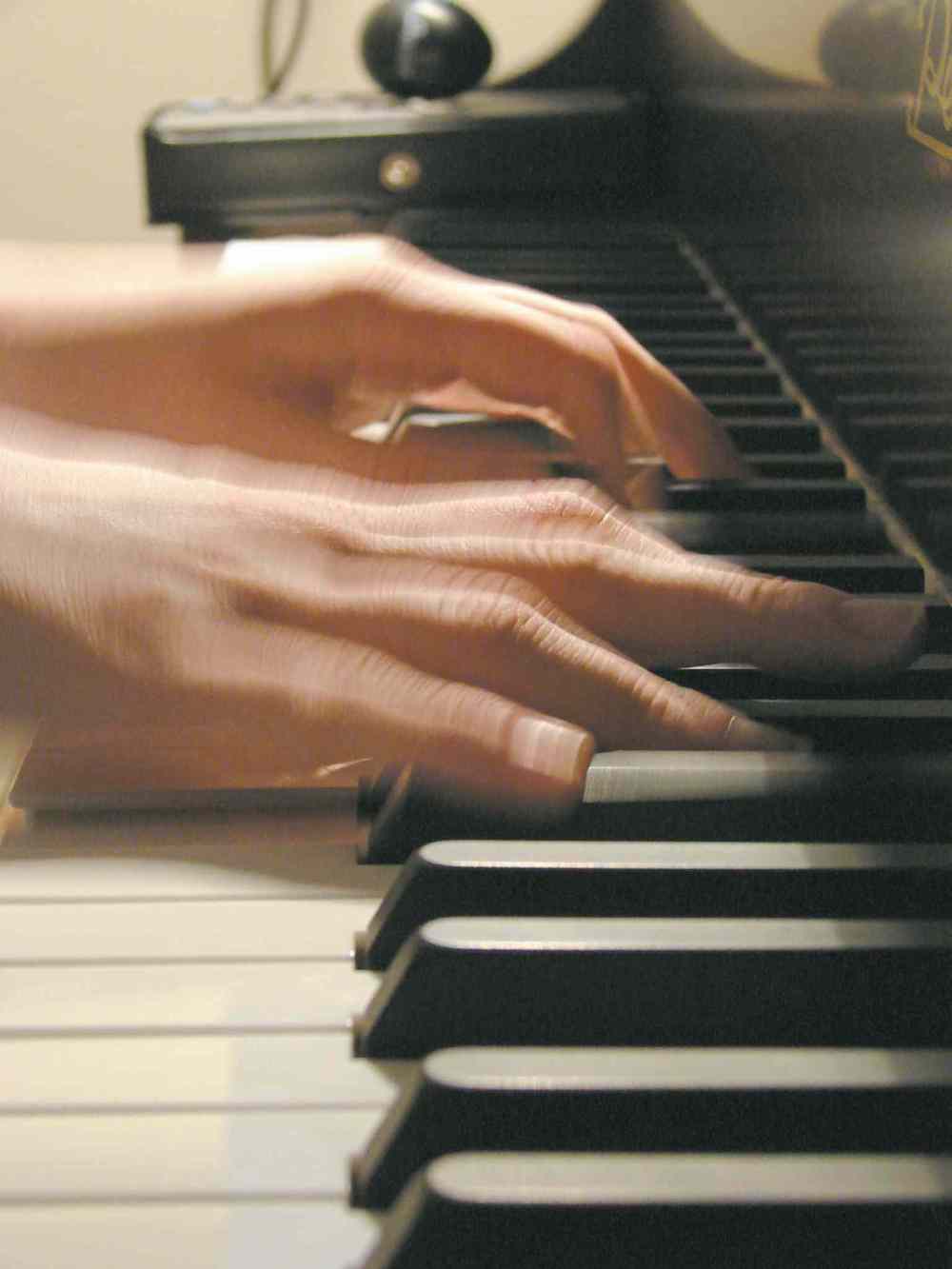
Still, when he sits down at the baby grand piano in the lobby — as he does almost every day — the fog evaporates. Moments earlier, Rose had asked if his wife, who died in 1984, would be visiting. Now, his fingers fly over the keys, retrieving Somewhere Over the Rainbow, You Are My Sunshine and When the Saints Go Marching In from the recesses of his ravaged brain.
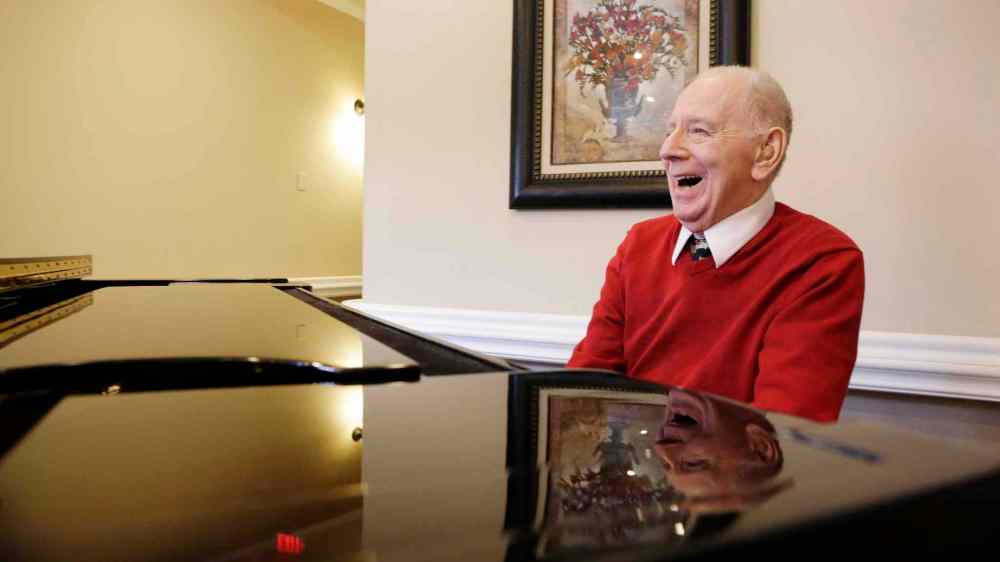
“It’s just so heartbreaking,” says his daughter, Nancy Berg, looking on. “Music is the only thing he has left.”
The music engages other residents as well, who are hand-clapping, toe-tapping and singing along.
The responsiveness observed at Autumn Leaves is hardly unique. There’s increasing evidence that music can be a potent and cost-effective weapon in the battle against Alzheimer’s, the most common form of dementia.
In Canada, 747,000 people were living with cognitive impairment, including dementia, in 2011, according to Alzheimer Society Canada. By 2031, the society predicts that number will increase to 1.4 million people if there are no changes in research and treatment.
With no cure in sight, finding ways to relieve symptoms and enhance quality of life for elders — who can live for years with dementia — is paramount, experts says.
“People living with dementia may lose the ability to express themselves verbally but may also sing with great gusto upon hearing a familiar song,” explains Caroline Edasis, an arts therapist at Chicago-area nonprofit Mather LifeWays. “Music is a compelling way to see beyond the disease process to reach the individual.”
Music’s role in memory is an enormously privileged one, says Nina Kraus, who heads Northwestern University’s Auditory Neuroscience Laboratory, which studies the link between music, cognition and the nervous system.
“It’s no accident that we learn our ABCs with songs,” says the neuroscientist.
Most input to the brain — including speech — is localized, but music is different, activating multiple sites, Kraus says.
“It engages the totality of the brain — centres that process… sound, memory, attention, language, sight, touch and more. It sparks neural activity within each of these centres and sets them in motion together in a way few other experiences can.”
Music also can elicit emotion and boost dopamine, a chemical that regulates the brain’s pleasure and rewards centres. It’s why, years later, hearing a song on the radio can immediately bring us back to a slow dance at prom.
It’s not surprising, then, that Rose — who started playing at age five — perks up as soon as he tickles the ivories. In a 2013 study, Kraus and her team found that music lessons carried benefits into old age. Their research, published in The Journal of Neuroscience, found that subjects who had musical training logged faster responses to speech than those who had none — even if they hadn’t picked up an instrument for decades.
Music’s ability to connect was evident at Mather LifeWays, which collaborated with the Chicago Symphony Orchestra as part of its Citizen Musician project last year.
Three musicians came to the senior-living community to interact with some of its most withdrawn residents. One man, who was mostly nonverbal, “started singing in the most beautiful vibrato voice, with so much passion and feeling,” says Emily Koi, a flutist from the Civic Orchestra of Chicago, CSO’s training orchestra.
“Another woman just started singing along to Beethoven… It really made me look at music in a totally different way. Sometimes, as classical musicians, we get so involved in ourselves, in our personal quest for perfection. This experience reminded me that it has a different power — to lift spirits and trigger memories,” Koi says.
While music can have an impact on the aging brain, it’s not a cure-all, says Bryan D. James, an epidemiologist at Chicago’s Rush Alzheimer’s Disease Center.
“Once the damage to the brain from Alzheimer’s has occurred, there’s no way to bring those neurons back that we know of,” James says.
James was part of a team of researchers at Rush who followed thousands of older adults — some of whom eventually got the disease and some of whom didn’t — and found that those who had music instruction when they were young were less likely to have cognitive impairment in later life. Their findings appeared last year in the journal Neuropsychology.
“The good news is that people who keep their minds active and engaged appear to have less of a chance of developing problems with their memory and thinking than those who don’t,” he says.
But it’s often the psychological costs that weigh heaviest on families.
Bert Rose’s son, Bob, says that after a visit, he has had to pull over to the side of the road to collect himself.
“You don’t lose them all at once,” he says, “just a little bit at a time.”
For Rose, the disease followed a common arc. He was functioning well in suburban Northbrook, Ill., where he had lived since the 1950s. While the days of 300 gigs a year had dwindled — in his heyday, it was common to book a bar mitzvah on a Saturday afternoon, followed by a black-tie soirée at night — he still played professionally until his mid-80s, says Berg, his daughter. He was as sharp and gregarious as you’d expect from a man who earned his livelihood with a tux and a song.
Then, he started repeating the same stories, sometimes minutes after he had told them, she says. He lost his way driving from her home to his home — a trip he had made countless times.
“We knew something was just terribly wrong,” says Berg, a retired music teacher.
Two years ago, his children knew that he could no longer be on his own. Rose came to Autumn Leaves, where he can play anytime. In fact, visitors often think he’s hired entertainment, says Carol Geimer, an administrator.
Geimer doesn’t need any research studies to confirm what she observes every day: That music decreases agitation and provides enjoyment for residents.
“It’s the magic therapy from our highest functioning people to those in the very last stages of the disease,” she says.
Rose doesn’t recall many of the luminaries who crossed his path. Perusing old photos elicits blank stares, even of other members in his orchestra, whom he played with for years.
Only Brooke Shields extracts a flicker of recognition. “She was the prettiest,” he says.

Otherwise, conversation is difficult. He’ll be present for a moment — and then he’s gone, trailing off in a sentence that leads nowhere.
“There are good days and bad days,” Berg says.
But then, her father is helped from wheelchair to piano bench and there’s bliss — a transformation that elevates his daughter’s mood as well.
“Not many people in life get to do something they love,” she says, “that also makes other people happy.”
— Chicago Tribune
History
Updated on Tuesday, March 17, 2015 6:23 AM CDT: Replaces photo, changes headline