

Working out the kinks
Despite gym reopenings, COVID-19 has changed way we exercise

Advertisement
Read this article for free:
or
Already have an account? Log in here »
To continue reading, please subscribe:
Monthly Digital Subscription
$1 per week for 24 weeks*
- Enjoy unlimited reading on winnipegfreepress.com
- Read the E-Edition, our digital replica newspaper
- Access News Break, our award-winning app
- Play interactive puzzles
*Billed as $4.00 plus GST every four weeks. After 24 weeks, price increases to the regular rate of $19.95 plus GST every four weeks. Offer available to new and qualified returning subscribers only. Cancel any time.
Monthly Digital Subscription
$4.99/week*
- Enjoy unlimited reading on winnipegfreepress.com
- Read the E-Edition, our digital replica newspaper
- Access News Break, our award-winning app
- Play interactive puzzles
*Billed as $19.95 plus GST every four weeks. Cancel any time.
To continue reading, please subscribe:
Add Free Press access to your Brandon Sun subscription for only an additional
$1 for the first 4 weeks*
*Your next subscription payment will increase by $1.00 and you will be charged $16.99 plus GST for four weeks. After four weeks, your payment will increase to $23.99 plus GST every four weeks.
Read unlimited articles for free today:
or
Already have an account? Log in here »
Hey there, time traveller!
This article was published 01/06/2020 (2120 days ago), so information in it may no longer be current.
In the days before COVID-19, Catherine Famega was a regular at her gym, seeing a personal trainer with a friend three days a week.
After the shutdown, Famega bought a couple of kettlebells and signed up for two online fitness platforms, Peloton and Nike Training Club. Both were free to join. Since then, she’s been routinely doing her own workouts at home.
“I wanted to keep my strength up and didn’t want all the work I put in at my gym to lapse,” she says.
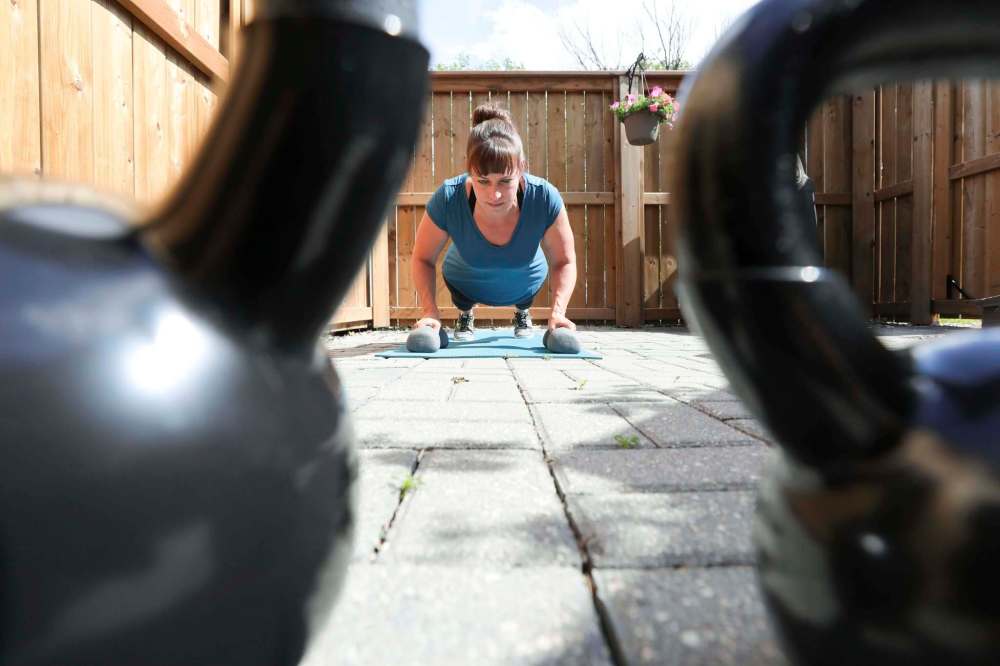
Famega misses the in-person training and motivation, but she has no plans to return when her gym reopens. At least not right away.
“I don’t think I’ll go back immediately, maybe in the fall,” she says. “There are a lot of factors at play. I’d have to see, once everything opens up, what the (COVID-19) results are before I’m comfortable going back.”
Famega won’t necessarily feel safe at the gym again until a significant amount of time has passed with few COVID-19 cases. She’d also like to see gyms impose cleaning protocols.
“It’s one thing for a gym-goer to wipe something down after they use it but it’s another thing to have a really deep clean from the facility a couple times a day,” she says. “That would make me feel better.”
Another concern: the close proximity of gym members.
“People are breathing hard and sweating. It’s not just like walking by somebody,” she says. “Six feet in normal life might be fine but six feet at the gym where everyone is breathing really hard is different. I feel like the risks are higher.”
Famega isn’t alone. Many are questioning whether they’ll go back altogether. A study conducted by RunRepeat.com asked more than 10,000 gym members if they plan on going back — 42 per cent of Canadians said they won’t. And of those Canadians, more than a third have already cancelled memberships or say they’re planning to.
Famega has adapted well to her new routine of at-home workouts. In fact, she’s working out more often at home, strictly because of the convenience.
“I’m doing five to six days a week now, just because I can fit it in. I just get up, roll out of bed and do it. It takes away the travel time and getting ready at the gym,” she says. “Nothing will replace having a real-life trainer but, in the meantime, this is my way to keep active.”
The COVID-19 pandemic has hit gyms hard but it’s been an opportunity for businesses like Peloton — it added 1.1 million people to digital-only free trials in March and April. The company, which sells home-exercise bikes and treadmills that connect to digital workout classes, also offers at-home workouts that require no equipment.
Once her free trial is up, the Peloton app will cost Famega about $20 a month, well under the cost of her gym membership. And if she doesn’t have a full hour to dedicate, the online platform offers workouts of varying lengths.
“For the number of classes and quality of instruction, I’d continue with the Peloton app,” she says. “If I have half an hour, it’s hard not to justify doing the workout, so I’ll squeeze in 20 minutes of HIIT (high intensity interval training).”
Here’s the thing: going to the gym will come down to your personal risk tolerance. In the time of the coronavirus, going to any public place (including gyms) will never be entirely risk-free. And that’s something you’ll have to be OK with if you do decide to go back to a fitness facility.
Despite the virus’s continued spread, some people are eager to return.
“I was never ready to stop going to the gym,” says Justin Pescitelli, who works as a construction supervisor. He feels confident that gyms, including Planet Fitness, where he has a membership, will be safe and clean once they reopen.
“My gym was clean to begin with. I’m not overly concerned,” he says. “If I have any concerns with the machines at the gym, I’ll wipe them down before I begin and then clean them when I’m done.”
Pescitelli tried home workouts for the first couple of weeks after gyms locked their doors. Despite having equipment at home, he struggled with motivation and the disruption of his regular gym schedule.
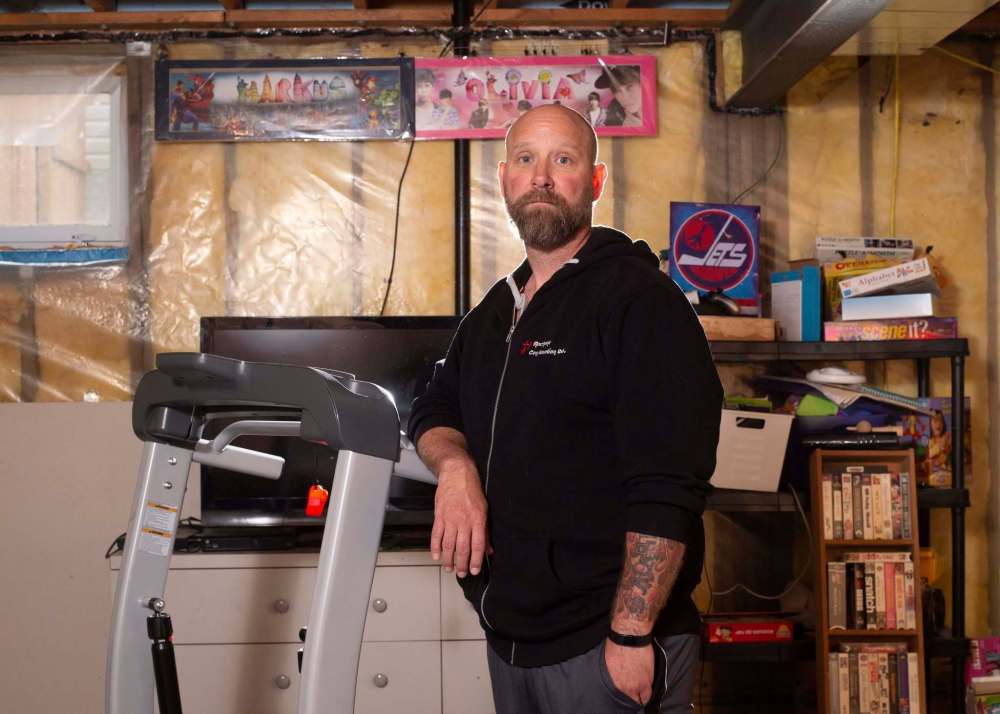
“We have a Bowflex TreadClimber. It’s a very expensive dust collector and coat rack,” he says. “I tried to treat home workouts like the gym. I’d come home from work, change, take my runners and water bottle downstairs, but it just didn’t feel right and something would get in the way.”
Pescitelli, who’s married with two kids, says going to the gym on his way home from work was an integral part of his everyday routine.
“I’m very unmotivated when I get home, even more so in the summer. Once I’m home from work, I’m helping make supper, cleaning — and pre-quarantine, I was rushing my kids to after-school sports,” he says. “I have to hit the gym at three, after work, because once I get home, I’m with my family.”
Not having access to his gym has also taken a toll on his well-being.
‘It’s hard because if you have a bad day at work, you bring it home, or you just have it with you. That’s probably the worst,” Pescitelli says. “Everybody preaches mental health but I think they may have dropped the ball with gyms. It’s been long and dragged out.”
The second phase of Manitoba’s reopening plan, which includes gyms, begins today. Gyms and fitness studios can reopen as long as they adhere strictly to safety and sanitary protocols. Some guidelines include members using a booking system to reserve a block of time in advance.
“If I have to book gym appointments, I’ll do so Monday to Friday and play it by ear on the weekends,” Pescitelli says. “It’ll become the new normal and we’ll adapt.”
One thing is for sure — gyms will likely look a whole lot different than they did just a few months ago and it’ll fall to the gyms themselves to put specific policies in place.
Ignite Cycle and Strength on Kenaston opened just 45 days before it had to close because of the pandemic.
“It was a huge blow to us. We hadn’t been open for long and were just starting to build momentum,” says Serena Nelko, who co-owns the facility with her husband, Denis Camracosky.
Nelko is also a family physician who works half-time in both Swan River and Winnipeg, mainly at Grace Hospital.
“It was a difficult position because, as a physician, I’m always putting public safety at the forefront of things,” Nelko says. “And as a business owner, especially of a fitness facility, I know how important fitness is to both mental and physical well-being.”
But when Ignite officially had to close its doors on March 17, reality set in.
“We had a freakout,” Nelko says. “We’d invested so much of ourselves into the business. There was uncertainty about whether or not we’d be able to survive.”
Members soon started to reach out asking how they could lend support and if Ignite planned to offer online classes.
“Having to switch to a virtual platform was never something we intended,” Nelko says. “It just happened, mostly, because our members reached out to us.”
Only a week after closing, Ignite shifted from a studio full of people attending spin and strength-training classes to renting out their bikes and developing an online platform that offers spin, strength and yoga classes at no cost.

As their virtual classes evolved, Nelko and Camracosky invested in professional audio and video equipment and transitioned to a monthly paid subscription service called Ignite on Demand.
“Our downtime used to be socializing with friends or walking our dog, but most of our nights are now spent working on and editing our virtual product and making it as polished as possible,” Nelko says.
In the last several weeks, many local gyms and fitness studios have made similar transitions to virtual classes after they were forced to close. For those who are hesitant to go back to the gym, virtual classes aren’t likely to go away for a while.
Even once Ignite officially reopens its doors, its on-demand platform will continue in some capacity.
“We recognize that some people will still feel slightly uncomfortable,” Nelko says. “We want people to still feel included and connected. We’ll strive to do that however we can.”
She adds that nothing quite compares to the social atmosphere of a group workout.
“Online workouts are great, but not everyone is motivated by a home workout,” she says. “A lot of people enjoy their workouts more as part of a group. That’s one of the unfortunate things COVID has taken away from people.”
With 5,000 square feet of space, Nelko adds they’ll have no problem keeping gym members at least two metres apart in their studio.
“We plan to follow all the protocols and utilize our space to its maximum potential so we can have people enjoying classes in a safe way,” she says.

In the end, the best thing you can do is stay informed about what your gym is doing, inquire about what measures are being enacted and see how they fit with the advice of health experts.
Choose the path that gives you the greatest peace of mind. If you’re still on the fence, don’t rush to make a decision either way. Your thoughts may change as things continue to evolve, so give yourself the leeway to shift as needed to make the right choice for you.
sabrinacarnevale@gmail.com
@sabrincsays
Sabrina Carnevale is a freelance writer and communications specialist, and former reporter and broadcaster who is a health enthusiast. She writes a twice-monthly column focusing on wellness and fitness.
Our newsroom depends on a growing audience of readers to power our journalism. If you are not a paid reader, please consider becoming a subscriber.
Our newsroom depends on its audience of readers to power our journalism. Thank you for your support.
Sabrina Carnevale is a freelance writer and communications specialist, and former reporter and broadcaster who is a health enthusiast. She writes a twice-monthly column focusing on wellness and fitness.
Our newsroom depends on a growing audience of readers to power our journalism. If you are not a paid reader, please consider becoming a subscriber.
Our newsroom depends on its audience of readers to power our journalism. Thank you for your support.
Advertisement Advertise With Us
Advertisement Advertise With Us