WEATHER ALERT

‘Hi, my name is – – – , and I’m addicted to tech’

Advertisement

Advertise with us

BELLEVUE, Wash. - The young men sit in chairs in a circle in a small meeting room in suburban Seattle and introduce themselves before they speak. It is much like any other 12-step meeting — but with a twist.

Read this article for free:

or

Already have an account? Log in here »

To continue reading, please subscribe:

Subscribe and receive a limited-edition Free Press branded hat or tote.

Digital Subscription

One year of digital access for only $205*

  • Enjoy unlimited reading on winnipegfreepress.com
  • Read the E-Edition, our digital replica newspaper
  • Access News Break, our award-winning app
  • Play interactive puzzles

*First annual payment billed as $205.00 + GST for one year. This annual subscription will automatically renew at $233.00 + GST every 52 weeks (10% off the regular annual price of $259.35). Offer available to new and qualified returning subscribers only. Cancel any time.

To continue reading, please subscribe:

Add Free Press access to your Brandon Sun subscription for only an additional

$1 for the first 4 weeks*

  • Enjoy unlimited reading on winnipegfreepress.com
  • Read the E-Edition, our digital replica newspaper
  • Access News Break, our award-winning app
  • Play interactive puzzles
Start now

*Your next Brandon Sun subscription payment will increase by $1.00 and you will be charged $17.95 plus GST for four weeks. After four weeks, your payment will increase to $24.95 plus GST every four weeks.

Hey there, time traveller!
This article was published 26/12/2018 (2769 days ago), so information in it may no longer be current.

BELLEVUE, Wash. – The young men sit in chairs in a circle in a small meeting room in suburban Seattle and introduce themselves before they speak. It is much like any other 12-step meeting — but with a twist.

“Hi, my name is,” each begins. Then something like, “and I’m an internet and tech addict.”

The eight who’ve gathered here are beset by a level of tech obsession that’s different than it is for those of us who like to say we’re addicted to our phones or an app or some new show on a streaming video service. For them, tech gets in the way of daily functioning and self-care. We’re talking flunk-your-classes, can’t-find-a-job, live-in-a-dark-hole kinds of problems, with depression, anxiety and sometimes suicidal thoughts part of the mix.

CP
In this Dec. 9, 2018 photo, a 27-year-old self-described tech addict poses for a portrait in front of a video game store at a mall in Everett, Wash. He asked to remain anonymous because he works in the tech industry and fears that speaking out about the negatives of excessive tech use could hurt his career.
CP In this Dec. 9, 2018 photo, a 27-year-old self-described tech addict poses for a portrait in front of a video game store at a mall in Everett, Wash. He asked to remain anonymous because he works in the tech industry and fears that speaking out about the negatives of excessive tech use could hurt his career. "If we get to a point in the tech industry where I can use my name and show my face in cases like this, thence've gotten somewhere. That'll be a turning point." (AP Photo/Martha Irvine)

There’s Christian, a 20-year-old college student from Wyoming who has a traumatic brain injury. His mom urged him to seek help because he was “medicating” his depression with video games and marijuana.

Seth, a 28-year-old from Minnesota, used video games and any number of things to try to numb his shame after a car he was driving crashed, seriously injuring his brother.

Wes, 21, an Eagle Scout and college student from Michigan, played video games 80 hours a week, only stopping to eat every two to three days. He lost 25 pounds and failed his classes.

Across town there is another young man who attended this meeting, before his work schedule changed — and his work places him squarely at risk of temptation.

He does cloud maintenance for a suburban Seattle tech company. For a self-described tech addict, this is like working in the lion’s den, labouring for the very industry that peddles the games, videos and other online content that long has been his vice.

“I’m like an alcoholic working at a bar,” the 27-year-old laments.

___

“The drugs of old are now repackaged. We have a new foe,” Cosette Rae says of the barrage of tech. A former developer in the tech world, she heads a Seattle area rehab centre called reSTART Life, one of the few residential programs in the nation specializing in tech addiction.

Use of that word — addiction — when it comes to devices, online content and the like, is still debated in the mental health world. But many practitioners agree that tech use is increasingly intertwined with the problems of those seeking help.

An American Academy of Pediatrics review of worldwide research found that excessive use of video games alone is a serious problem for as many as 9 per cent of young people. This summer, the World Health Organization also added “gaming disorder” to its list of afflictions. A similar diagnosis is being considered in the United States.
CP
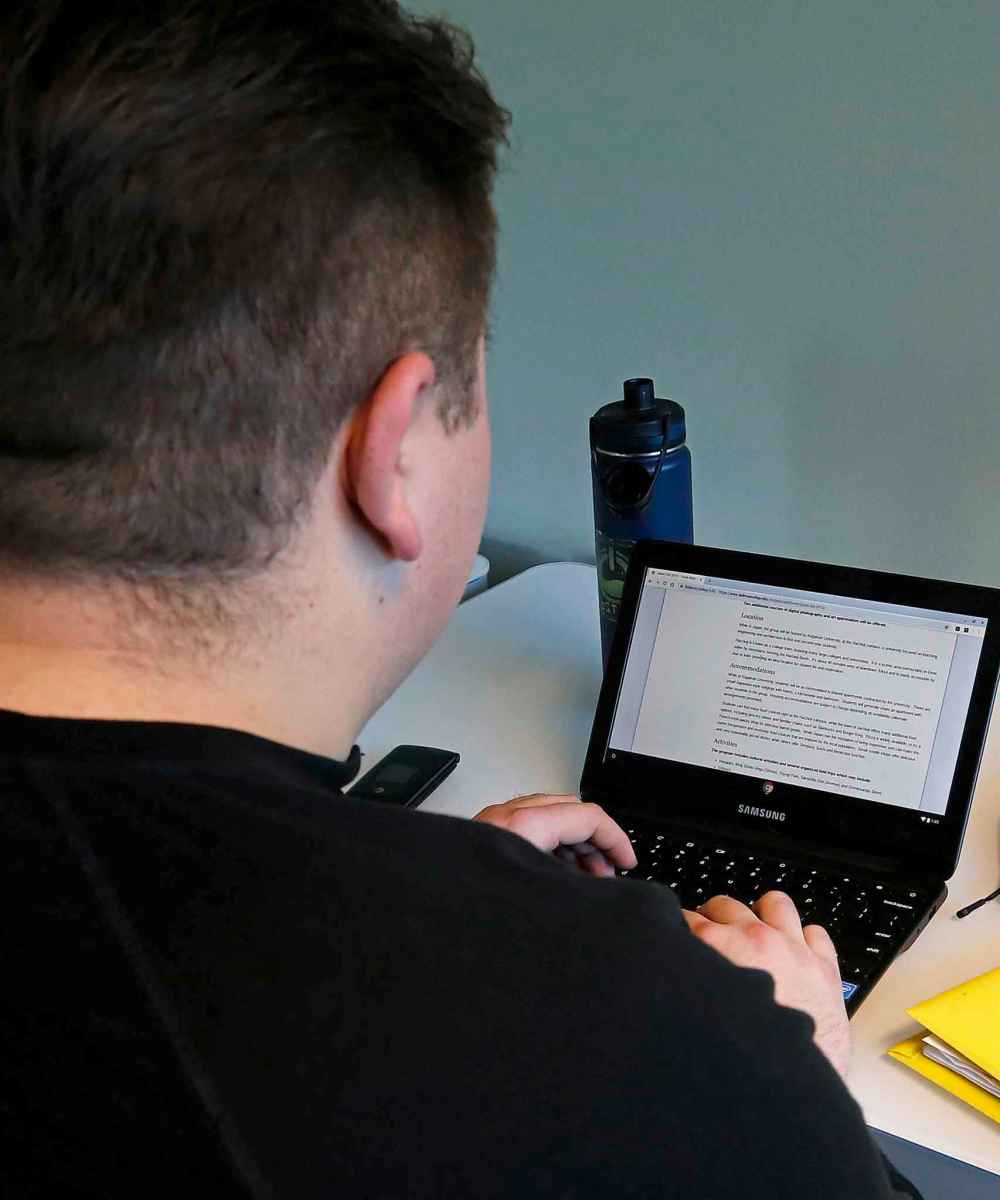
Jason, a 24-year-old tech addict from New York state, works on a laptop in Bellevue, Wash., at the headquarters of reSTART Life, a residential program for adolescents and adults who have serious issues with excessive tech use, including video games. Jason came to reSTART several months ago because excessive use of video games had become a problem.
CP Jason, a 24-year-old tech addict from New York state, works on a laptop in Bellevue, Wash., at the headquarters of reSTART Life, a residential program for adolescents and adults who have serious issues with excessive tech use, including video games. Jason came to reSTART several months ago because excessive use of video games had become a problem. "I knew I'd have to change or I'd end up killing myself," said Jason, who is now living independently, has a job and is able to use some technology. He plans to start his first pre-med class, biology, in January. (AP Photo/Martha Irvine)

It can be a taboo subject in an industry that frequently faces criticism for using “persuasive design,” intentionally harnessing psychological concepts to make tech all the more enticing. That’s why the 27-year-old who works at the tech company spoke on condition that his identity not be revealed. He fears that speaking out could hurt his fledgling career.

“I stay in the tech industry because I truly believe that technology can help other people,” the young man says. He wants to do good.

But as his co-workers huddle nearby, talking excitedly about their latest video game exploits, he puts on his headphones, hoping to block the frequent topic of conversation in this tech-centric part of the world.

Even the computer screen in front of him could lead him astray. But he digs in, typing determinedly on his keyboard to refocus on the task at hand.

___

The demons are not easy to wrestle for this young man, who was born in 1991, the very year the World Wide Web went public.

As a toddler, he sat on his dad’s lap as they played simple video games on a Mac Classic II computer. Together in their Seattle area home, they browsed the internet on what was then a ground-breaking new service called Prodigy. The sound of the bouncy, then high-pitched tones of the dial-up connection are etched in his memory.

By early elementary school, he got his first Super Nintendo system and fell in love with “Yoshi’s Story,” a game where the main character searched for “lucky fruit.”

As he grew, so did one of the world’s major tech hubs. Led by Microsoft, it rose from the nondescript suburban landscape and farm fields here, just a short drive from the home he still shares with his mom, who split from her husband when their only child was 11.

The boy dreamt of being part of this tech boom and, in eighth grade, wrote a note to himself. “I want to be a computer engineer,” it read.
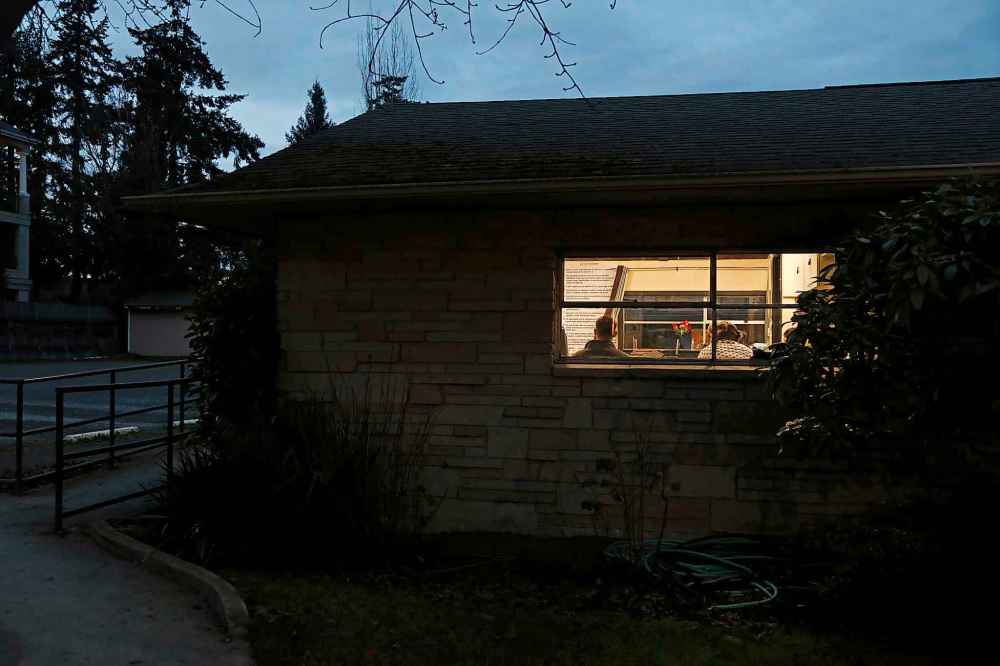
Young men gather to talk after a 12-step meeting for Internet & Tech Addiction Anonymous in Bellevue, Wash. The meeting is run much like other 12-step meetings for addicts, but the focus is video games, devices and internet content that has become a life-harming distraction. The Seattle area has become a hub for treatment of extreme tech use. (AP Photo/Martha Irvine)

Very bright and with a head full of facts and figures, he usually did well in school. He also took an interest in music and acting but recalls how playing games increasingly became a way to escape life — the pain he felt, for instance, when his parents divorced or when his first serious girlfriend broke his heart at age 14. That relationship still ranks as his longest.

“Hey, do you wanna go out?” friends would ask.

“No, man, I got plans. I can’t do it this weekend. Sorry,” was his typical response, if he answered at all.

“And then I’d just go play video games,” he says of his adolescent “dark days,” exacerbated by attention deficit disorder, depression and major social anxiety.

Even now, if he thinks he’s said something stupid to someone, his words are replaced with a verbal tick – “Tsst, tsst” — as he replays the conversation in his head.

“There’s always a catalyst and then it usually bubbles up these feelings of avoidance,” he says. “I go online instead of dealing with my feelings.”

He’d been seeing a therapist since his parents’ divorce. But attending college out of state allowed more freedom and less structure, so he spent even more time online. His grades plummeted, forcing him to change majors, from engineering to business.

Eventually, he graduated in 2016 and moved home. Each day, he’d go to a nearby restaurant or the library to use the Wi-Fi, claiming he was looking for a job but having no luck.

Instead, he was spending hours on Reddit, an online forum where people share news and comments, or viewing YouTube videos. Sometimes, he watched online porn.

Even now, his mom doesn’t know that he lied. “I still need to apologize for that,” he says, quietly.
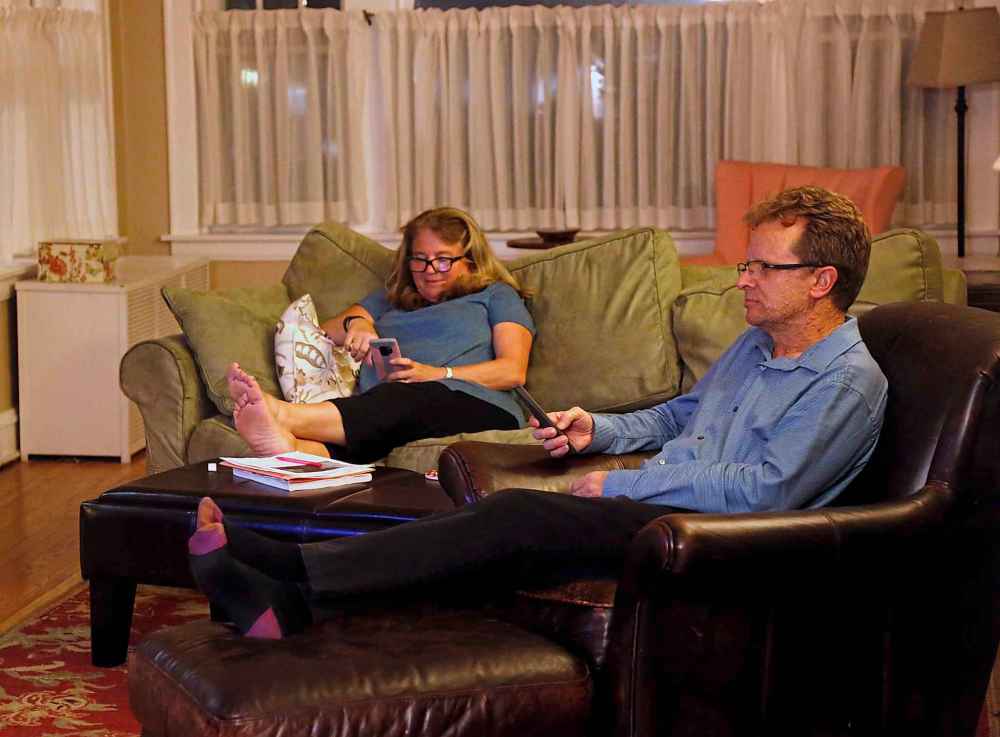
In this Sept. 25, 2018, photo, Barb Hailey, left, checks her phone while her husband, Allen Hailey watches TV in their Chicago home. Like a lot of parents, they use their phones for work and fun, something their boys like to point out when they try to limit the boys' screen time. (AP Photo/Martha Irvine)

___

The apologies will come later, in Step 9 of his 12-step program, which he found with the help of a therapist who specializes in tech addiction. He began attending meetings of the local group called Internet & Tech Addiction Anonymous in the fall of 2016 and landed his current job a couple months later.

For a while now, he’s been stuck on Step 4 — the personal inventory — a challenge to take a deep look at himself and the source of his problems. “It can be overwhelming,” he says.

The young men at the recent 12-step meeting understand the struggle.

“I had to be convinced that this was a ‘thing,'” says Walker, a 19-year-old from Washington whose parents insisted he get help after video gaming trashed his first semester of college. He and others from the meeting agreed to speak only if identified by first name, as required by the 12-step tenets.

That’s where facilities like reSTART come in. They share a group home after spending several weeks in therapy and “detoxing” at a secluded ranch. One recent early morning at the ranch outside Carnation, Washington, an 18-year-old from California named Robel was up early to feed horses, goats and a couple of farm cats — a much different routine than staying up late to play video games. He and other young men in the house also cook meals for one another and take on other chores.

Eventually, they write “life balance plans,” committing to eating well and regular sleep and exercise. They find jobs and new ways to socialize, and many eventually return to college once they show they can maintain “sobriety” in the real world. They make “bottom line” promises to give up video games or any other problem content, as well as drugs and alcohol, if those are issues. They’re also given monitored smartphones with limited function — calls, texts and emails and access to maps.

“It’s more like an eating disorder because they have to learn to use tech,” just as anorexics need to eat, says Hilarie Cash, chief clinical officer and another co-founder at reSTART, which opened nearly a decade ago. They’ve since added an adolescent program and will soon offer outpatient services because of growing demand.

The young tech worker, who grew up just down the road, didn’t have the funds to go to such a program — it’s not covered by insurance, because tech addiction is not yet an official diagnosis.

But he, too, has apps on his phone that send reports about what he’s viewing to his 12-step sponsor, a fellow tech addict named Charlie, a 30-year-old reSTART graduate.

In this Monday, Dec. 10, 2018, photo, Robel, an 18-year-old tech addict from California, leaves a barn after helping feed animals at the Rise Up Ranch outside rural Carnation, Wash. The ranch is a starting point for clients like Robel who come to reSTART Life, a residential program for adolescents and adults who have serious issues with excessive tech use, including video games. The organization, which began about a decade ago, also is adding outpatient services due to high demand. (AP Photo/Martha Irvine)

At home, the young man also persuaded his mom to get rid of Wi-Fi to lessen the temptation. Mom struggles with her own addiction — over-eating — so she’s tried to be as supportive as she can.

It hasn’t been easy for her son, who still relapses every month or two with an extended online binge. He’s managed to keep his job. But sometimes, he wishes he could be more like his co-workers, who spend a lot of their leisure time playing video games and seem to function just fine.

“Deep down, I think there’s a longing to be one of those people,” Charlie says.

That’s true, the young man concedes. He still has those days when he’s tired, upset or extremely bored — and he tests the limits.

He tells himself he’s not as bad as other addicts. Charlie knows something’s up when his calls or texts aren’t returned for several days, or even weeks.

“Then,” the young man says, “I discover very quickly that I am actually an addict, and I do need to do this.”

Having Charlie to lean on helps. “He’s a role model,” he says.

“He has a place of his own. He has a dog. He has friends.”

That’s what he wants for himself.

___
In this Monday, Dec. 10, 2018, photo, Jason, a 24-year-old tech addict from New York state, works on a laptop in Bellevue, Wash., at the headquarters of reSTART Life, a residential program for adolescents and adults who have serious issues with excessive tech use, including video games. Jason came to reSTART several months ago because excessive use of video games had become a problem.
In this Monday, Dec. 10, 2018, photo, Jason, a 24-year-old tech addict from New York state, works on a laptop in Bellevue, Wash., at the headquarters of reSTART Life, a residential program for adolescents and adults who have serious issues with excessive tech use, including video games. Jason came to reSTART several months ago because excessive use of video games had become a problem. "I knew I'd have to change or I'd end up killing myself," said Jason, who is now living independently, has a job and is able to use some technology. He plans to start his first pre-med class, biology, in January. (AP Photo/Martha Irvine)

Online:

Internet & Tech Addiction Anonymous: http://www.netaddictionanon.com

reSTART Life: https://netaddictionrecovery.com

Children and Screens: http://www.childrenandscreens.com

___

Martha Irvine, an AP national writer and visual journalists, can be reached at mirvine@ap.org or at http://twitter.com/irvineap


Report Error Submit a Tip

More Stories

Today’s horoscope

Georgia Nicols 4 minute read Preview

Today’s horoscope

Georgia Nicols 4 minute read 2:00 AM CDT

MOON ALERT: After 9 a.m. today there are no restrictions to shopping or important decisions. The moon is in Capricorn.

ARIES (March 21-April 19)

You are direct, proactive and quick to act. You shouldn’t second-guess anything, especially instructions or orders from authority figures — bosses, parents, teachers, VIPs and even the police. You might misread their intentions? Postpone important decisions.

TAURUS (April 20-May 20)

Read
2:00 AM CDT

Up to the challenge

Zoe Pierce 3 minute read Preview

Up to the challenge

Zoe Pierce 3 minute read Yesterday at 6:13 PM CDT

There may not be another restaurant in Manitoba that can say it has welcomed visitors from as many communities across the province and beyond as the Somerset Food Bar & Lounge has this summer.

In just over a two week span, visitors from more than 100 towns have come out to the family-owned restaurant tucked away in Somerset, a community of roughly 450 people in the Pembina Valley 130 kilometres southwest of Winnipeg.

It started as a challenge, “60 Towns in 60 Days,” where the restaurant wanted to document how many different places they could reach, as it often sees people travelling across Canada stop at the restaurant. The goal was also to encourage people to make a drive they normally wouldn’t.

“The more we started sharing, the more people really started getting behind it, and it turned into this really big thing fairly quickly,” said Jay Friesen, restaurant manager.

Read
Yesterday at 6:13 PM CDT

'Hi, my name is - - - , and I'm addicted to tech'

Martha Irvine, The Associated Press 12 minute read Preview

'Hi, my name is - - - , and I'm addicted to tech'

Martha Irvine, The Associated Press 12 minute read Thursday, Dec. 27, 2018

BELLEVUE, Wash. - The young men sit in chairs in a circle in a small meeting room in suburban Seattle and introduce themselves before they speak. It is much like any other 12-step meeting — but with a twist.

"Hi, my name is," each begins. Then something like, "and I'm an internet and tech addict."

The eight who've gathered here are beset by a level of tech obsession that's different than it is for those of us who like to say we're addicted to our phones or an app or some new show on a streaming video service. For them, tech gets in the way of daily functioning and self-care. We're talking flunk-your-classes, can't-find-a-job, live-in-a-dark-hole kinds of problems, with depression, anxiety and sometimes suicidal thoughts part of the mix.

There's Christian, a 20-year-old college student from Wyoming who has a traumatic brain injury. His mom urged him to seek help because he was "medicating" his depression with video games and marijuana.

Read
Thursday, Dec. 27, 2018

Hospital window smasher gets 90 days in jail

Tessa Adamski 4 minute read Yesterday at 2:01 AM CDT

BRANDON — A 35-year-old man from The Pas was sentenced to 90 days in jail after he admitted to smashing a garage window in the ambulance bay of the Brandon hospital while intoxicated.

James Constant pleaded guilty in Brandon provincial court on Thursday to mischief under $5,000 and breaching a probation order that prohibited him from possessing weapons. Two additional charges, involving failing to comply with a probation order and possessing a dangerous weapon, were stayed.

On July 15, Constant was taken to the Brandon Regional Health Centre by ambulance after he overdosed and became “aggressive” and “unco-operative” with paramedics, says an agreed statement of facts read in court by Crown attorney Rich Lonstrup.

“He took a piece of wood and smashed the garage-door window within the ambulance bay,” Lonstrup said.

Trailblazer returns to share success, inspire next generation

Grace Penner 6 minute read Preview

Trailblazer returns to share success, inspire next generation

Grace Penner 6 minute read Yesterday at 5:14 PM CDT

Starstruck kids and fans zigzagged throughout the rink, anxiously waiting to get an autograph from Kati Tabin and to see their role model on the same side of the glass.

Tabin, Montreal Victoire defender and Team Canada silver medallist, on Saturday came home to the rink where it all began, the Oakbank Community Club. She brought the PWHL championship trophy, the Walter Cup, won in her third season with the club, as well as her 2026 Milan Cortina Olympic medal.

The arena was packed to the brim with fans from all over coming to see Tabin — the local player who made history in women’s hockey. Hundreds of enthusiasts of all ages lined up with their Victoire or Team Canada merchandise, some waiting over two hours to see their idol.

Eight-year-old Loxley Cierzan came with her mother, Ainsley, and other family members to meet the one and only Tabin. Cierzan has loved seeing other girls grace the ice and play the competitive sport she adores. When the PWHL takeover stopped in Winnipeg in March, she not only got to watch the game but also a practice beforehand where Tabin signed her Victoire hat.

Read
Yesterday at 5:14 PM CDT

Automation reaches new heights on farm

Laura Rance-Unger 4 minute read Preview

Automation reaches new heights on farm

Laura Rance-Unger 4 minute read Yesterday at 2:01 AM CDT

LANGHAM, Sask. — The thousands of farmers from across the Prairies who flock to the annual Ag in Motion show every July seem oblivious to the possibility the technology on display could one day replace many of them.

Families with children in tow, Hutterite colony workers, grandparents and young couples just starting out roamed through the 600 or more exhibitor displays, amazed at how everything about farming just keeps getting bigger, more efficient and increasingly more automated.

It’s now possible to seed using a 100-foot-wide drill — a 12-foot jump over the widest available a few years ago — provided the farmer can afford a tractor with enough horsepower to pull it. Those sell for around $850,000 and up.

Granted, the number of farms with enough acres to justify that kind of width and drawing power is still relatively small, but farms continue to grow. And it’s no secret the number of people who have the interest, skills and financial wherewithal to run them continues to shrink.

Read
Yesterday at 2:01 AM CDT