Tips to avoid mishandling food so you can prolong shelf life
Advertisement
Read this article for free:
or
Already have an account? Log in here »
To continue reading, please subscribe:

Digital Subscription
One year of digital access for only $205*
- Enjoy unlimited reading on winnipegfreepress.com
- Read the E-Edition, our digital replica newspaper
- Access News Break, our award-winning app
- Play interactive puzzles
*First annual payment billed as $205.00 + GST for one year. This annual subscription will automatically renew at $233.00 + GST every 52 weeks (10% off the regular annual price of $259.35). Offer available to new and qualified returning subscribers only. Cancel any time.
To continue reading, please subscribe:
Add Free Press access to your Brandon Sun subscription for only an additional
$1 for the first 4 weeks*
- Enjoy unlimited reading on winnipegfreepress.com
- Read the E-Edition, our digital replica newspaper
- Access News Break, our award-winning app
- Play interactive puzzles
*Your next Brandon Sun subscription payment will increase by $1.00 and you will be charged $17.95 plus GST for four weeks. After four weeks, your payment will increase to $24.95 plus GST every four weeks.
Read unlimited articles for free today:
or
Already have an account? Log in here »
Hey there, time traveller!
This article was published 14/03/2016 (3862 days ago), so information in it may no longer be current.
Best-before dates are put on packages to indicate a food’s peak quality. But once a food item has been opened, the best-before date is no longer valid.
You can prolong a food’s freshness by handling and storing it properly, says Getty Stewart, a professional home economist in Winnipeg.
The time to look at the best-before date is when you’re shopping, says Stewart.
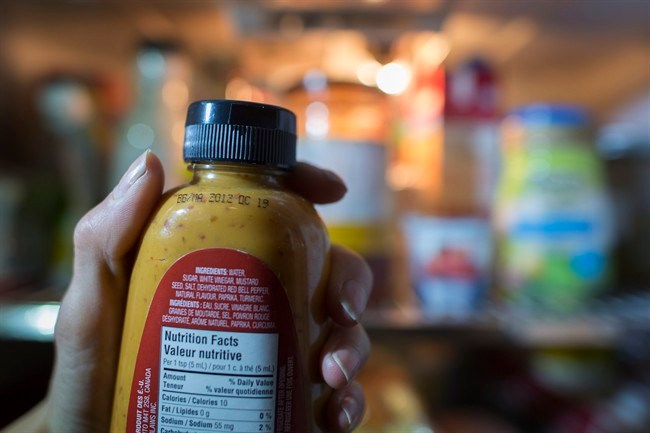
To save money, you can consider buying items marked down because the best-before date is very close. If you can use or freeze the product right away, you can often get some great deals and still get quality food.
“Retailers are allowed to sell products after the best-before date. Retailers are compelled by law to sell food that is safe. Those two rules would be in the mind of a retailer so they know the dairy — which is probably a little more sensitive — there’s no sense putting a sale on the milk that’s already past the best-before date, but the can of tuna or the salad dressing that is close to the best-before date, they could sell that,” she adds.
Here are some other tips from Stewart:
— At home, set up your own inventory control system. Keep a marker on hand to indicate the date an item is opened. Eat the oldest items first before buying more.
— Buy smaller jars so you can use them up while the contents are of better quality.

— Store food at the correct temperature. “If I’m serving milk with dinner I’m better off to pour the milk into everybody’s glasses, and put the jug of milk back in the fridge. I want to limit the amount of time that my food is in that bacterial danger zone of 4 to 60 degrees Celsius” (40 F to 140 F), says Stewart.
— Don’t put the whole container of something like sour cream on the table during a meal. Spoon some into a dish and put the container back into the fridge. Provide a serving utensil so diners aren’t “double dipping” with their own cutlery, which adds bacteria and makes it spoil more quickly.