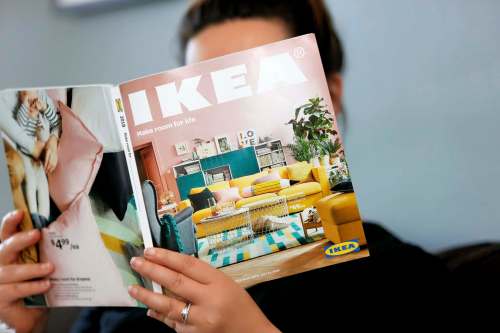
Home, Swede home
No-tech Ikea catalogue beguiles with promises of affordable chic

Advertisement
Read this article for free:
or
Already have an account? Log in here »
To continue reading, please subscribe:

Digital Subscription
One year of digital access for only $205*
- Enjoy unlimited reading on winnipegfreepress.com
- Read the E-Edition, our digital replica newspaper
- Access News Break, our award-winning app
- Play interactive puzzles
*First annual payment billed as $205.00 + GST for one year. This annual subscription will automatically renew at $233.00 + GST every 52 weeks (10% off the regular annual price of $259.35). Offer available to new and qualified returning subscribers only. Cancel any time.
To continue reading, please subscribe:
Add Free Press access to your Brandon Sun subscription for only an additional
$1 for the first 4 weeks*
- Enjoy unlimited reading on winnipegfreepress.com
- Read the E-Edition, our digital replica newspaper
- Access News Break, our award-winning app
- Play interactive puzzles
*Your next Brandon Sun subscription payment will increase by $1.00 and you will be charged $17.95 plus GST for four weeks. After four weeks, your payment will increase to $24.95 plus GST every four weeks.
Read unlimited articles for free today:
or
Already have an account? Log in here »
Hey there, time traveller!
This article was published 29/08/2017 (3245 days ago), so information in it may no longer be current.
A confession: I love the Ikea catalogue.
I’m always excited to see it when it arrives in my mailbox in August and I don’t immediately toss it in the recycling.
And I’m not alone.
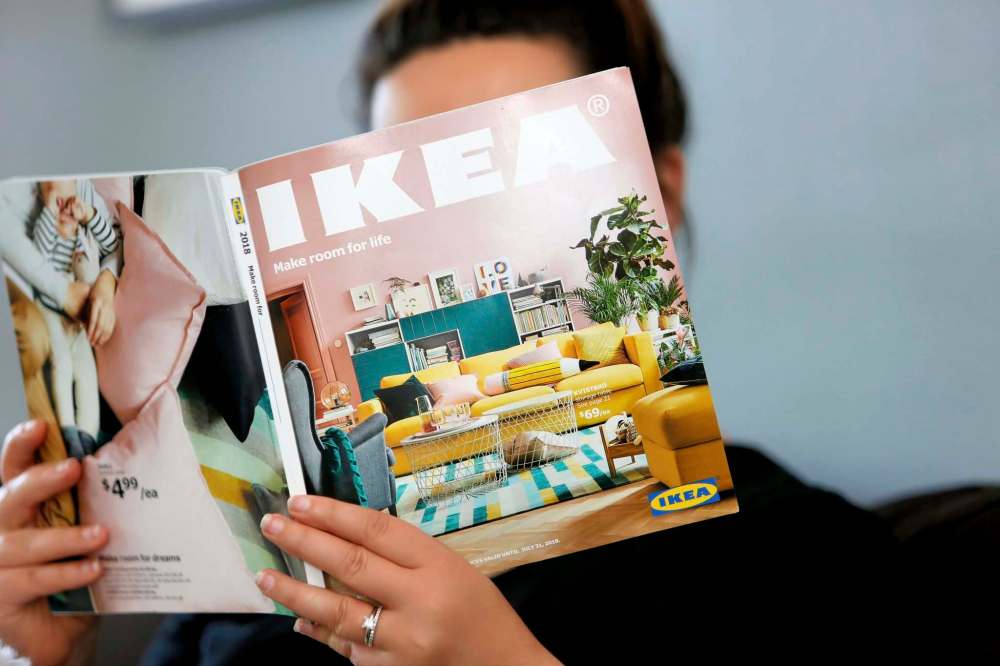
The annual catalogue from the Swedish furniture giant is said to be among the world’s most widely distributed books — right up there with the Bible and the Harry Potter series — with a print run this year of 203 million copies. It’s also reliably controversial; in 2012, Ikea came under fire for Photoshopping out all the women in its Saudi Arabian edition, and then there was the whole “well-endowed greyhound” flap of 2007. (It was his leg.)
Still, that retail catalogues are even printed in 2017 — let alone anticipated, reviewed and discussed — runs contrary to everything we’d assume about this era of “pivoting to video” and digital marketing. But, as Fang Wan, a professor of marketing at the University of Manitoba, points out, what makes the catalogue’s endurance interesting has little to do with its analogue nature and more to do with consumer behaviour.
“Consumers are vigilant about any selling intention; if it’s persuasive, or associated with selling, they instantly become resistant,” she says. “…And yet, a catalogue is blatantly selling, but people look forward to it. It’s a counterintuitive phenomenon.”
An anticipated, talked-about catalogue isn’t the sole domain of Ikea. Many people of a certain vintage has warm, fuzzy memories of cobbling together their Christmas lists from the hefty Sears Wish Book, which was first published in 1934 and became just as traditional as leaving milk and cookies for Santa. (Sears is proof that not even a blockbuster catalogue can save a business; the company filed for bankruptcy protection in June.)
So what does it take to create an anticipated catalogue? Wan says it’s about the calibre of the book and the strength of the brand putting it out.
For Ikea’s part, “it’s designer taste, designer style, made affordable and made so accessible,” Wan says. “They’re leading the trend, and we’re suckers for newness. So, when I get a catalogue, what I’m actually getting is a sense of what’s up, what’s new, what should I do?”
Indeed, the 2018 Ikea catalogue feels strikingly “how-to” focused, with interior designer tips on how to style a shelf, or how to mix and match patterns.
There’s even a spread dedicated to do-it-yourself projects, even though almost everything from Ikea is technically already a do-it-yourself project. The company has obviously gotten hip to the fact that so-called “Ikea hacks” are the bread and butter of budget design blogs, so it makes sense it would claim some ownership over that type of content.
More than that, though, Ikea is acknowledging a basic truth about affordable, mass-produced furniture: the greatest hits — Lack wall shelves, Hemnes bedside tables or, what’s destined to be this year’s biggie, the cover-gracing Kvistbro storage table (which I already own) — tend to enjoy a certain level of ubiquity. “You’re unique — and your Ikea can be, too,” reads the headline. The spread features a woman with mermaid-hued hair and fashionable eyewear, obviously Instagramming a plant. We might be suckers for newness, but we’re also suckers for uniqueness.
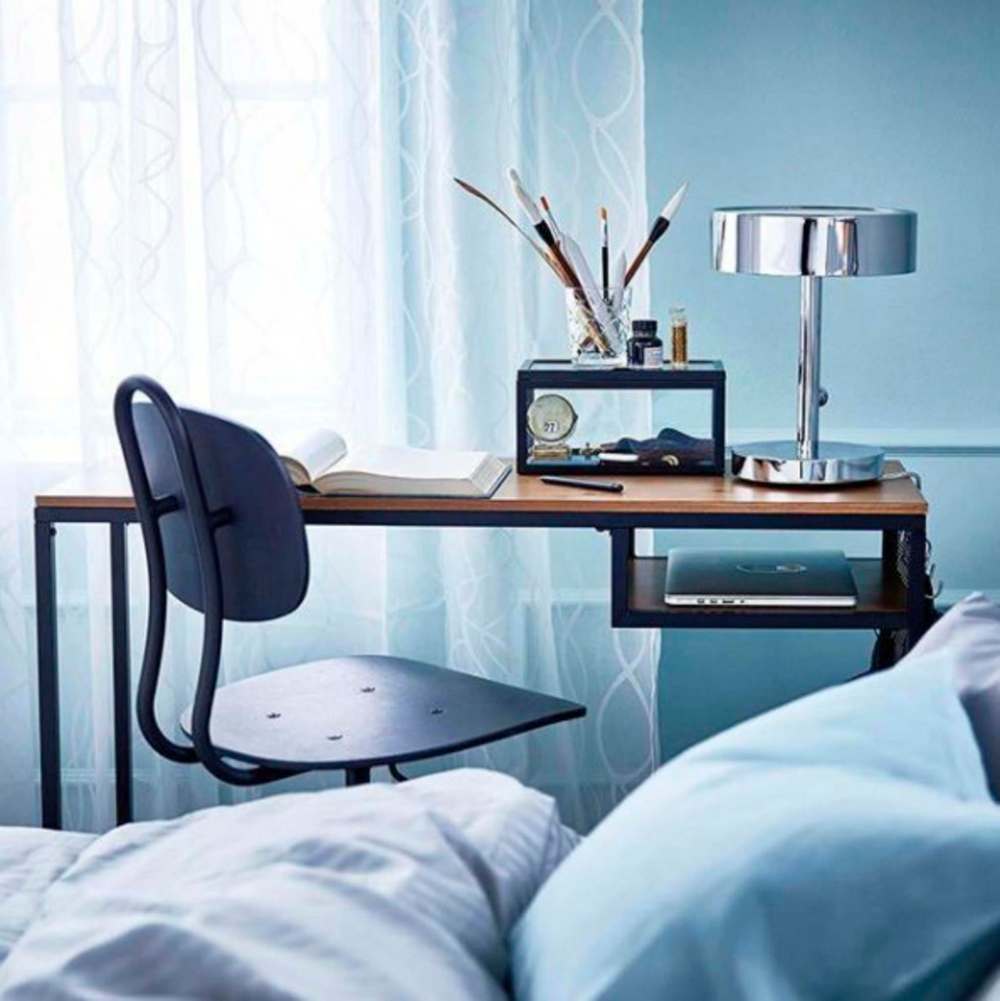

As Wan says, catalogues are no longer about inventory. “It’s about lifestyle,” she says. “It’s exactly like a magazine. It’s very high on visuals and esthetics. The more you think about it, these catalogues become brand magazines.”
And like magazines, catalogues, at their heart, are aspirational. Long before Instagram, Ikea’s been offering up images of perfectly curated, Scandi-chic spaces that look “lived in” but still meticulously pulled together. It’s just easier to imagine yourself — albeit a tidier, more organized version of yourself — inhabiting Ikea’s glossy pages because Ikea’s products are attainable.
But the Ikea catalogue isn’t just selling cost-effective furniture whose at-home assembly will test the very fibre of your relationships. The Ikea catalogue is selling a fantasy — a fantasy in which you do yoga in front of an impressive gallery wall, or lead living-room jam sessions with your impossibly cute musical family. A fantasy in which a “mess” is a single stuffed alligator on the floor. A fantasy in which a put-together space means you are a put-together person living a put-together life.
Of course, this is the part where I’m supposed to say something profound about how real life is sloppy and imperfect, and there’s a limit on just how life-changing a new organizational system can be. But most of us know that already. The reason I retreat into the oasis of order and calm as presented by the Ikea catalogue is the same reason I imagine myself cooking elaborate meals in kitchens from Nancy Meyers rom-coms: sometimes, it’s just fun to pretend.
jen.zoratti@freepress.mb.caTwitter: @JenZoratti
Jen Zoratti is a columnist and feature writer working in the Arts & Life department, as well as the author of the weekly newsletter NEXT. A National Newspaper Award finalist for arts and entertainment writing, Jen is a graduate of the Creative Communications program at RRC Polytech and was a music writer before joining the Free Press in 2013. Read more about Jen.
Every piece of reporting Jen produces is reviewed by an editing team before it is posted online or published in print – part of the Free Press‘s tradition, since 1872, of producing reliable independent journalism. Read more about Free Press’s history and mandate, and learn how our newsroom operates.
Our newsroom depends on a growing audience of readers to power our journalism. If you are not a paid reader, please consider becoming a subscriber.
Our newsroom depends on its audience of readers to power our journalism. Thank you for your support.
Jen Zoratti is a columnist and feature writer working in the Arts & Life department, as well as the author of the weekly newsletter NEXT. A National Newspaper Award finalist for arts and entertainment writing, Jen is a graduate of the Creative Communications program at RRC Polytech and was a music writer before joining the Free Press in 2013. Read more about Jen.
Every piece of reporting Jen produces is reviewed by an editing team before it is posted online or published in print – part of the Free Press‘s tradition, since 1872, of producing reliable independent journalism. Read more about Free Press’s history and mandate, and learn how our newsroom operates.
Our newsroom depends on a growing audience of readers to power our journalism. If you are not a paid reader, please consider becoming a subscriber.
Our newsroom depends on its audience of readers to power our journalism. Thank you for your support.
Advertisement Advertise With Us
Advertisement Advertise With Us