How to have a good death
Panel aims to tackle stigma around talking about dying

Advertisement
Read this article for free:
or
Already have an account? Log in here »
To continue reading, please subscribe:
Digital Subscription
One year of digital access for only $1.44 a week*
- Enjoy unlimited reading on winnipegfreepress.com
- Read the E-Edition, our digital replica newspaper
- Access News Break, our award-winning app
- Play interactive puzzles
*Billed as $5.77 plus GST every four weeks. After 52 weeks, price increases to the regular rate of $19.95 plus GST every four weeks. Offer available to new and qualified returning subscribers only. Cancel any time.
To continue reading, please subscribe:
Add Free Press access to your Brandon Sun subscription for only an additional
$1 for the first 4 weeks*
- Enjoy unlimited reading on winnipegfreepress.com
- Read the E-Edition, our digital replica newspaper
- Access News Break, our award-winning app
- Play interactive puzzles
*Your next Brandon Sun subscription payment will increase by $1.00 and you will be charged $17.95 plus GST for four weeks. After four weeks, your payment will increase to $24.95 plus GST every four weeks.
Read unlimited articles for free today:
or
Already have an account? Log in here »
Hey there, time traveller!
This article was published 09/02/2019 (2811 days ago), so information in it may no longer be current.
When Angelika Jantz’s mother died in the spring of 2017 at the age of 87, her family made a decision that seems at once both perfectly natural and totally radical.
They would care for her body at home.
“I think it was something, as a family, we had different levels of comfort (about),” Jantz, 58, says. “We entered into these conversations with a lot of love and care. We asked questions about our motivation — are we doing this for ourselves or mom? But I think, overall, we embraced the idea that we could hold on to her, that she wouldn’t be dealt with by other people. It eased the letting go. It was a final act of love for her.”
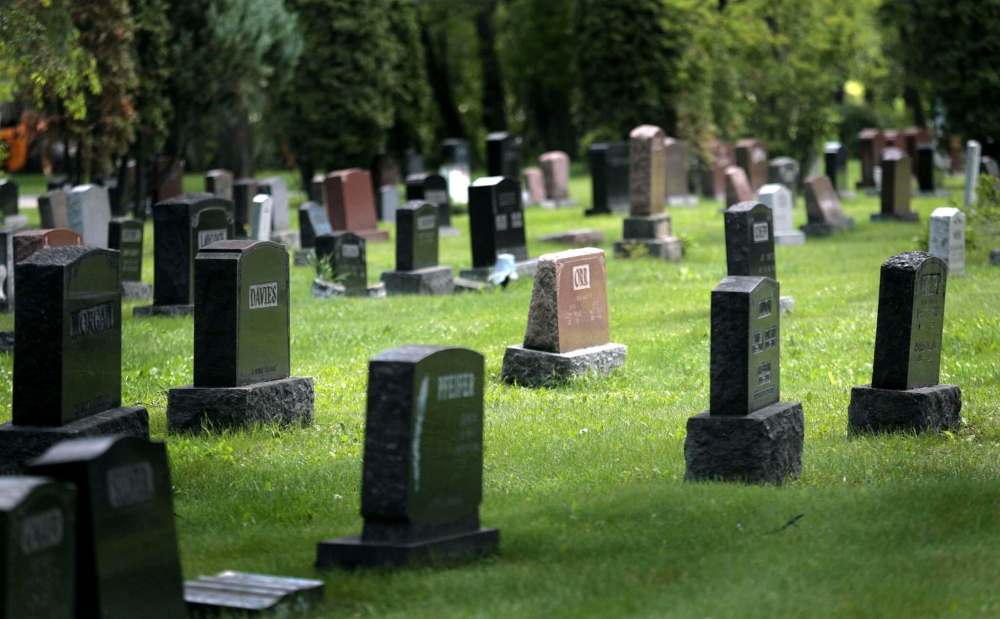
They washed and dressed her, and had a viewing for family and friends. “A few of her peers who saw her said, ‘You know, we used to do this. We used to know how to do this,’” Jantz says.
“You start to feel like there’s something wrong with the way we’ve corporatized death. It used to be something that was so a part of a community’s life — accepting death, accepting that it was normal, being close to the person who’s dying and caring for them after their death.”
Jantz will be sharing her experiences on a panel on Monday evening called “Let’s Talk About Death… It Won’t Kill You.” Presented by Canadian Mennonite University as part of its Face2Face series, the discussion will take place at 7 p.m. in Marpeck Commons at 2299 Grant Ave. Admission is free.
Joining Jantz are fellow panelists Rick Zerbe Cornelsen, a casket and urn maker; Doug Koop, a spiritual health practitioner; and Michael Boyce, associate professor of English and film studies at Booth University College. The 90-minute conversation will be moderated by David Balzer, assistant professor of communications and media at CMU. The goal? Have an open and frank discussion about a topic that remains taboo.
“The committee planning of the event was as fascinating as what I think the evening will be,” Balzer says. “As we started talking about death, there were these really poignant moments. You don’t always get to hear the university president reflect on how she makes sense of death and dying. As we started wading into, ‘How does your family deal with death?’ and ‘what has your journey been?’ it got bigger and bigger and much more interesting.”
Being aware of our own mortality is one of the defining things about being human. And yet, there’s still a lot of fear, mystery and cognitive dissonance around the subject. “On one hand, it’s so commonplace — it’s not like we don’t see images of death — but there’s a disconnect and artificiality about it that’s different than when I think about my own mortality. We’re trying to close that gap a little bit.”
But why are we so afraid to even talk about death? A few years ago, I interviewed Caitlin Doughty, the American bestselling author, mortician and founder of The Order of the Good Death, a death-acceptance organization, for a piece about women working in death care.
“We’re still reticent to talk about death because of the systems around us,” she said at the time. “We have a broken relationship with the funeral industry, the health-care and end-of-life industries, the meat and food production industries. All of our death is mediated and hidden. Until we have more open dialogue with actual death, we will continue to be terrified of the bogeyman under our bed we can’t quite make out in the dark.”
Indeed, death, not unlike birth, has become less visible in modern society. The process of death became medicalized and removed from the home, outsourced to capitalist systems that don’t always inspire trust.
Balzer, for example, recalls accompanying his mother, who is very much alive, to a cemetery to start making her own end-of-life arrangements.
“It was, frankly, one of the worst experiences I’ve ever had,” he says. “It was this horrible, upselling-of-tombstones experience. It wasn’t dignifying to her at all. And it was just so bizarre. They weren’t even listening to the human in the room anymore.”
Talking about death makes it less scary, which is the ethos of the death café movement. Based on Swiss sociologist Bernard Crettaz’s “café mortels,” Death cafés are informal events where people can drink tea, eat cake and talk death. Jantz has participated in death cafés here in Winnipeg, and they have been clarifying for her.
“In order for us to be open to death, we have to not see it as not a failure of some kind, or something to be avoided or something that went wrong,” she says. “Obviously there are tragedies, but death is a very natural thing.”

As humans, we tend to focus on what it means to have good life. But it’s equally important to think about what it means to have a good death. And we can’t do that without talking about it, first.
“Talking about death not only makes it more normal, but it frees us up to live our life now, too,” Jantz adds.
“We were sitting at a death café and someone said, ‘When I’m dying, I want my home to be filled with love. I want to drink wine and have people around and enjoy each other’s company’ — and we were saying, ‘Isn’t that what we all want now?’ Talking about death helps us remember what is essential about being alive.”
jen.zoratti@freepress.mb.ca
Twitter: @JenZoratti
Jen Zoratti is a columnist and feature writer working in the Arts & Life department, as well as the author of the weekly newsletter NEXT. A National Newspaper Award finalist for arts and entertainment writing, Jen is a graduate of the Creative Communications program at RRC Polytech and was a music writer before joining the Free Press in 2013. Read more about Jen.
Every piece of reporting Jen produces is reviewed by an editing team before it is posted online or published in print – part of the Free Press‘s tradition, since 1872, of producing reliable independent journalism. Read more about Free Press’s history and mandate, and learn how our newsroom operates.
Our newsroom depends on a growing audience of readers to power our journalism. If you are not a paid reader, please consider becoming a subscriber.
Our newsroom depends on its audience of readers to power our journalism. Thank you for your support.
Jen Zoratti is a columnist and feature writer working in the Arts & Life department, as well as the author of the weekly newsletter NEXT. A National Newspaper Award finalist for arts and entertainment writing, Jen is a graduate of the Creative Communications program at RRC Polytech and was a music writer before joining the Free Press in 2013. Read more about Jen.
Every piece of reporting Jen produces is reviewed by an editing team before it is posted online or published in print – part of the Free Press‘s tradition, since 1872, of producing reliable independent journalism. Read more about Free Press’s history and mandate, and learn how our newsroom operates.
Our newsroom depends on a growing audience of readers to power our journalism. If you are not a paid reader, please consider becoming a subscriber.
Our newsroom depends on its audience of readers to power our journalism. Thank you for your support.
Advertisement Advertise With Us
Advertisement Advertise With Us