Immune system therapy shows wider promise against cancer
Advertisement
Read this article for free:
or
Already have an account? Log in here »
To continue reading, please subscribe:

Digital Subscription
One year of digital access for only $205*
- Enjoy unlimited reading on winnipegfreepress.com
- Read the E-Edition, our digital replica newspaper
- Access News Break, our award-winning app
- Play interactive puzzles
*First annual payment billed as $205.00 + GST for one year. This annual subscription will automatically renew at $233.00 + GST every 52 weeks (10% off the regular annual price of $259.35). Offer available to new and qualified returning subscribers only. Cancel any time.
To continue reading, please subscribe:
Add Free Press access to your Brandon Sun subscription for only an additional
$1 for the first 4 weeks*
- Enjoy unlimited reading on winnipegfreepress.com
- Read the E-Edition, our digital replica newspaper
- Access News Break, our award-winning app
- Play interactive puzzles
*Your next Brandon Sun subscription payment will increase by $1.00 and you will be charged $17.95 plus GST for four weeks. After four weeks, your payment will increase to $24.95 plus GST every four weeks.
Read unlimited articles for free today:
or
Already have an account? Log in here »
Hey there, time traveller!
This article was published 31/03/2019 (2677 days ago), so information in it may no longer be current.
ATLANTA – A treatment that helps the immune system fight deadly blood cancers is showing early signs of promise against some solid tumors, giving hope that this approach might be extended to more common cancers in the future.
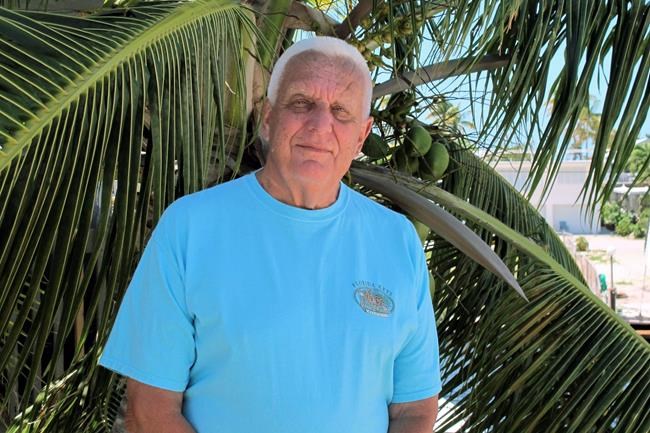
The treatment, called CAR-T therapy, involves genetically modifying some of a patient’s own cells to help them recognize and attack cancer. Richard Carlstrand of Long Key, Florida, had it more than a year ago for mesothelioma, an aggressive cancer of the lining of the lungs.
“We were going into unknown territories” to try this, he said, but now he shows no sign of cancer and “I couldn’t be happier.”
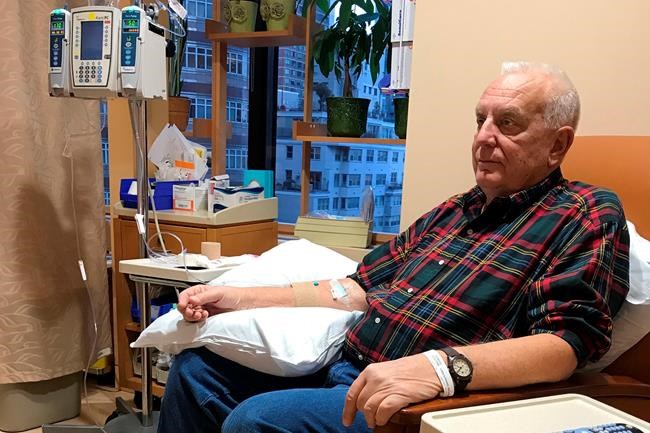
Results on his and other cases were discussed Sunday at an American Association for Cancer Research conference in Atlanta.
The first CAR-T therapies were approved in 2017 for some leukemias and lymphomas. After being altered in the lab, the modified immune system cells are returned to the patient through an IV, which puts them right where the cancer is — in the blood.
But that approach doesn’t work well if the cells have to travel far through the bloodstream to get to tumors in the lung, breast, colon, or other places.
“Solid tumors are notorious for not letting the immune cells enter,” and not enough may make it in to have an effect, said Dr. Prasad Adusumilli of Memorial Sloan Kettering Cancer Center in New York.
A bigger worry is that the proteins on solid tumour cells that these therapies target also are found on normal cells at lower levels, so the therapy might harm them, too.
Adusumilli helped design a new CAR-T to try to avoid these problems and tested it on 19 patients with mesothelioma and two others with lung and breast cancer, respectively, that had spread to the chest lining. About 150,000 patients in the U.S. each year face this situation.
The modified cells were injected directly into the chest where the tumors were. A genetic safety switch was added so a medicine could be given to destroy the cells if they caused harm.
After the therapy, one patient was able to have surgery and radiation, and is doing well 20 months later with no further treatment. Fifteen others were well enough to start on a drug that boosts the immune system in a different way.
Eleven of the 15 have been studied long enough to report results. Two had signs of cancer disappear for about a year, although one later relapsed. Six saw their tumors shrink. Three saw their cancer worsen.
There were no severe side effects although some patients had temporarily low blood counts and fatigue.
Grants from the federal government and foundations paid for the work and a larger study is planned. Sloan Kettering has licensed the treatment to Atara Biotherapeutics and may get payments from it, as may Adusumilli.
A second study tested a different CAR-T therapy in 10 children and adults with advanced sarcomas — cancers that originate in various soft tissues or bones. Unlike other CAR-Ts that are usually given just once, this one was given multiple times, up to 15 in one patient’s case, if there were signs it was helping.
“From a single blood draw we make a large amount of the CAR-T cells and then we freeze them” and give them through an IV as needed, said Dr. Shoba Navai of Baylor College of Medicine in Houston.
Two of the 10 patients had all signs of cancer disappear, one for 17 months and the other for nearly three years, so far. Three others had their disease stabilized. Five worsened despite treatment.
Side effects were similar to the other study. The therapy seems safe “and we have early signs that this treatment approach may help,” Navai said.
Several foundations and charities paid for the work.
“These studies are showing there may be a path forward in solid tumors” with CAR-T therapies, said Dr. Louis Weiner, director of the Georgetown Lombardi Comprehensive Cancer Center and one of the conference leaders. It may hold promise for some cancers of the stomach, breast, colon, lung and other areas, he said.
Cost is a big issue — current CAR-T therapies are around $400,000 but can be made for far less than that in research centres. Doctors say they hope the cost will come down as more come on the market and find their way to wider use.
___
Marilynn Marchione can be followed at http://twitter.com/MMarchioneAP
The Associated Press Health & Science Department receives support from the Howard Hughes Medical Institute’s Department of Science Education. The AP is solely responsible for all content.