‘Just Do it’ slogan had morbid inspiration
Advertisement
Read this article for free:
or
Already have an account? Log in here »
To continue reading, please subscribe:

Digital Subscription
One year of digital access for only $205*
- Enjoy unlimited reading on winnipegfreepress.com
- Read the E-Edition, our digital replica newspaper
- Access News Break, our award-winning app
- Play interactive puzzles
*First annual payment billed as $205.00 + GST for one year. This annual subscription will automatically renew at $233.00 + GST every 52 weeks (10% off the regular annual price of $259.35). Offer available to new and qualified returning subscribers only. Cancel any time.
To continue reading, please subscribe:
Add Free Press access to your Brandon Sun subscription for only an additional
$1 for the first 4 weeks*
- Enjoy unlimited reading on winnipegfreepress.com
- Read the E-Edition, our digital replica newspaper
- Access News Break, our award-winning app
- Play interactive puzzles
*Your next Brandon Sun subscription payment will increase by $1.00 and you will be charged $17.95 plus GST for four weeks. After four weeks, your payment will increase to $24.95 plus GST every four weeks.
Read unlimited articles for free today:
or
Already have an account? Log in here »
Hey there, time traveller!
This article was published 08/09/2018 (2869 days ago), so information in it may no longer be current.
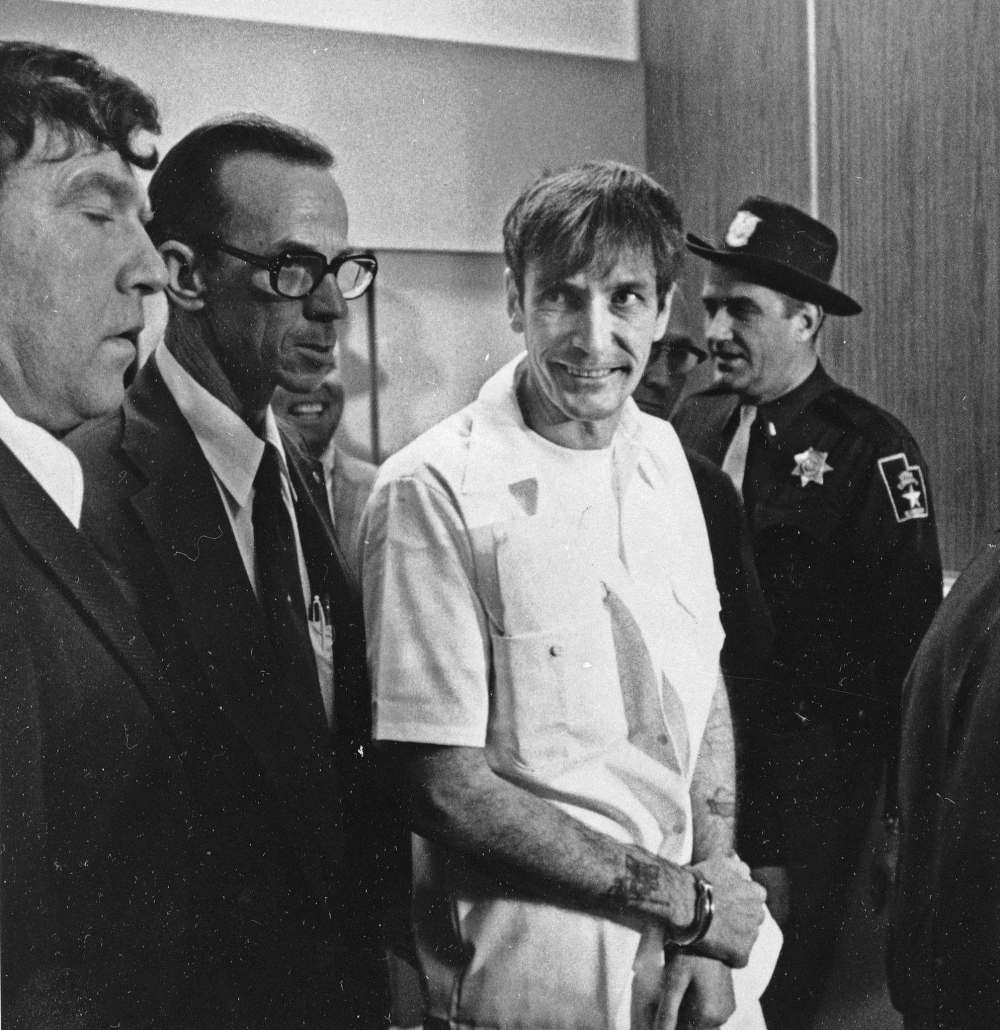
Before Colin Kaepernick and “Just Do It,” there was Gary Gilmore and “Let’s Do It.”
In a plain T-shirt with a bag over his head, Gilmore was strapped into a chair, waiting for a firing squad to execute him at Utah State Prison. It was the morning of Jan. 17, 1977, and Gilmore, convicted of murdering a gas station employee and motel manager in Utah the year before, was to become the first person in the United States to be executed in nearly a decade. The author Norman Mailer wrote in his 1979 Pulitzer Prize-winning novel The Executioner’s Song that shortly before his execution, the 36-year-old Gilmore was asked if he had any last words.
“Let’s do it,” Gilmore reportedly said. As the Washington Post reported at the time, Gilmore did not flinch when he was executed.
The story of Gilmore has been long forgotten by most. But his final words live on in a manner no one would have imagined.
In 1988, Dan Wieden, an advertising executive who co-founded the Wieden+Kennedy agency in Portland, Ore., made something of a morbid pitch to Nike. Long before it became a dominant sports and fashion brand, Nike was struggling in 1987, failing to keep pace with the more fitness-focused approach of Reebok. Like Gilmore, Wieden was a Portland native. He remembered the crimes and the ending.
Wieden said in the 2009 documentary Art & Copy that he looked toward the phrase “do it” and used it as the inspiration for his pitch to Nike.
“Certainly, it wasn’t a question of Dan being inspired by Gary Gilmore, but rather, it was about the ultimate statement of intention,” Liz Dolan, former chief marketing officer at Nike, told the Washington Post. “It had to be personal.”
The idea was “Just Do It.” And seemingly everyone Wieden ran the slogan by hated the idea.
“I went to Nike and (Nike co-founder) Phil Knight said, ‘We don’t need that s—,’” Wieden recalled in 2015 to Dezeen magazine, an architecture and design publication. “I said, ‘Just trust me on this one.’ So they trusted me and it went big pretty quickly.”
Shortly thereafter, one of the first ads in 1988 for “Just Do It” featured Walt Stack, an 80-year-old marathon runner in San Francisco. (Stack died in 1995.) From there, “Just Do It” would become the company’s signature slogan, helping to turn a niche brand into a global multibillion-dollar giant and etching the phrase indelibly into the global memory so that it’s almost interchangeable with the brand.
On Monday, the slogan took another surprising turn. It was announced that Kaepernick, the NFL free agent quarterback whose kneeling during the national anthem in protest of police shootings of unarmed black men ignited a national controversy, will be the face for the 30th-anniversary campaign celebrating Nike’s “Just Do It” slogan. The news comes as Kaepernick, who could be heading to court for his collusion grievance against the NFL, signed a new multi-year deal to keep him with Nike. Response to the Kaepernick news has already created a backlash on social media, as detractors are voicing their displeasure with #NikeBoycott.
“Believe in something,” the ad stated. “Even if it means sacrificing everything.”
Though the slogan attributed to much of the brand’s success, it was not the only reason for the turnaround. Ask Michael Jordan and Mars Blackmon, the cinematic character played by Spike Lee. In February 1988, Jordan and Lee teamed up to release films in support of the Air Jordan shoe line. “Just Do It” was also part of an aggressive marketing campaign in 1988, with Nike spending a reported US$40 million on advertising that year. Still, Jerome Conlon, then the company’s director of brand planning and marketing insights, wrote in 2015 that “Just Do It” represented a major turning point.
“After the launch of Just Do It, Nike brand sales were rejuvenated, increasing 1,000 per cent over the next ten years,” Conlon wrote for Branding Strategy Insider. “And Nike truly stepped into its role as one of the world’s (premier) iconic and soulful brands.”
Wieden said in the 2009 documentary that neither he nor the members of his team gave much thought to the long-term influence of the ad, or the Gilmore connection.
“None of us really paid that much attention,” Wieden said in an interview in Art & Copy. “We thought, yeah, that’d work.”
He added: “I think what happened and it was sort of, like with a lot of things in life, it’s the most inadvertent things you don’t really see. People started reading things into it, much more than sport.”
— Washington Post