Life in plastic not fantastic
Once-niche companies gear up for surge in demand as public opinion turns
Advertisement
Read this article for free:
or
Already have an account? Log in here »
To continue reading, please subscribe:

Digital Subscription
One year of digital access for only $205*
- Enjoy unlimited reading on winnipegfreepress.com
- Read the E-Edition, our digital replica newspaper
- Access News Break, our award-winning app
- Play interactive puzzles
*First annual payment billed as $205.00 + GST for one year. This annual subscription will automatically renew at $233.00 + GST every 52 weeks (10% off the regular annual price of $259.35). Offer available to new and qualified returning subscribers only. Cancel any time.
To continue reading, please subscribe:
Add Free Press access to your Brandon Sun subscription for only an additional
$1 for the first 4 weeks*
- Enjoy unlimited reading on winnipegfreepress.com
- Read the E-Edition, our digital replica newspaper
- Access News Break, our award-winning app
- Play interactive puzzles
*Your next Brandon Sun subscription payment will increase by $1.00 and you will be charged $17.95 plus GST for four weeks. After four weeks, your payment will increase to $24.95 plus GST every four weeks.
Read unlimited articles for free today:
or
Already have an account? Log in here »
Hey there, time traveller!
This article was published 21/07/2018 (2914 days ago), so information in it may no longer be current.
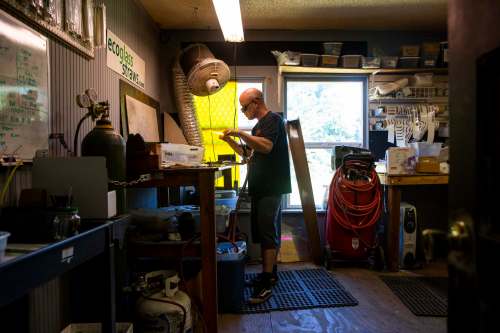
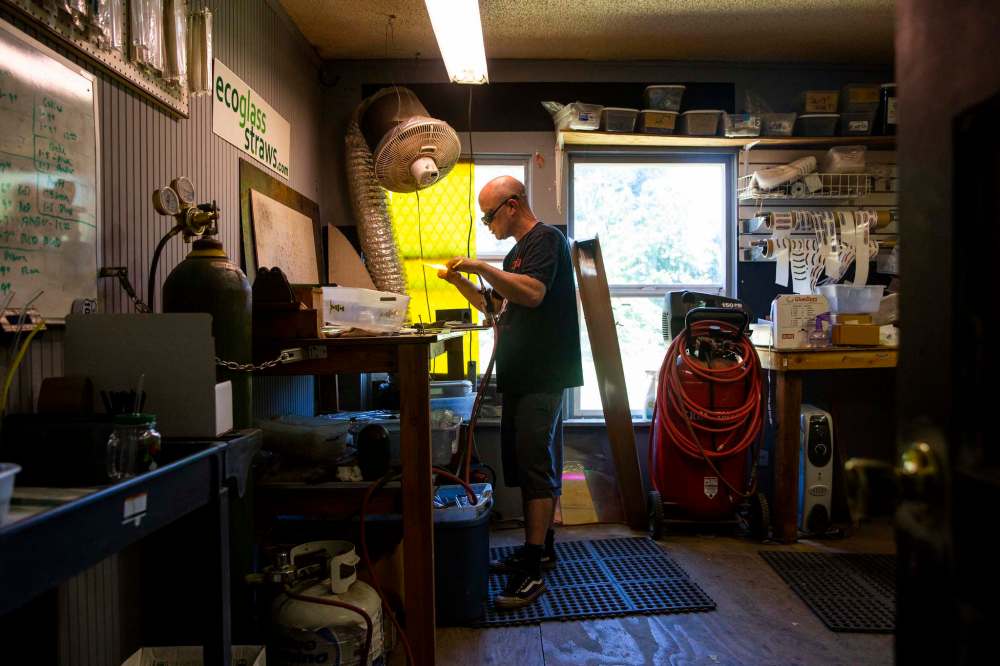
Craig Graffius started EcoGlass Straws 12 years ago with three decades of glass-making experience and his vision for an alternative to the ubiquitous plastic straw. What he didn’t have was anyone clamouring for his product.
Today, his tiny four-person shop in Hood River, Ore., is gearing up to turn out 2,000 handcrafted glass straws an hour. That’s up from the current pace of 125 an hour, or 1,000 a day.
EcoGlass’s surging output underscores a wave of change sweeping through the supply chain as the straw emerges as a central symbol of the world’s plastic trash crisis. With consumers searching for greener options, companies from Starbucks to McDonald’s to MGM Resorts International are responding.
“Everybody’s got to find a replacement,” said Graffius, who said he has seen orders more than triple in the past year after a long struggle to convince buyers his wares were more than just a novelty. “We didn’t anticipate this happening. We were going to really hit the market.’’ But instead, “it’s hitting us.”
Plastic straws are just one example of how companies are being forced to adapt to changing public attitudes about the environment. For some, abandoning traditional plastic raises costs, threatens sales and forces uncomfortable conversations with customers. Others see opportunity with the rise in demand for alternatives.
The furor dates to a viral 2015 video of marine biologists pulling a straw from deep inside the nose of a sea turtle. Then in 2017, the “Strawless in Seattle” campaign motivated cities to take action. The public outcry escalated to the point McDonald’s, Starbucks and MGM have vowed to phase out their reliance on plastic straws globally. American Airlines recently said it would replace plastic straws and stir sticks with more “eco-friendly” straw and bamboo options. Alaska Air Group said in May it would phase out single-use plastic straws.
While straws account for just 0.03 per cent of the eight million metric tons of plastic that enters the ocean each year, according to a 2015 study, the disturbing images refocused the world’s attention on the problem.
“The anti-single-use-plastic movement is much bigger than those who identify as environmentalists,” said Maisie Ganzler, brand chief for Bon Appetit Management Co., a food-service chain that on May 31 said it would stop using traditional plastic straws. “When people see the photographic evidence of the amount of plastic pollution in our oceans and in the bodies of birds, fish, turtles and whales, it’s stomach-turning no matter what your politics are.”
In recent months, countries in Europe have begun announcing bans or limits. As of July 1, Seattle became the first major U.S. city to outlaw plastic straws, following similar measures by smaller towns along the East and West Coasts. Even where laws haven’t changed, the public outcry is pressuring companies to respond or risk alienating customers. That pressure travels up and down the supply chain.
Best Diamond Plastics co-founder and president Mark Tolliver has grown his straw-making business to more than 70 employees from the five he started with in 2008, in large part thanks to his first major customer: McDonald’s. Now his 73,000-square-foot plant in Chicago churns out plastic implements for customers including five big fast-food companies.
Tolliver started talking with McDonald’s about more environmentally friendly options a few years ago as concerns about plastic trash gained traction. That sent him searching for a solution that wouldn’t turn his growing business upside down. Competing against a range of entirely different materials, such as glass, paper or metal, Best Diamond decided to stick with the material it knew best, but engineer it to quickly decompose.
Tolliver teamed up with Smart Plastic Technologies in Knoxville, Tenn., where CEO Tim Murtaugh found success in recent years selling an additive that makes plastic grocery bags biodegradable, and has now adjusted the product to work for straws.
In the past six months, the drive for an alternative became more urgent as he heard from all five of his big fast-food customers. McDonald’s announced last month it would be replacing plastic straws with paper in the U.K. and Ireland by 2019, and would start testing substitutes in the U.S., as well.
Murtaugh says he’s seen a tenfold increase in inquiries for his additive so far this year, including from many larger companies. “We’ve drawn their attention, they’re impressed with our technology, and we are now in what I would call the final phase of conversation about it,’’ he said.
Many plastic substitutes come with their own set of environmental problems, Murtaugh said. Paper straws have more carbon emissions when the entire manufacturing process is considered, and plant-based bioplastics are tricky because they won’t break down if they’re not composted correctly, he said. Reusable glass straws can be difficult to clean and are significantly more expensive up front.
Nonetheless, those products are also seeing demand surge in the wake of the plastic straw controversy.
The largest U.S. paper straw maker, Aardvark Straws, can’t keep up with the flood of new orders, leaving some customers to wait three months for their orders to be filled.
Eco-Products Inc., which supplies food-service giants such as US Foods Holdings Corp. and Sysco Corp., has seen demand for its compostable straws double in the past six months.
When he was first getting EcoGlass off the ground, Graffius spent years travelling to craft shows and conferences handing out free samples of his glass straws to drum up business. But people still viewed them as a gimmick. “I spent a lot of money and I pretty much got nowhere,” he recalled.
Graffius abandoned his marketing efforts and refocused on making his straws. He imports shatter-resistant glass from Germany and then hand-shapes and polishes it into smooth, dishwasher-safe drinking tubes “almost equal to the silverware that’s in your drawer.’’
He sells his straws direct through his company website and in bulk to a distributor, Foods Alive Inc., based in Angola, Ind. Foods Alive repackages and sells the straws to several hundred retail stores, juice bars and consumers. The distributor has seen sales jump by 30 per cent from last year, and now markets the EcoGlass product to individuals, too, packaged with a carrying case and cleaning brush, said Matt Alvord, one of the company’s founders.

EcoGlass’s phone started ringing more often a couple years ago after the turtle video stirred more awareness about how plastic trash was harming the environment.
As demand took off over the past year, EcoGlass has been able to cut prices by almost half, with the wholesale price now ranging from US$1 to US$1.50 per straw, depending on style. Compare that to a box of 100 disposable plastic bendy straws that retails for US$5.99 on Amazon.com, or about six cents apiece. Graffius is finishing work on a machine that will drastically speed up the cutting and polishing process. He expects an average 1,890 straws an hour to roll off the assembly line by next month, which will allow him to cut prices even more.
Meanwhile, the glassmaker is hearing from new customers every day, ranging from hospitals to hotels, as the plastic backlash accelerates.
“It’s exciting,’’ Graffius said. His business started with a simple, environmentally friendly product that was ahead of its time, “and now everything’s catching up.”
— Bloomberg