Lost and found
Luckily, these stolen treasures were returned to their rightful owners
Advertisement
Read this article for free:
or
Already have an account? Log in here »
To continue reading, please subscribe:

Digital Subscription
One year of digital access for only $205*
- Enjoy unlimited reading on winnipegfreepress.com
- Read the E-Edition, our digital replica newspaper
- Access News Break, our award-winning app
- Play interactive puzzles
*First annual payment billed as $205.00 + GST for one year. This annual subscription will automatically renew at $233.00 + GST every 52 weeks (10% off the regular annual price of $259.35). Offer available to new and qualified returning subscribers only. Cancel any time.
To continue reading, please subscribe:
Add Free Press access to your Brandon Sun subscription for only an additional
$1 for the first 4 weeks*
- Enjoy unlimited reading on winnipegfreepress.com
- Read the E-Edition, our digital replica newspaper
- Access News Break, our award-winning app
- Play interactive puzzles
*Your next Brandon Sun subscription payment will increase by $1.00 and you will be charged $17.95 plus GST for four weeks. After four weeks, your payment will increase to $24.95 plus GST every four weeks.
Read unlimited articles for free today:
or
Already have an account? Log in here »
Hey there, time traveller!
This article was published 08/09/2018 (2868 days ago), so information in it may no longer be current.
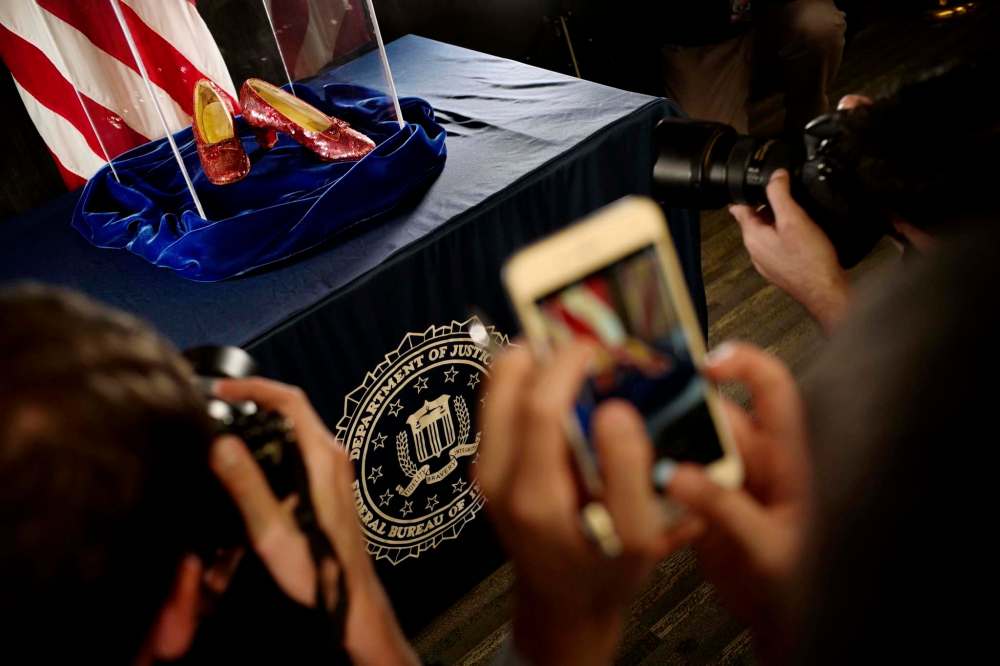
There’s no place like home, especially for a pair of ruby slippers from the classic 1939 film The Wizard of Oz that were stolen from a Minnesota museum 13 years ago.
The red-sequined slippers, one of four known pairs actress Judy Garland wore in her role as Dorothy in the iconic film, were put on display this week at the FBI’s Minneapolis headquarters after being recovered in an undercover sting operation set up to bust an extortion plot.
The shoes, insured for US$1 million but believed to be worth US$5 million at auction, had been kept in a Plexiglas case inside the Judy Garland Museum in Grand Rapids, Minn. On Aug. 28, 2005, burglars (or a burglar) broke into the museum and smashed the case with a baseball bat. Investigators estimated the heist took only seconds.
“They’re more than just a pair of shoes, the slippers. They’re an enduring symbol of the power of belief,” Grand Rapids police Chief Scott Johnson said this week. “The thieves not only took the slippers, they took a piece of history that will be forever connected to Grand Rapids and one of our city’s most famous children.”
Fans of classic films — including this columnist, who has written frequently of his love for The Wizard of Oz — are over the rainbow now that the slippers have been rescued. But the investigation continues into who’s responsible for the 2005 theft of the cherished piece of movie memorabilia.
Sadly, it’s far from the first time a revered and pricey item has been snitched and then recovered, as we see from today’s list of Stolen Treasures that Finally Found Their Way Back Home:
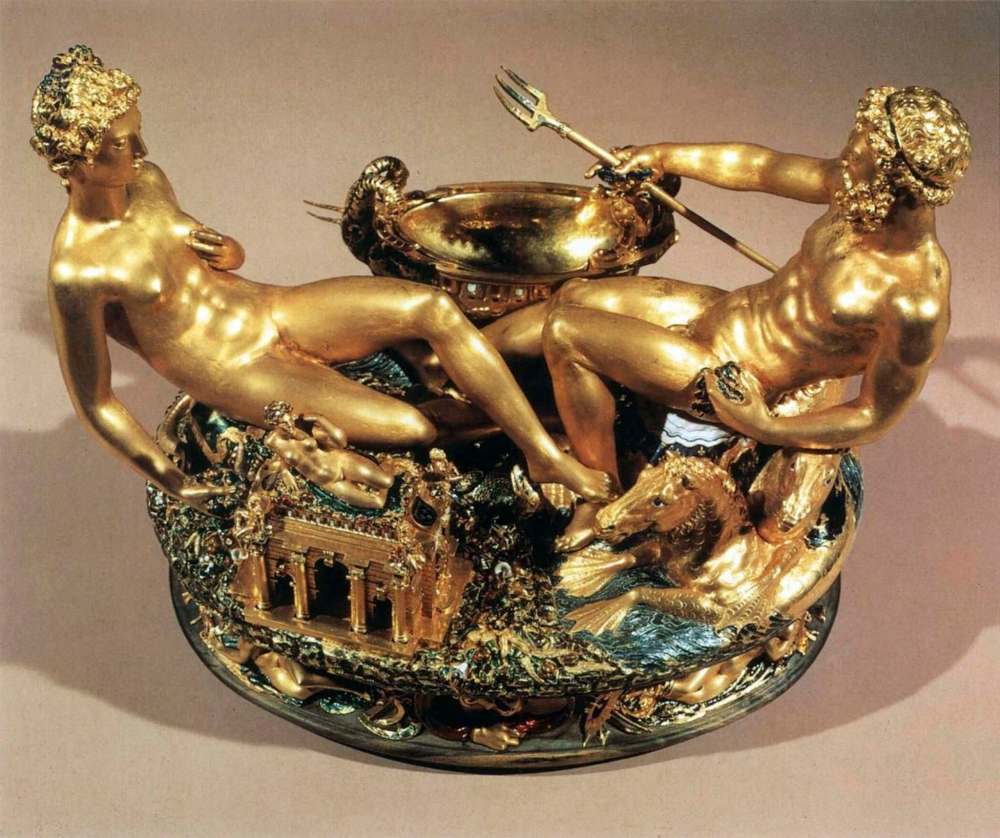
5) The pilfered treasure: Cellini’s Salt Cellar
The estimated value: US$65 million
No place like home: As you have no doubt already assumed, this was no ordinary salt shaker. Also known as the Saliera, it’s a 10-inch high, 13-inch-wide masterpiece, sculpted by hand from rolled gold. Created by 16th-century Italian genius Benvenuto Cellini for Francis I of France, it is considered one of the world’s greatest Renaissance artifacts.
Featuring gold-plated images of Ceres, the Roman goddess of agriculture, and Neptune, god of the sea, it has been called “the Mona Lisa of sculptures.” What thief could resist something like that? Well, Robert Mang, a 50-year-old specialist in security-alarm systems, certainly couldn’t. In 2003, Mang pulled off one of the biggest art heists in recent history, snatching the golden salt cellar from the Kunsthistorisches Museum in Vienna. According to the New York Times, in the early hours of May 11, 2003, Mang climbed scaffolding built around the museum while its facade was being sandblasted and broke in through a second-floor window.
“When Mr. Mang entered the gallery where the Cellini sculpture was kept, he set off a movement-detection alarm. For reasons that have never been explained, the security guard on duty simply turned off the alarm and failed to investigate,” the Times reported. After holding the masterpiece for almost three years and making two attempts to collect about US$12 million in ransom, Mang, described as a successful businessman with no criminal record, made a serious blunder — he used a new cellphone to send a test message to police.
The thief turned himself in after police circulated security camera images of him buying the phone he used to send the message. He led police to a wooded area northeast of Vienna where he had buried the legendary sculpture inside a lead box. It was returned to its home in the museum.
4) The pilfered treasure: The Gibson ex-Huberman Stradivarius
The estimated value: US$15 million
No place like home: Even people who hate classical music know the violins crafted by legendary Italian instrument maker Antonio Stradivari are worth a fortune. The Gibson ex-Huberman is now owned by American violin virtuoso Joshua Bell, but the journey it took before landing in his talented hands is worthy of a Hollywood blockbuster.
More than 300 years old, the Gibson ex-Huberman is believed to be one of only five or six instruments made in 1713 by Stradivari in Cremona, Italy. It has passed through many hands over the years, including the English violinist George Alfred Gibson, after whom it was first named. It was bought early in the century by Polish virtuoso Bronislaw Huberman, an internationally known teacher and master of the violin, from whom the treasure was stolen twice.
It was first stolen in 1919 from a hotel room in Vienna but was recovered days later when the thief tried to sell it. The second theft, on Feb. 28, 1936, was from a dressing room in Carnegie Hall while Huberman was giving a recital with a Guarnerius violin one floor below. It ended up in the hands of Julian Altman, reputed to be a scoundrel and gambler who made a living playing the violin at restaurants and society functions. On Aug. 15, 1985, as he lay dying in hospital, Altman made a deathbed confession to his wife, Marcelle Hall, telling her he had bought the violin in 1936 for US$100 from the man who had stolen it. Some have argued Altman, who disguised the violin with shoe polish and played it for the rest of his career, was the thief. In a 2017 article, current owner Joshua Bell wrote: “She (Hall) eventually returned the violin to Lloyd’s of London and received a finder’s fee; the instrument underwent a nine-month restoration by J & A Beare Ltd., which noted it was like ‘taking dirt off the ceiling of the Sistine Chapel.’”
The fabled instrument was later sold to British violinist Norbert Brainin, and in 2001, Bell bought it to prevent it from being sold to a wealthy German industrialist. “It is overwhelming to think of how many amazing people have held it and heard it,” Bell wrote in 2017 as the violin turned 300.
3) The pilfered treasure: The Third Imperial Fabergé Egg
The estimated value: US$33 million

No place like home: The House of Fabergé created 50 famously bejewelled eggs for the Russian royal family from 1885 up until the eve of the October Revolution in 1917. Each egg took around a year to complete, contained a “surprise” and was designed in secret, with not even the czar privy to its design until it was hand-delivered by Fabergé.
The Third Imperial Egg was a stunner — slightly taller than a cupcake, the ridged, yellow-gold egg sits on a tripod with lion-paw feet and is encircled with gold flower garlands strung from blue sapphires and topped with rose diamond-set bows. The surprise it contains is a lady’s watch by Vacheron Constantin with a white enamel face and diamond-set gold hands. It was seized by Bolshevik revolutionaries in 1917 and mysteriously made its way to the United States, where, in 2012, it magically resurfaced. According to Britain’s Telegraph newspaper, an American scrap-metal dealer bought the egg from a junk market and was poised to melt it for its gold. The unnamed dealer, knowing nothing of the egg’s history, bought it for US$14,000 based on its weight and the value of its gems. “He intended to sell it on to a buyer who would melt it down, turning a quick profit of a few hundred pounds. But prospective buyers thought he had overestimated the price and turned him down,” the Telegraph reported.
The egg languished in his kitchen for years until one night in 2012, when he Googled the name etched on the timepiece inside and stumbled on an earlier Telegraph article asking: “Is this 20-million pound nest-egg on your mantlepiece?” The shocked dealer called the Fabergé expert cited in the article, who flew to the U.S. to verify the find. “There was the egg, next to some cupcakes on the kitchen counter,” the expert chirped. “I examined it and said, ‘You have an imperial Fabergé egg.’ And he practically fainted. He literally fell to the floor in astonishment.”
London jeweller Wartski bought the egg on behalf of an unidentified collector.
2) The pilfered treasure: The Empire State Building
The estimated value: US$2 billion

No place like home: We know what you are thinking. You are thinking: “Huh? No one could steal an entire skyscraper, especially not one as iconic as New York City’s legendary Empire State Building!” Well, brace yourselves for a shock, because it happened. And it happened in less than 90 minutes.
The thief? We almost hate to say this, but it was a newspaper, New York’s Daily News. On the upside, the paper had the best of intentions — the massive ripoff was conducted to illustrate what the newspaper called a gaping loophole in the city’s system for recording deeds, mortgages and other transactions. Here’s what the News reported in December 2008: “In one of the biggest heists in American history, the Daily News ‘stole’ the US$2-billion Empire State Building. And it wasn’t that hard. The News swiped the 102-storey Art Deco skyscraper by drawing up a batch of bogus documents, making a fake notary stamp and filing paperwork with the city to transfer the deed to the property. Some of the information was laughable: original King Kong star Fay Wray is listed as a witness and the notary shared a name with bank robber Willie Sutton… Less than 90 minutes after the bogus documents were submitted on Monday, the agency rubber-stamped the transfer from Empire State Land Associates to Nelots Properties LLC. Nelots is ‘stolen’ spelled backwards.”
On the plus side, the News didn’t try to keep the property — less than 24 hours after the fake deed was filed, the paper returned the building to its rightful owners. “Of course, stealing the Empire State Building wouldn’t go unnoticed for long, but it shows how easy it is for con artists to swipe more modest buildings right out from under their owners. Armed with a fraudulent deed, they can take out big mortgages and disappear, leaving a mess for property owners, banks and bureaucrats,” the paper concluded.
Fortunately, the deed-recording system has since been tightened up.
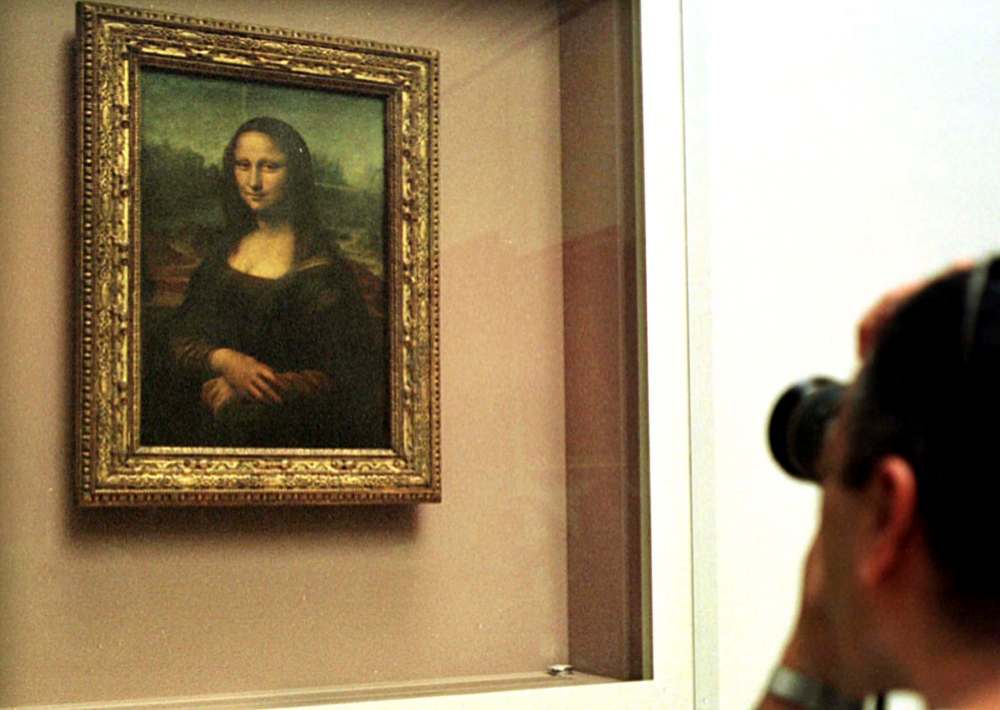
1) The pilfered treasure: The Mona Lisa
The estimated value: US$2 billion

No place like home: A lot of heists are billed as “the crime of the century.” But this one really was. It’s hard to argue when you’re talking about the most famous painting in history: the Mona Lisa, the crown jewel of the Louvre museum in Paris, a portrait of a woman with a famously enigmatic smile painted by none other than Leonardo da Vinci.
On Aug. 21, 1911, Mona vanished and the world went wild. It was initially speculated modernist enemies of traditional art were involved. But the real mastermind was a petty criminal named Vincenzo Peruggia, who had worked at the Louvre as a handyman. According to a 2013 report by CNN, the handyman had been hired to make protective glass cases for some of its famous works, including the Mona Lisa. “After hiding in a closet overnight, he simply removed the painting, hid it under his smock, and was about to waltz out of the building when he discovered the door was locked,” CNN noted. “Desperate, Peruggia removed the doorknob, but still it wouldn’t open — until a helpful plumber opened the door with his key.”
It reportedly took 24 hours before anyone even noticed the prized painting was gone, as artwork was routinely removed to be photographed or cleaned. The press had a field day, poking fun at police and the government. Visitors lined up just to see the empty space where the small painting had hung. The head of the Paris police had to resign in shame. Two years later, a Florence art dealer received a letter from a man saying he had Mona. Peruggia turned up with the painting, which had spent years hidden in a trunk in his apartment. He was handed seven months in jail.
“He seemed to have genuinely been convinced he would be heralded as a national hero and genuinely dismayed to discover he wasn’t,” Noah Charney, an art history professor, told CNN. “He was maybe a few pickles short of a sandwich, but not a lunatic.” Now protected by bulletproof glass, Mona is where she belongs, luring millions of visitors to the Louvre each year.
No doubt she’d agree with Dorothy — there’s no place like home!
doug.speirs@freepress.mb.ca