Millennial Money: Don’t freak out about your emergency fund
Advertisement
Read this article for free:
or
Already have an account? Log in here »
To continue reading, please subscribe:

Digital Subscription
One year of digital access for only $205*
- Enjoy unlimited reading on winnipegfreepress.com
- Read the E-Edition, our digital replica newspaper
- Access News Break, our award-winning app
- Play interactive puzzles
*First annual payment billed as $205.00 + GST for one year. This annual subscription will automatically renew at $233.00 + GST every 52 weeks (10% off the regular annual price of $259.35). Offer available to new and qualified returning subscribers only. Cancel any time.
To continue reading, please subscribe:
Add Free Press access to your Brandon Sun subscription for only an additional
$1 for the first 4 weeks*
- Enjoy unlimited reading on winnipegfreepress.com
- Read the E-Edition, our digital replica newspaper
- Access News Break, our award-winning app
- Play interactive puzzles
*Your next Brandon Sun subscription payment will increase by $1.00 and you will be charged $17.95 plus GST for four weeks. After four weeks, your payment will increase to $24.95 plus GST every four weeks.
Read unlimited articles for free today:
or
Already have an account? Log in here »
Hey there, time traveller!
This article was published 27/02/2019 (2709 days ago), so information in it may no longer be current.
Let’s be real: For millennials, having an emergency fund is way down on the financial worry list, behind student loan debt, medical bills or saving for a down payment.
Some weeks, it can feel like you barely have enough money to get by, let alone put some away for a rainy day.
But that cash stash can be crucial in preventing a debt spiral or keeping you afloat if you lose your job. Regardless of income, building your emergency fund doesn’t have to be intimidating.
START SMALL, BUILD A HABIT
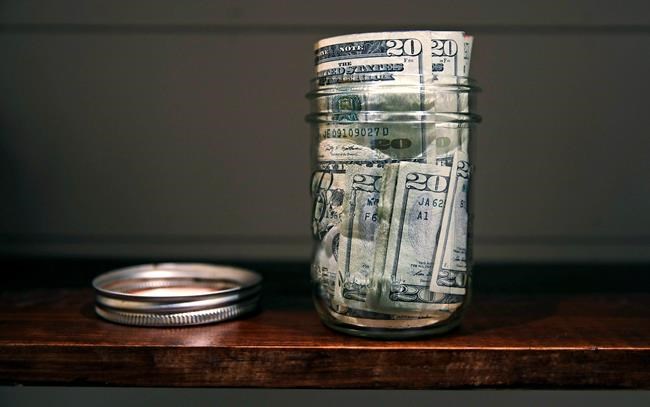
First, pick an amount you can put away on a regular basis, no matter how small. Then, commit to it.
“It can be as little as $10 a week into a separate savings account,” says Lara Lamb, a certified financial planner at Abacus Wealth Partners in Los Angeles. Making a small contribution every week is less painful than shooting for an ideal final sum, she says. Automatically transferring the money to a separate account helps you succeed at saving.
The saving habit — even if it’s small — is valuable for your finances in the long term, says Eric Gabor, a certified financial planner at Eagle Grove Advisors in Jersey City, New Jersey.
A family with at least $250 in savings is less likely to face financial turmoil such as a missed utility payment or eviction, according to a 2016 study by the Urban Institute, a Washington, D.C.-based think-tank . Any amount above that — $400, $500 — improves your chances of navigating a setback.
Getting started is especially important for younger adults. An Urban Institute study released this year found 35.6 per cent of adults ages 18-34 surveyed in December 2017 had experienced “financial insecurity” in the previous 12 months. That was the highest among the study’s three age groups of adults under 65. It defined financial insecurity as the “inability to come up with a small amount of money to buffer negative economic shocks or to pay his or her credit card or nonmortgage loan.”
Lamb suggests working toward one month’s fixed expenses, which includes rent, groceries, transportation and insurance. “Don’t worry about your eating-out money or shopping money,” she says. “If you are in an emergency or a transition, the whole idea is you would cut back on your spending.”
A savings account that pays a high interest rate is a smart place to keep your fund, both planners say, so it can grow.
MAKE USE OF WINDFALLS
An easy way to kick-start your fund is to use windfalls — part of a tax refund or even birthday money from relatives.
Young professionals typically get tax refunds instead of owing money, Gabor says. The IRS allows you to direct deposit your refund in up to three accounts, so you can send part directly to your emergency fund.
If no windfall is imminent, check your checking account. Leave a small buffer so that you aren’t at risk of overdrawing and put anything else in the emergency fund to earn interest, Lamb says.
There’s no ideal amount to keep in your checking account. But both financial planners warn that having a lot of extra “cushion” in a checking account carries the temptation to spend it.
PLAN FOR NON-EMERGENCIES
If you’re building the habit of saving for emergencies, use that muscle to plan for other expenses.
Financial experts often use the terms “irregular expenses” and “unplanned expenses.” An unplanned expense is something you don’t foresee, such as an illness or car repair. Irregular expenses are predictable costs that come up during the year — think of car registration fees or holiday season spending.
Ideally, an emergency fund shouldn’t be used for irregular expenses, Lamb says. Instead, build a separate pool of money for them.
“Sit down and look at last year’s worth of spending and look at the things that popped up periodically,” she says. “Think about the coming year and how that might change. Figure out the annual amount and divide by 12. That dollar amount is what you set aside every month in an irregular expense account.”
USE THE MONEY WHEN YOU NEED IT
Don’t be afraid to use your emergency fund when you need it. Knowing the difference between unplanned and irregular expenses can help you decide when to tap it.
If the alternative is maxing out your credit cards or taking a high-interest loan, it’s cheaper over the long term to use your cash, then immediately start rebuilding the fund.

_______________________________________________
This column was provided to The Associated Press by the personal finance website NerdWallet. Amrita Jayakumar is a writer at NerdWallet. Email: ajayakumar@nerdwallet.com. Twitter: @ajbombay.
RELATED LINKS:
NerdWallet: Emergency fund calculator http://bit.ly/nerdwallet-emergency-fund-calculator
Urban Institute: Financial Distress Among American Families https://www.urban.org/research/publication/financial-distress-among-american-families-evidence-well-being-and-basic-needs-survey