Museum workshop to offer insight into Ojibwe world view
Pre-contact philosophies to be revisited in modern context

Advertisement
Read this article for free:
or
Already have an account? Log in here »
To continue reading, please subscribe:

Digital Subscription
One year of digital access for only $205*
- Enjoy unlimited reading on winnipegfreepress.com
- Read the E-Edition, our digital replica newspaper
- Access News Break, our award-winning app
- Play interactive puzzles
*First annual payment billed as $205.00 + GST for one year. This annual subscription will automatically renew at $233.00 + GST every 52 weeks (10% off the regular annual price of $259.35). Offer available to new and qualified returning subscribers only. Cancel any time.
To continue reading, please subscribe:
Add Free Press access to your Brandon Sun subscription for only an additional
$1 for the first 4 weeks*
- Enjoy unlimited reading on winnipegfreepress.com
- Read the E-Edition, our digital replica newspaper
- Access News Break, our award-winning app
- Play interactive puzzles
*Your next Brandon Sun subscription payment will increase by $1.00 and you will be charged $17.95 plus GST for four weeks. After four weeks, your payment will increase to $24.95 plus GST every four weeks.
Read unlimited articles for free today:
or
Already have an account? Log in here »
Hey there, time traveller!
This article was published 06/03/2018 (3115 days ago), so information in it may no longer be current.
Bimaadiziwin is an Ojibwe word that can be loosely translated as “way of life” or “standard of living.”
For the Ojibwe people, that way of life has been vastly altered by such things as colonization, residential schools and urbanization, but the core values live on in the Ojibwe language.
The Manitoba Museum is presenting a daylong workshop called Bimaadiziwin: Anishinaabe Life Model — Authenticating Ojibwe Beliefs and Value Systems. The workshop, facilitated by Albert McLeod and Roger Roulette, is aimed at program managers, health-care workers, justice workers, teachers, organizations working with Indigenous clients, or anyone interested in learning more about the philosophies and history of the Ojibwe people.
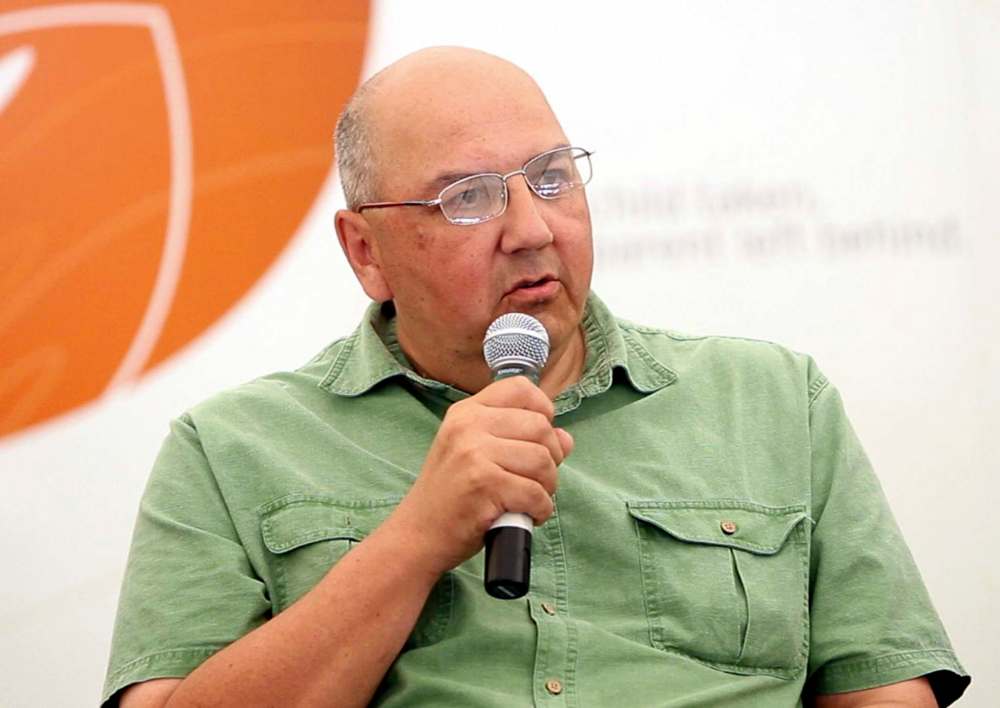
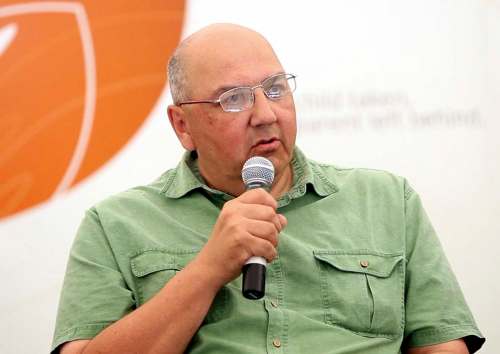
McLeod, who specializes in cross-cultural training, has roots in the Nisichawayasihk Cree Nation and the Métis community of Norway House.
Roulette is an Ojibwe language expert who has taught in the native studies department at the University of Manitoba. After collecting more than 100 oral histories from Ojibwe speakers (“most of whom are no longer with us,” he says), he devised a language-based life model.
“I think language is really so important, because what happened with residential schools was that people thought that it was easier for their children or grandchildren to learn English than their native language,” Roulette says. “So there was a disconnect in transferring information, because the person that chose to speak English to their children or grandchildren, they didn’t have the skills to transfer their knowledge, because they weren’t using their native language; they didn’t have the proficiency in English that you need to be able to explain things.”
The two work together to present a picture of pre-contact philosophies and practices and how they can be applied to contemporary life; McLeod provides the historical context and Roulette focuses on the values inherent in the language. They strive to avoid a pan-Indigenous approach, focusing specifically on the Ojibwe language and beliefs.
Roulette’s model is based on four areas of human experience: independence, faith/belief, grace/kindness and survival/overcoming. Those categories are further broken down to explore such subcategories as self-healing, forgiveness, altruism and observant study of events.
McLeod points to the category of survival as one where the Ojibwe world view is valuable to revisit in a modern, urban context.
“It’s more about how we relate to survival with regard to animals that we hunt, the plants we gather, the berries we need to survive a winter,” he says. “The focus was different. Now in Winnipeg, it’s housing, employment, education, it’s negotiating human-to-human experience, which we know can be flawed. The Indigenous point of view is ‘What is our relationship with the land? How are we going to get through the winter?’
“Colonization looks at colonial lands as this treasure house of exploitable resources without a limit, but now we know that there are limits. It’s really to step back and say, ‘What do we need to do differently in that relationship?’”

“Urbanization has the effect of segregating people,” Roulette adds. “Now people make jokes about how the only time they visit one another is for a funeral.
“We have to come up with solutions for people not to be segregated, because that causes a lot of social problems if you find yourself alone. We need these constructs where communities can gather.”
To register, contact Albert McLeod at bizonred@gmail.com or text 204-330-8671. The registration fee is $200, payable by e-transfer. The workshop runs at the museum on Wednesday from 9 a.m. to 4 p.m.; participants should bring a lunch.
jill.wilson@freepress.mb.ca
Twitter: @dedaumier
Jill Wilson is the editor of the Arts & Life section. A born and bred Winnipegger, she graduated from the University of Winnipeg and worked at Stylus magazine, the Winnipeg Sun and Uptown before joining the Free Press in 2003. Read more about Jill.
Jill oversees the team that publishes news and analysis about art, entertainment and culture in Manitoba. It’s part of the Free Press‘s tradition, since 1872, of producing reliable independent journalism. Read more about Free Press’s history and mandate, and learn how our newsroom operates.
Our newsroom depends on a growing audience of readers to power our journalism. If you are not a paid reader, please consider becoming a subscriber.
Our newsroom depends on its audience of readers to power our journalism. Thank you for your support.
Jill Wilson is the editor of the Arts & Life section. A born and bred Winnipegger, she graduated from the University of Winnipeg and worked at Stylus magazine, the Winnipeg Sun and Uptown before joining the Free Press in 2003. Read more about Jill.
Jill oversees the team that publishes news and analysis about art, entertainment and culture in Manitoba. It’s part of the Free Press‘s tradition, since 1872, of producing reliable independent journalism. Read more about Free Press’s history and mandate, and learn how our newsroom operates.
Our newsroom depends on a growing audience of readers to power our journalism. If you are not a paid reader, please consider becoming a subscriber.
Our newsroom depends on its audience of readers to power our journalism. Thank you for your support.
Related Articles
Pair of Winnipeg instructors seek to open dialogue with students on First Nations issues
Advertisement Advertise With Us
Advertisement Advertise With Us