California winery and Oregon feud over pinot labeling rights

Advertisement

Advertise with us

SALEM, Ore. - Pinot noir is one of the finickiest grapes, but with proper nurturing it produces an amazing wine. Officials in Oregon and at a U.S. government agency are similarly finicky, and are stomping on a California winery's claims that it makes an Oregon pinot.

Read this article for free:

or

Already have an account? Log in here »

To continue reading, please subscribe:

Subscribe and receive a limited-edition Free Press branded hat or tote.

Digital Subscription

One year of digital access for only $205*

  • Enjoy unlimited reading on winnipegfreepress.com
  • Read the E-Edition, our digital replica newspaper
  • Access News Break, our award-winning app
  • Play interactive puzzles

*First annual payment billed as $205.00 + GST for one year. This annual subscription will automatically renew at $233.00 + GST every 52 weeks (10% off the regular annual price of $259.35). Offer available to new and qualified returning subscribers only. Cancel any time.

To continue reading, please subscribe:

Add Free Press access to your Brandon Sun subscription for only an additional

$1 for the first 4 weeks*

  • Enjoy unlimited reading on winnipegfreepress.com
  • Read the E-Edition, our digital replica newspaper
  • Access News Break, our award-winning app
  • Play interactive puzzles
Start now

*Your next Brandon Sun subscription payment will increase by $1.00 and you will be charged $17.95 plus GST for four weeks. After four weeks, your payment will increase to $24.95 plus GST every four weeks.

Hey there, time traveller!
This article was published 28/11/2018 (2803 days ago), so information in it may no longer be current.

SALEM, Ore. – Pinot noir is one of the finickiest grapes, but with proper nurturing it produces an amazing wine. Officials in Oregon and at a U.S. government agency are similarly finicky, and are stomping on a California winery’s claims that it makes an Oregon pinot.

Copper Cane, a Napa Valley, California, winery sells more pinot noir made from Oregon grapes than anyone else, and often at a lower price. That has some Oregon winemakers, who call the California version a less elevated product, seeing red.

Now, both the U.S. Alcohol and Tobacco Tax and Trade Bureau and Oregon’s liquor agency have ruled that Copper Cane’s labels have been improperly referencing Oregon wine regions. The case recalls France’s mostly successful efforts to have only sparkling wine produced in its Champagne region called by that name.
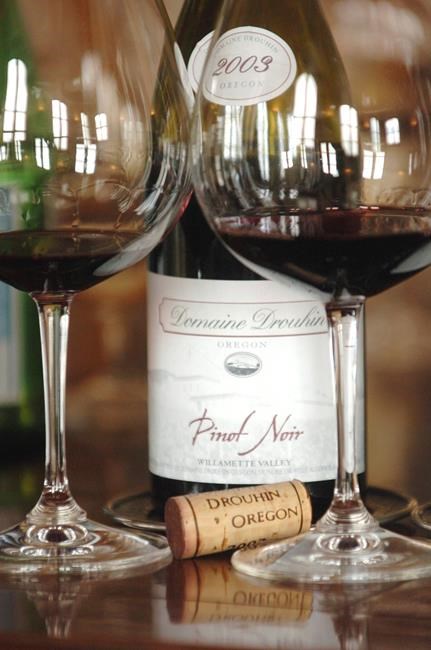
FILE--In this Aug. 17, 2006, file photo, a 2003 Domaine Drouhin pinot noir is displayed at the winery's tasting rooms in Dayton, Ore. Officials in Oregon and at a U.S. government agency are similarly finicky, and have told a California winery to back off its claims it makes an Oregon pinot noir. (AP Photo/Greg Wahl-Stephens, file)

At stake is a multi-billion-dollar industry, and Oregon’s reputation for producing a delicate pinot noir in its cool, rainy climate, according to state Rep. David Gomberg and winemaker Jim Bernau, who have been sharply critical of Copper Cane.

“Part of this is prestige and marketing,” Gomberg said.

Grapes for Copper Cane’s pinot noirs are grown in three Oregon wine regions and trucked in dry ice to California. Jim Blumling, Copper Cane’s vice-president of operations, acknowledged that the winery’s top-selling Elouan Pinot Noir is more pronounced than the typical Oregon version because the grapes are picked later, with higher sugar content.

“It helps deliver a more concentrated juice in the fruit,” Blumling said.

Bernau, founder of Willamette Valley Vineyards of Turner, Oregon, said Copper Cane’s labels deceptively indicate its wines came from Oregon’s officially designated wine regions, or AVAs.

“Copper Cane takes something valuable that isn’t theirs and deeply discounts it,” Bernau said. “They can’t use Oregon AVAs if the wine is not made in the AVA.”

In their rulings this month, the federal and state regulatory bodies agreed there was a problem because Copper Cane’s labels refer to Oregon’s Willamette Valley, Rogue Valley and Umpqua Valley wine regions. If a wine label claims or implies it’s from a particular AVA, 95 per cent of the grapes must be from there, according to the Oregon Wine Board.

Furthermore, the Oregon Liquor Control Commission informed Copper Cane that only wines “finished” in Oregon can claim association with an Oregon wine region.

The federal TTB told Copper Cane that it has to ditch seven of its labels, agency spokesman Tom Hogue said.

The Oregon liquor commission found last week that Copper Cane has committed seven violations and is seeking to revoke its ability to sell in Oregon, said commission spokesman Matthew VanSickle. The violations focus on Copper Cane’s improper use of AVA designations and “misleading statements on labeling.”

One major grocery store chain in Oregon, Fred Meyer, already ordered staff to remove any Elouan Pinot Noir and Copper Cane’s Willametter Journal wines that might be on shelves until further notice.

Gomberg wants the federal government to stop Copper Cane from selling Elouan wine in the other 49 states.

“Copper Cane claims they were simply engaged in ‘fanciful’ marketing,” Gomberg said. “But the state of Oregon has determined that they crossed the line from fanciful to fraudulent.”

Blumling and Copper Cane’s owner, Joe Wagner, met with Oregon Liquor Control Commission Executive Director Steven Marks on Wednesday, though the informal encounter wasn’t expected to resolve the issue, VanSickle said.

“It’s not an official meeting. A lot of discussions are going to have to happen,” VanSickle said. “This is a very big thing.”

Copper Cane has the right to a hearing to dispute the charges and the proposed sanction.

The company has already submitted new labels to the TTB that don’t mention Oregon winemaking regions and say only that the grapes come from prime Oregon vineyards, Blumling said. Those labels have been approved by the TTB, he said.

Copper Cane hopes the new labels also satisfy the Oregon liquor commission.

The previous labels had been in use for years until Gomberg and Bernau complained, the California winemakers said. They believe it was to edge out the competition. Last year, 120,000 cases of Elouan wine — over 1.4 million bottles — were sold nationwide, Blumling said.

“We’re being blatantly attacked,” Wagner said. “What’s disappointing is it’s for financial gain.”

In a Nov. 19 statement, Gomberg said that Elouan Pinot Noir and The Willametter Journal “look and taste like they have an additive” called Mega Purple, often used in California to make wines darker and thicker. Blumling called that “slanderous” and denied any such additive has been used.

He said Elouan’s growing national popularity, with sales up 50 per cent in a year, will raise consumers’ consciousness and boost overall demand for Oregon pinot noir.

“We’re expecting that all boats rise with the tide,” Blumling said.

___

Follow Andrew Selsky on Twitter at https://twitter.com/andrewselsky
Report Error Submit a Tip

More Stories

California winery and Oregon feud over pinot labeling rights

Andrew Selsky, The Associated Press 5 minute read Preview

California winery and Oregon feud over pinot labeling rights

Andrew Selsky, The Associated Press 5 minute read Wednesday, Nov. 28, 2018

SALEM, Ore. - Pinot noir is one of the finickiest grapes, but with proper nurturing it produces an amazing wine. Officials in Oregon and at a U.S. government agency are similarly finicky, and are stomping on a California winery's claims that it makes an Oregon pinot.

Copper Cane, a Napa Valley, California, winery sells more pinot noir made from Oregon grapes than anyone else, and often at a lower price. That has some Oregon winemakers, who call the California version a less elevated product, seeing red.

Now, both the U.S. Alcohol and Tobacco Tax and Trade Bureau and Oregon's liquor agency have ruled that Copper Cane's labels have been improperly referencing Oregon wine regions. The case recalls France's mostly successful efforts to have only sparkling wine produced in its Champagne region called by that name.

At stake is a multi-billion-dollar industry, and Oregon's reputation for producing a delicate pinot noir in its cool, rainy climate, according to state Rep. David Gomberg and winemaker Jim Bernau, who have been sharply critical of Copper Cane.

Read
Wednesday, Nov. 28, 2018

Brighter days ahead after Camp Arnes

Joshua Frey-Sam 5 minute read Preview

Brighter days ahead after Camp Arnes

Joshua Frey-Sam 5 minute read 6:00 AM CDT

Keishna Abenstein remembers what it was like to be a teenager who was stuck in her shell.

She also recalls how much going to summer camp at Camp Arnes helped her spread her wings.

Abenstein has watched her middle child, Teagen, go through a similar roller-coaster as a teenager. Teagen, described as a social butterfly in his childhood, has become a bit more reserved in his adolescence after many of his closest elementary school friends went to a different middle school, forcing him to make new friends as he began the next chapter of his education.

Abenstein saw an opportunity for a similar experience at Camp Arnes that could impact her son the same way it did for her.

Read
6:00 AM CDT

Puzzles Palace

1 minute read Monday, Jul. 27, 2026

To solve our puzzles, please subscribe with this special offer: |

Long journey to home ownership for Eritrean couple

Zoe Pierce 4 minute read Preview

Long journey to home ownership for Eritrean couple

Zoe Pierce 4 minute read 2:01 AM CDT

Solomon Ghebru and his family have been building a life together in Winnipeg for the past three years after years of living apart in various countries. Now, they are working toward a new goal: owning a home.

Their story is the focus of this year’s Habitat for Humanity Manitoba Cycle of Hope fundraising ride, a seven-day cycling event through southern Manitoba that begins Monday. The ride aims to raise $150,000 to support Ghebru, his wife, Mehret Awate, and their two daughters as they work toward affordable homeownership.

The couple’s journey to Canada started in Eritrea, where they grew up and attended the same church together. They left Eritrea separately, hoping to build a better life together out of the country. Ghebru travelled through Sudan and Libya before reaching Malta, while Awate travelled to Sudan and then Uganda.

After he found work in Malta, he tried to have his family join him, but government policies prevented them from reuniting. The couple married in Uganda in 2016, and their first daughter, Peniel, was born there the following year.

Read
2:01 AM CDT

Winnipeg police ticketed a man accused of leaving his dog locked in his vehicle in a grocery store parking lot during the intense heat earlier this week, then attacking bystanders who were concerned about the animal’s welfare.

It’s not uncommon for city police to be contacted about pets left locked in cars during heat waves, but typically those calls don’t escalate to the extent of the incident Wednesday afternoon, said Winnipeg Police Service spokesman Const. Claude Chancy.

“It definitely comes up every time we have heat events in the city, we do get concerned citizens calling about pets being left in vehicles, even for a short period of time,” said Chancy.

“Typically, what will happen is that the owner or the caretaker of the pet will present themselves to police and proper, appropriate advice is given about the care of these animals — this is definitely an extreme case.”

Crop storage headaches loom on horizon

Laura Rance-Unger 5 minute read Preview

Crop storage headaches loom on horizon

Laura Rance-Unger 5 minute read 2:01 AM CDT

A sense of calm descends over Prairie fields this time of year — at least on the surface.

Activities become more limited in the weeks leading up to harvest. There’s not much farmers can do now to support this year’s crop, other than monitor and protect it from diseases such as sclerotinia in canola and leaf stripe and fusarium head blight in wheat and barley.

July is when you might see farmers wading into a thick stand of canola, conducting a so-called “wet pants test” to get a low-tech read on how much disease-inducing moisture is lurking in the canopy.

Disease pressure is high in a humid, hot summer like this one and it’s kept aerial applicators busy applying fungicides. Sclerotinia spores live on plant residues in the soil and blossom into a mould that destroys the canola stem, starving the maturing pods.

Read
2:01 AM CDT