Paying the price for glory
Football cost ex-Bomber dearly, now his widow hopes to raise awareness about concussions
Advertisement
Read this article for free:
or
Already have an account? Log in here »
To continue reading, please subscribe:
Monthly Digital Subscription
$1 per week for 24 weeks*
- Enjoy unlimited reading on winnipegfreepress.com
- Read the E-Edition, our digital replica newspaper
- Access News Break, our award-winning app
- Play interactive puzzles
*Billed as $4.00 plus GST every four weeks. After 24 weeks, price increases to the regular rate of $19.95 plus GST every four weeks. Offer available to new and qualified returning subscribers only. Cancel any time.
Monthly Digital Subscription
$4.99/week*
- Enjoy unlimited reading on winnipegfreepress.com
- Read the E-Edition, our digital replica newspaper
- Access News Break, our award-winning app
- Play interactive puzzles
*Billed as $19.95 plus GST every four weeks. Cancel any time.
To continue reading, please subscribe:
Add Free Press access to your Brandon Sun subscription for only an additional
$1 for the first 4 weeks*
*Your next subscription payment will increase by $1.00 and you will be charged $16.99 plus GST for four weeks. After four weeks, your payment will increase to $23.99 plus GST every four weeks.
Read unlimited articles for free today:
or
Already have an account? Log in here »
Hey there, time traveller!
This article was published 08/09/2020 (2017 days ago), so information in it may no longer be current.
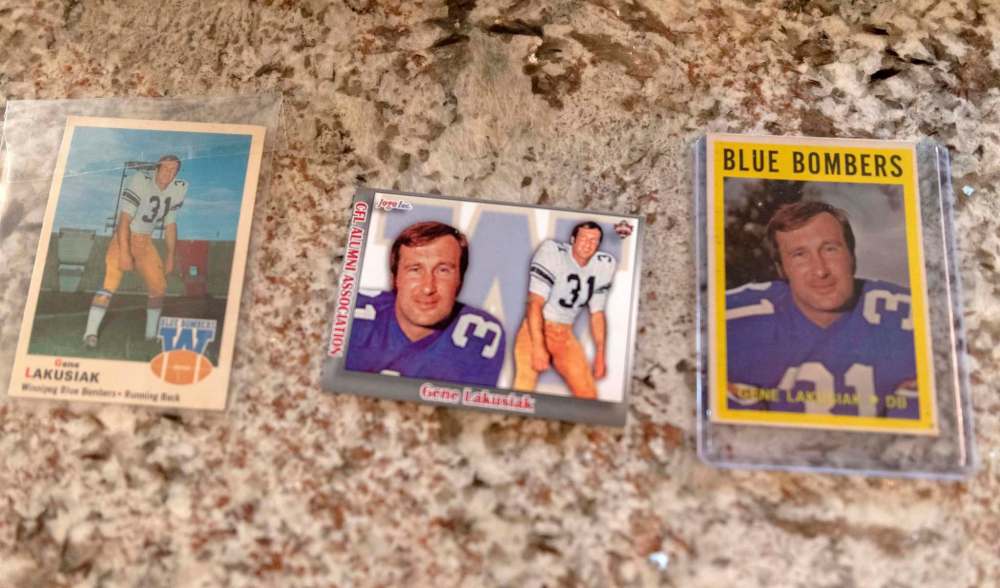
For seven glorious seasons, Gene Lakusiak was a hard-hitting defensive back for the Winnipeg Blue Bombers.
A Western Division all-star in 1972-73 and the Bombers’ outstanding Canadian in ‘73, he had a well-earned reputation for hammering opposing receivers and running backs into the turf.
“He was super intense as an athlete,” his wife of 53 years, Lynn, recalled last week as she sat in the sun-dappled kitchen of her St. Vital home at a table laden with memorabilia from Gene’s football career.
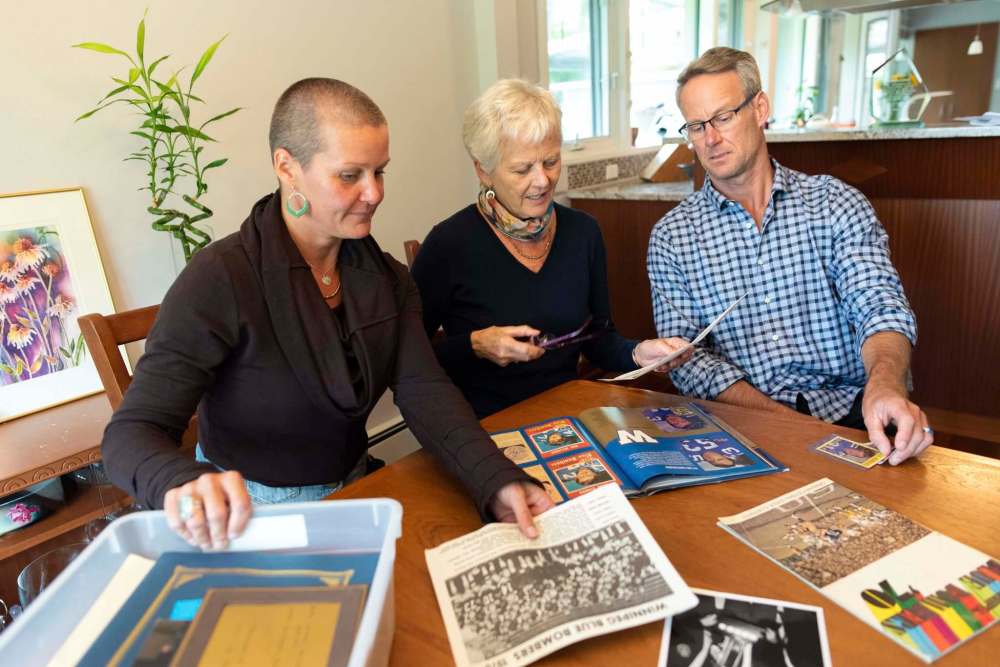
“But he was very quiet, a man of few words. Rock solid. You could always count on Gene. He was tough. He was a hard hitter. That’s what he was known for.”
In his final years, Gene adamantly believed he’d paid a heavy price for all those punishing hits — multiple concussions that led to confusion, forgetfulness and, in 2016, a diagnosis of probable Alzheimer’s disease.
“Gene felt all along what he was dealing with was a result of multiple concussions,” Lynn, 74, recalled. “We were taking him to different doctors and doing all kinds of things trying to figure out what was going on, but Gene knew; he said he’s paying the price for all his concussions.
“Back then they didn’t call them concussions, they called it ‘getting your bell rung.’ He had a lot of that. And they treated it pretty lightly, I would say.”
On July 29, at the age of 78, this former Bomber all-star, a father of two and grandfather of three, died at Riverview Health Centre. He’d spent a little over three months in the centre’s personal care home after the battle with dementia made it impossible to care for him at home.
His family agreed to share Gene’s story with this columnist, a member of the health centre foundation’s board, because they want to educate and inspire other families who may just be starting their own painful journey with dementia.
‘Back then they didn’t call them concussions, they called it ‘getting your bell rung.’ He had a lot of that. And they treated it pretty lightly, I would say’– Lynn Lakusiak, widow of former Bombers defensive back Gene Lakusiak
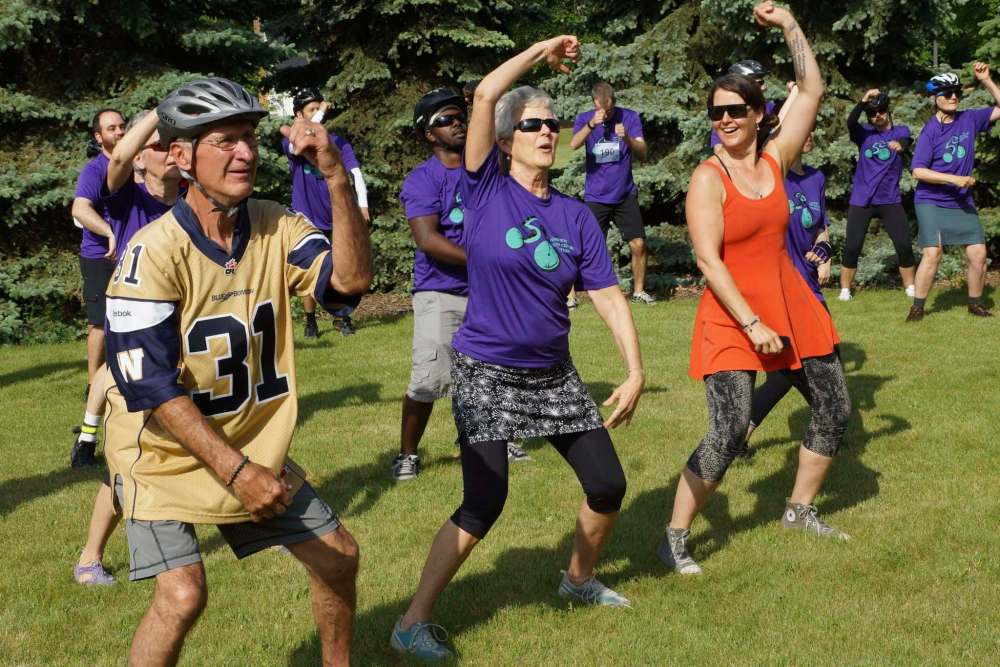
They are also determined to promote Riverview’s 22nd annual Cycle on Life fundraising bike-a-thon, set for Sept. 13, which will pay tribute to the Bomber legend, with all riders receiving “Ride for Gene” stickers to slap on their helmets.
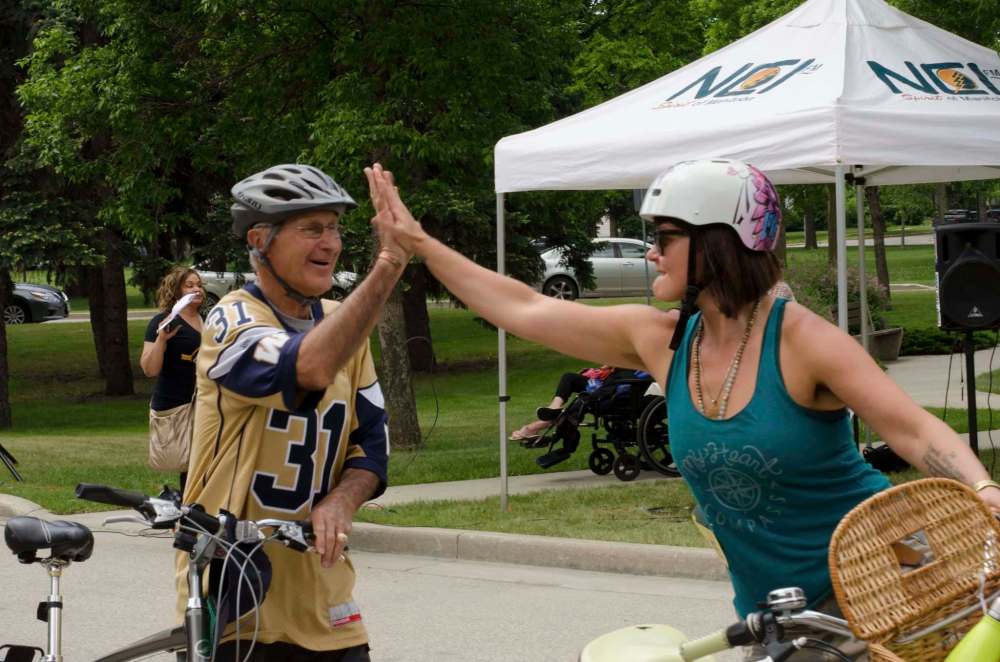
When Bomber alumni were invited to support the event about eight years ago, Gene was the first to hop on his bike, something he and his family did every year. His condition made it impossible for him to ride in 2019, but his wife and children and grandchildren will be riding for him this Sunday.
“Gene would love it. If we can help raise awareness, first about the journey with Alzheimer’s, maybe head trauma. If we can share any of that information, that’s really why we stepped up in the first place,” Lynn explained.
“I have had phone calls from three or four wives of guys that Gene played with and they are at the beginning of what Gene experienced. They are starting to recognize that something is off. So I’ve committed to being more open about it. The essence of it is, if it heightens the awareness for people who are on the same journey we were on with Gene…,” she said, her voice fading at the memory.
Which is when son Scott jumped in: “Gene’s Ride is giving our dad the voice he struggled with for many years, that he struggled communicating with.”
Chimed in daughter Corey: “It’s giving dad a voice, exactly!”
Lynn said her husband, who became a teacher after retiring from football in 1974, including 18 years teaching phys-ed at Winnipeg’s Tec Voc High School, began showing subtle signs of dementia about two years before the family signed up for the Cycle on Life.
“It started off many years ago, very subtle, and then he started recognizing (it), too. He sort of hid it for a long time. Because he was quiet and always liked to blend in the background, he was also very good at hiding his condition. But it got to the point where he couldn’t hide it anymore because he was experiencing a lot of frustration,” she recalled.
“I think I kind of knew in my heart of hearts that something was brewing … forgetfulness, lack of focus, just slowly, slowly he started to forget how to do things he’d always been able to do. He was always good at troubleshooting, fixing things and he started having more difficulty with that. He’d just forget. You’d ask him how long he’d been married and he couldn’t remember. It started to get more obvious as the years went by.
“It’s a gradual thing. That’s what makes it so difficult. It’s so slow in the beginning that you almost don’t know what’s happening and it’s very easy to deny that it’s happening or chalk it up to something else. It took me a very long time to accept, OK, this is what is happening.”
In April, when this lifelong fitness fanatic could no longer be cared for at home, his family applied to have him taken into full-time care at Riverview, where he could take advantage of the very resources for which he’d spent years raising money.
“The past year he was having some real difficulty. It was starting to affect not just his brain; it was starting to physically affect him and he ended up in hospital several times with a mysterious infection they could never really determine what was going on. He was starting to have physical symptoms as well as cognitive stuff. He was declining quite quickly in the last year,” Lynn noted.
Daughter Corey gently added: “He was always such a physical specimen. When his mind was going, he had his body to lean back on, and then in the last year the body started to falter.”
They weren’t prepared for the trauma of placing a loved one into care just as a deadly COVID-19 pandemic was sinking its teeth into the province.
“When he first went in we weren’t able to see him at all, because of COVID,” Lynn noted. “It was excruciating being separated from him and not being able for him to understand how our family got separated like that. He never fully understood that … he was always a schemer and he’d say, ‘OK, how am I going to get out of here?’ I’d say, ‘Well, we’re going to make a plan Gene, we’ll figure it out.’ With dementia, what you do is say whatever you can that is reassuring to them. I said, ‘Gene you just have to be a champion, you’ve always been a champion. Can you do that?’ And he said, ‘Yes, I can do that!’ “
The family became misty eyed as they recalled the anguish of those first days when “window visits” were the only way to see their father, husband and grandfather. “Every time he saw us, he’d be like, ‘Ah, they’re here to break me out, they’re here to get me,’ “ Corey said with a wistful smile.
Gene broke his hip in a fall, and the end came shortly after that, but his extended family was able to be at his bedside, two people at a time. “The last five days we were with him in his room to visit him, which was a huge blessing. He knew we were there,” Lynn stoically recalled.
They expressed gratitude for the compassionate care at Riverview. “The care was lovely. I can’t say enough about them. They were very attentive and good at communicating. They were doing the best they could with him. They bent over backwards. It was a really tough situation,” Lynn told a visitor.
Sheldon Mindell, executive director of Riverview Health Centre Foundation, said it was only natural for this Sunday’s Cycle on Life — with all the cash going toward programs for patients and residents in care — to honour the former Bomber great.
Mindell said Lakusiak and his teammates were drawn to Riverview because it’s the gold standard for patients who have dementia and brain injuries. “People who play contact sports have a greater likelihood of having a stroke, having a brain injury, getting dementia,” he offered.
“Gene always supported the Cycle on Life and became a Riverview resident. It’s very special. He not only joined and had his whole family involved, he ended up using the resources the facility has, the resources that he raised money for.”
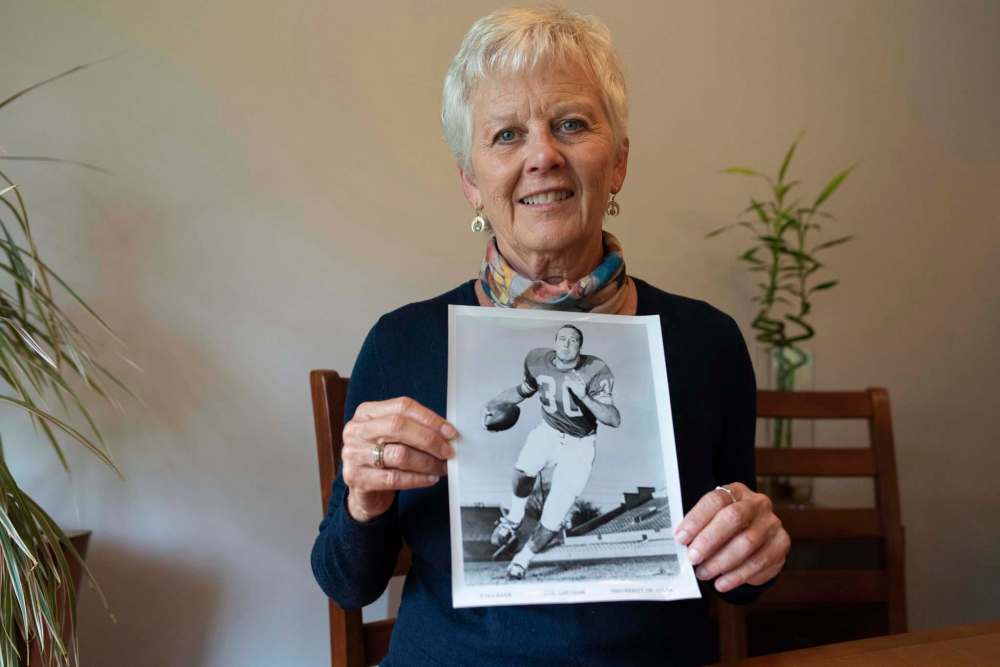
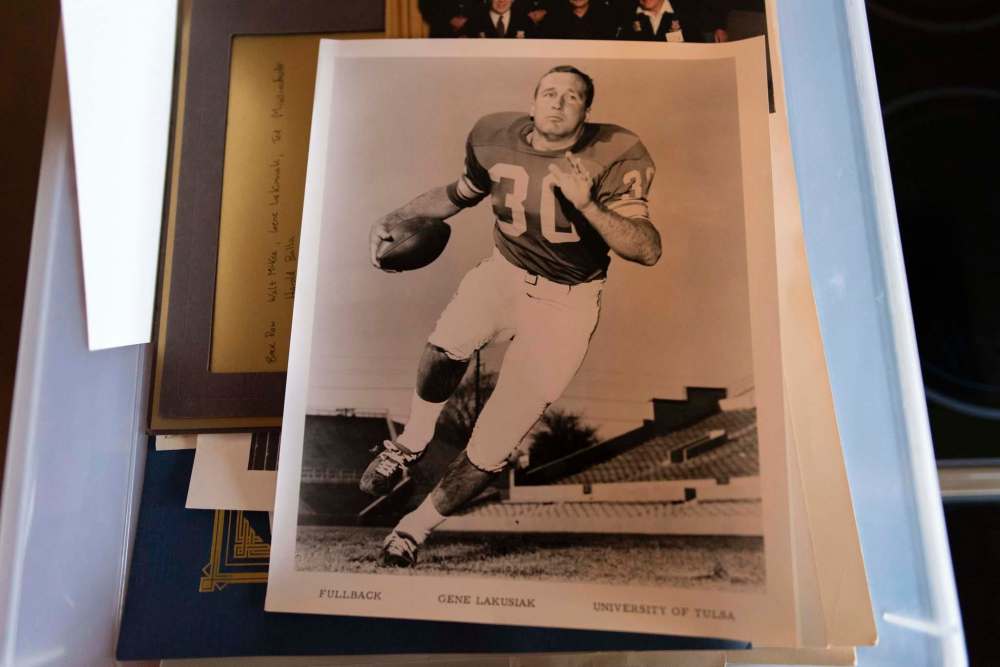
Looking at a black-and-white photo of her husband in his football gear, Lynn said she hopes Gene’s ordeal will inspire Winnipeggers to join her family at this year’s ride. “We hope that this has a big impact this year, with it being ‘Gene’s Ride.’ We hope we get a really good response, because we recognize that fundraising is really challenging this year,” she said softly.
doug.speirs@freepress.mb.ca