Peasant food on the Prairies
Syrians settled in Western Canada decades ago and their recipes have caught on with a new generation of Canadians

Advertisement
Read this article for free:
or
Already have an account? Log in here »
To continue reading, please subscribe:

Digital Subscription
One year of digital access for only $205*
- Enjoy unlimited reading on winnipegfreepress.com
- Read the E-Edition, our digital replica newspaper
- Access News Break, our award-winning app
- Play interactive puzzles
*First annual payment billed as $205.00 + GST for one year. This annual subscription will automatically renew at $233.00 + GST every 52 weeks (10% off the regular annual price of $259.35). Offer available to new and qualified returning subscribers only. Cancel any time.
To continue reading, please subscribe:
Add Free Press access to your Brandon Sun subscription for only an additional
$1 for the first 4 weeks*
- Enjoy unlimited reading on winnipegfreepress.com
- Read the E-Edition, our digital replica newspaper
- Access News Break, our award-winning app
- Play interactive puzzles
*Your next Brandon Sun subscription payment will increase by $1.00 and you will be charged $17.95 plus GST for four weeks. After four weeks, your payment will increase to $24.95 plus GST every four weeks.
Read unlimited articles for free today:
or
Already have an account? Log in here »
Hey there, time traveller!
This article was published 15/11/2017 (3165 days ago), so information in it may no longer be current.
‘Even when we didn’t have much, we didn’t go hungry,” recalls Habeeb Salloum, speaking of his childhood in Depression-era Saskatchewan.
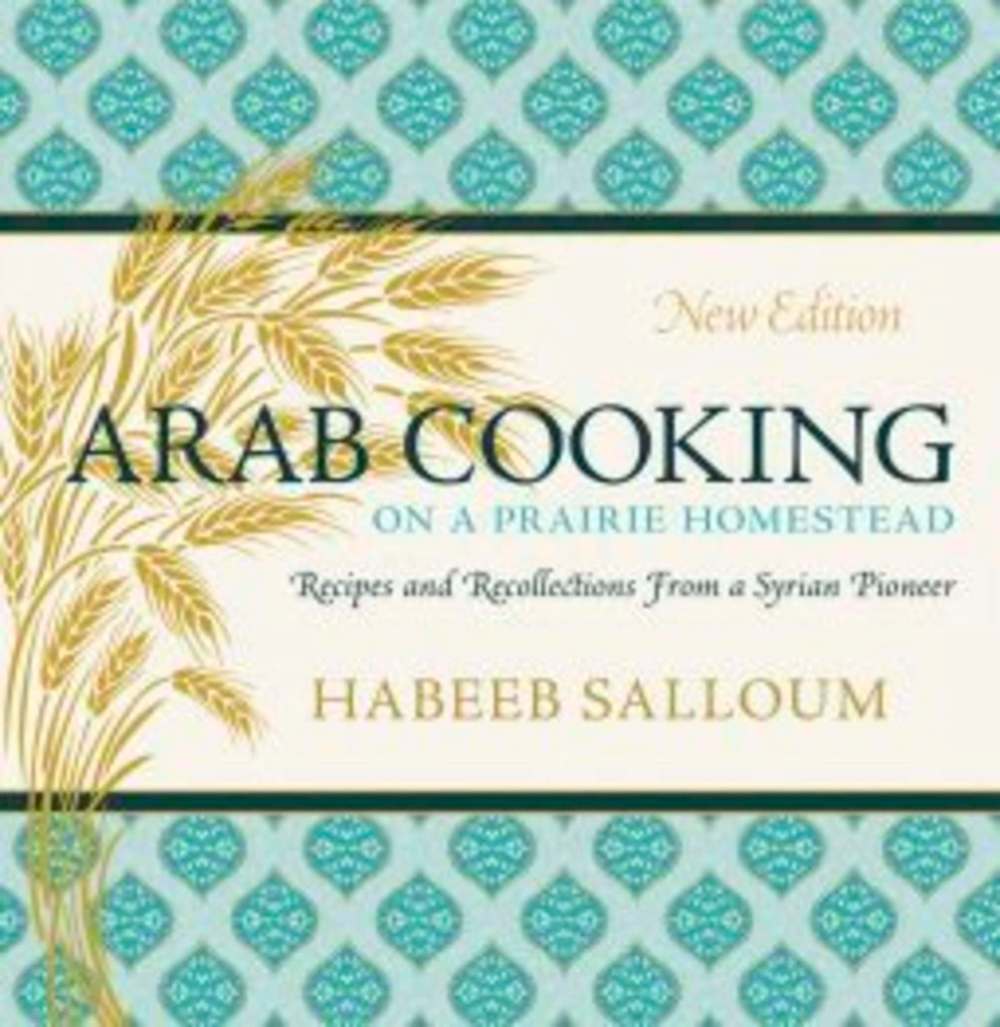
The new edition of Salloum’s awar d-winning cookbook, Arab Cooking on a Prairie Homestead: Recipes and Recollections from a Syrian Pioneer (University of Regina Press, $34.95), combines recipes, social history and a personal memoir. First released in 2005, the book seems even more timely as a new wave of Syrian immigrants comes to Canada.

The 94-year-old food and travel writer, who spoke by phone with the Free Press from his home in Toronto, sees food as a way to tell the immigrant story. “I wanted to make a sort of biography of my life,” he says.
“A lot of people have never heard of Syrian immigrants farming in the west, but they went all over the world — Argentina, Brazil, Canada, America — looking for a better life,” according to Salloum.
“And a lot of them came out west.”
His family ended up in rural Saskatchewan in the 1920s, and like many Syrians there, began growing some of the crops they knew from back home.
“Everyone grew a garden and watered it by hand,” Salloum recounts. “And they seeded chickpeas and lentils.
“The peasants of Syria and all over the Middle East had grown them since antiquity. They grew in dry conditions and they kept very well, so we always had food.”
“Saskatchewan is now the biggest exporter of lentils in the world,” Salloum says. “But nobody would even taste the lentil dishes we had back then.”
In his book, Salloum recalls yearning for white-bread sandwiches like the other kids at school and taking his mother’s traditional Arab cooking — spicy stews and lentil soups and chopped salads and hummus and yogurt — for granted. But in hindsight he came to realize the value of her cooking. “All those things we were ashamed to eat because we thought they were inferior, now they’re sold at health-food stores,” he states.
“We didn’t know it then, but lentils are one of the most nourishing foods in the world, with lots of protein.”
Arab Cooking on a Prairie Homestead offers recipes adapted from dishes cooked by Salloum’s mother through the Depression years, though he’s added some ingredients his mother would have had a hard time sourcing in the 1930s. He devotes chapters to garlic, mint, olives, tomatoes and dandelion leaves, as well as an affectionate reminiscence about saskatoon berries, the only fruit his family consumed in abundance during the Depression.
There are also sections on chickpeas, lentils, broad beans and burghul (also known as bulgur or cracked wheat), which Salloum calls “the big four.”
“It’s peasant food,” Salloum explains. “Healthy, tasty, thrifty.”
And now trendy, as well. As the interest in eating seasonally, locally and healthily increases, along with a new interest in Middle Eastern cooking, recipes from the Depression-era kitchen of Salloum’s mother feel both time-tested and contemporary.
alison.gillmor@freepress.mb.ca
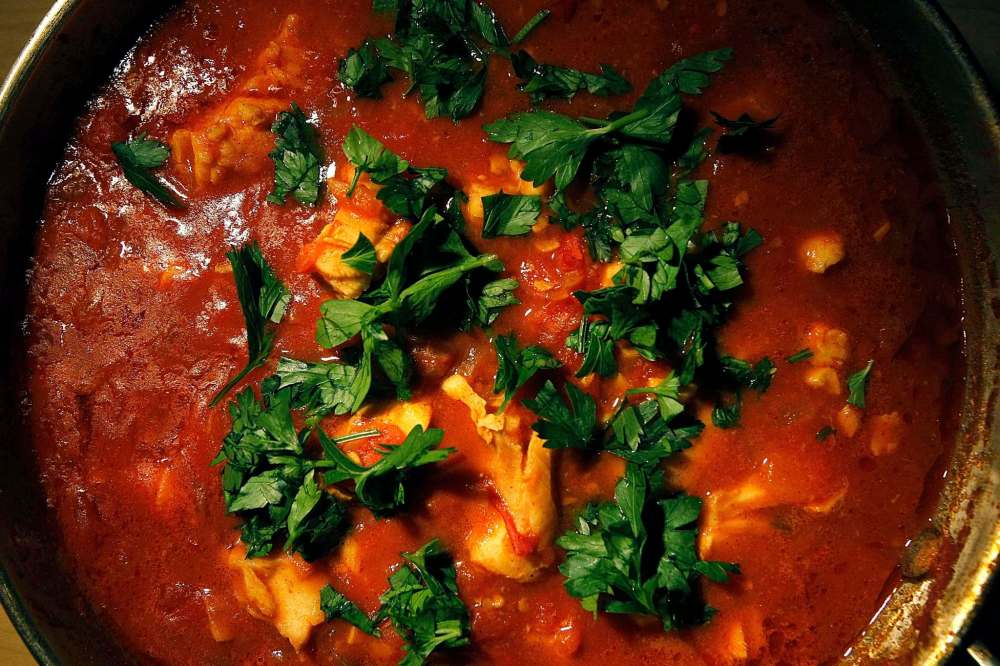
Curried Garlic Fish
Serves 6
- 60 ml (4 tbsp) olive oil
- 1 large onion, chopped
- 1/2 head of garlic, peeled and chopped
- 1 small hot pepper, seeded and finely chopped
- 5 ml (1 tsp) grated fresh ginger
- 2 medium tomatoes, chopped
- 60 ml (4 tbsp) tomato paste
- 2 ml (1/2 tsp) salt
- 2 ml (1/2 tsp) black pepper
- 2 ml (1/2 tsp) turmeric
- 1 ml (1/4 tsp) ground cardamom
- 1 ml (1/4 tsp) cumin
- 1 ml (1/4 tsp) cinnamon
- 1 ml (1/4 tsp) nutmeg
- Pinch cayenne
- 250 ml (1 cup) water
- 900 g (2 lbs) fish fillets, cut into pieces
Heat oil in a large frying pan, then add onion, garlic, hot pepper and ginger. Sauté over medium heat until onions begin to brown. Add tomatoes and tomato paste, then stir-fry for about 3 minutes. Add remaining ingredients, except fish pieces, then cover and simmer over low heat for 30 minutes. Turn heat to medium, them add fish pieces and cover. Simmer for about 20 minutes or until fish is cooked. Serve hot.
Note: Chicken may be substituted for the fish but should be cooked for about 15 minutes longer or until tender.
Tester’s notes: This was easy and very tasty, with complex seasoning and a little heat. I used boned cod fillets cut into thick chunks, which needed less than 20 minutes of cooking time — more like 10 to 12 minutes — and served the dish with rice.
Sesame Sauce (Salsat Tahini)
- 1/2 head of garlic, peeled
- 125 ml (1/2 cup) tahini (sesame-seed paste)
- 60 ml (1/4 cup) water
- 45 ml (3 tbsp) lemon juice
- 15 ml (1 tbsp) finely chopped seeded hot pepper
- 1 ml (1/4 tsp) salt
- 60 ml (1/4 cup) finely chopped parsley
- 15 ml (1 tbsp) olive oil
In a food processor, place garlic, then process for a few moments. Add tahini, water, lemon juice, hot pepper and salt, then purée, adding more water, a little at a time, until sauce becomes light in colour and the same consistency as mayonnaise.
Place on a serving platter, then garnish with parsley.
Refrigerate for half an hour, then sprinkle with oil just before serving.
Studying at the University of Winnipeg and later Toronto’s York University, Alison Gillmor planned to become an art historian. She ended up catching the journalism bug when she started as visual arts reviewer at the Winnipeg Free Press in 1992.
Our newsroom depends on a growing audience of readers to power our journalism. If you are not a paid reader, please consider becoming a subscriber.
Our newsroom depends on its audience of readers to power our journalism. Thank you for your support.
Studying at the University of Winnipeg and later Toronto’s York University, Alison Gillmor planned to become an art historian. She ended up catching the journalism bug when she started as visual arts reviewer at the Winnipeg Free Press in 1992.
Our newsroom depends on a growing audience of readers to power our journalism. If you are not a paid reader, please consider becoming a subscriber.
Our newsroom depends on its audience of readers to power our journalism. Thank you for your support.
Advertisement Advertise With Us
Advertisement Advertise With Us