People living with incurable cancers urge more research

Advertisement

Advertise with us

ATLANTA - Tom Smith hesitated to buy light bulbs guaranteed for up to 10 years, thinking they'd outlast him. Terry Langbaum debated filling a prescription for a $13,000-a-month drug that keeps cancer from worsening for three months on average and carries six pages of warnings.

Read this article for free:


or

Already have an account? Log in here »

To continue reading, please subscribe:

Subscribe and receive a limited-edition Free Press branded hat or tote.

Digital Subscription

One year of digital access for only $205*

  • Enjoy unlimited reading on winnipegfreepress.com
  • Read the E-Edition, our digital replica newspaper
  • Access News Break, our award-winning app
  • Play interactive puzzles

*First annual payment billed as $205.00 + GST for one year. This annual subscription will automatically renew at $233.00 + GST every 52 weeks (10% off the regular annual price of $259.35). Offer available to new and qualified returning subscribers only. Cancel any time.

To continue reading, please subscribe:

Add Free Press access to your Brandon Sun subscription for only an additional

$1 for the first 4 weeks*

  • Enjoy unlimited reading on winnipegfreepress.com
  • Read the E-Edition, our digital replica newspaper
  • Access News Break, our award-winning app
  • Play interactive puzzles
Start now

*Your next Brandon Sun subscription payment will increase by $1.00 and you will be charged $17.95 plus GST for four weeks. After four weeks, your payment will increase to $24.95 plus GST every four weeks.

Hey there, time traveller!
This article was published 03/04/2019 (2692 days ago), so information in it may no longer be current.

ATLANTA – Tom Smith hesitated to buy light bulbs guaranteed for up to 10 years, thinking they’d outlast him. Terry Langbaum debated filling a prescription for a $13,000-a-month drug that keeps cancer from worsening for three months on average and carries six pages of warnings.

“There are so many of us living with cancers that can’t be cured,” Langbaum said. “We study the treatments but we don’t study what it’s like to be the person going through treatment.”

Millions of people live with metastatic cancer — disease that has spread through the body and is considered incurable. They are surviving longer as treatments improve, often seeing cancer subside and flare again and again. Now many are pushing to be included more widely in research and to have it focus more on the patient’s point of view.
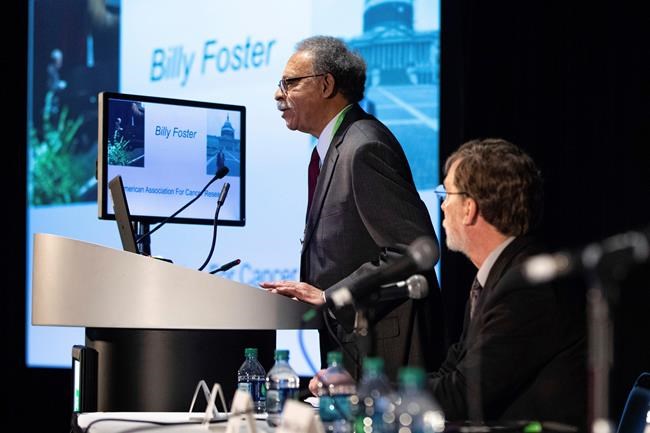
In this Saturday, March 30, 2019 photo provided by the American Association for Cancer Research, Billy Foster speaks during the organization's annual meeting in Atlanta. The jazz pianist and radio show host from Gary, Indiana had a cancerous kidney removed in 1996, but in 2007 learned the disease had spread to his lungs, liver and brain. He joined a study testing an experimental drug that helped him for five years until the company abandoned it.
In this Saturday, March 30, 2019 photo provided by the American Association for Cancer Research, Billy Foster speaks during the organization's annual meeting in Atlanta. The jazz pianist and radio show host from Gary, Indiana had a cancerous kidney removed in 1996, but in 2007 learned the disease had spread to his lungs, liver and brain. He joined a study testing an experimental drug that helped him for five years until the company abandoned it. "It wasn't working for enough people but it was saving my life," Foster said. His doctor persuaded the company to keep making the drug for him for another year, long enough for a new drug to come out that seems to be keeping his cancer in check. (Scott Morgan/AARC via AP)

“It’s really about time that happened,” said Dr. Elizabeth Jaffee, deputy director of Johns Hopkins University’s Sidney Kimmel Cancer Center. Patients should be asked what side effects and risks they’ll accept, “not just treated as research subjects,” she said.

Jaffee is president of the American Association for Cancer Research, and its annual meeting this week in Atlanta featured many talks on the need for involving patients more in metastatic cancer research. Smith is a doctor and palliative care chief at Hopkins who is being treated for metastatic prostate cancer. Langbaum is a Hopkins administrator who developed three other cancers from radiation treatments for her first one 37 years ago. Smith and Langbaum wrote about their experiences Wednesday in the New England Journal of Medicine.

Guidelines on how cancer survivors should be monitored later in life often assume the disease is in remission rather than still being treated, they wrote. Many patients now live for years with advanced cancer: Sixteen per cent of people with widely spread lung cancer survive five years. Patients wonder if they should have genetic testing, how they’ll deal with the cost of treatment and whether their doctors can keep up with the latest discoveries.

“We could also use some guidance even on seemingly irrelevant health decisions,” such as whether it’s worth it to be tested for other medical conditions or to take a cholesterol-lowering medicine “when you don’t even know if you should take a chance on purchasing airline tickets for a summer vacation,” Smith and Langbaum wrote .

Smith said hormone therapy and dozens of radiation treatments for his prostate cancer caused extreme fatigue. A marathoner, he said he “went from somebody who could run 50 miles, or 26 miles, to somebody who gets short of breath going up the stairs.”

“I’ve got terrible sleep, hot flashes every 45 minutes,” mood swings and depression, he said. Last summer, “I actually admitted myself to the hospital so I wouldn’t kill myself.”

A good psychiatrist, help from his family and a support group, and a new antidepressant have helped.
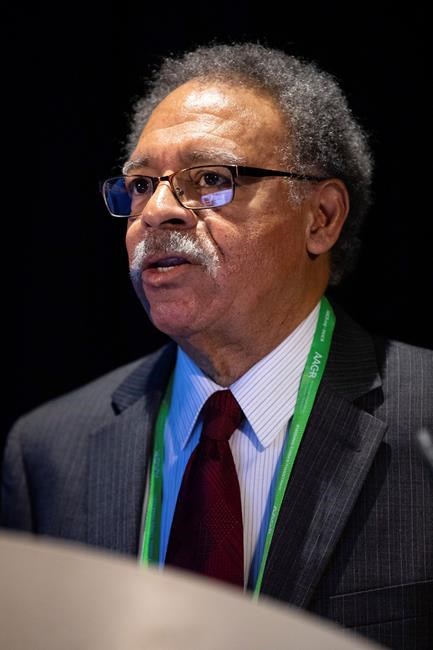
In this Saturday, March 30, 2019 photo provided by the American Association for Cancer Research, Billy Foster speaks during the organization's annual meeting in Atlanta. The jazz pianist and radio show host from Gary, Indiana had a cancerous kidney removed in 1996, but in 2007 learned the disease had spread to his lungs, liver and brain. He joined a study testing an experimental drug that helped him for five years until the company abandoned it.
In this Saturday, March 30, 2019 photo provided by the American Association for Cancer Research, Billy Foster speaks during the organization's annual meeting in Atlanta. The jazz pianist and radio show host from Gary, Indiana had a cancerous kidney removed in 1996, but in 2007 learned the disease had spread to his lungs, liver and brain. He joined a study testing an experimental drug that helped him for five years until the company abandoned it. "It wasn't working for enough people but it was saving my life," Foster said. His doctor persuaded the company to keep making the drug for him for another year, long enough for a new drug to come out that seems to be keeping his cancer in check. (Scott Morgan/AARC via AP)

When she was 34, Langbaum was treated for Hodgkin lymphoma with radiation that led to breast and stomach cancers in later years. Two years ago, doctors found an unusual and inoperable soft tissue cancer called a sarcoma between her throat and windpipe. She said she has lived “in this constant fear of the other shoe dropping.”

Billy Foster, a jazz pianist and radio show host from Gary, Indiana, who spoke at the Atlanta conference as a patient advocate, talked about the uncertainty cancer patients live with. Foster had a cancerous kidney removed in 1996, but in 2007 learned the disease had spread to his lungs, liver and brain.

“They say if you go five years, you’re kind of in the clear,” but that’s often not true, Foster said. He joined a study testing an experimental drug that helped him for five years until the company abandoned it.

“It wasn’t working for enough people but it was saving my life,” Foster said. His doctor persuaded the company to keep making the drug for him for another year, long enough for a new drug to come out that seems to be keeping his cancer in check.

Several studies are examining “what allows some people to live a very long time with incurable cancer,” said Dr. Mark Burkard, who is leading one at the University of Wisconsin in Madison for breast cancer. Around 750 women have given extensive details on their treatments and lifestyles, and tumour samples are being analyzed for genetic clues.

Langbaum and Smith say they are focusing on living. She filled the prescription she’d been debating. He bought the long-lasting light bulbs.

“I figured, even if I can’t enjoy them, the next person who lives in our house might,” he said.
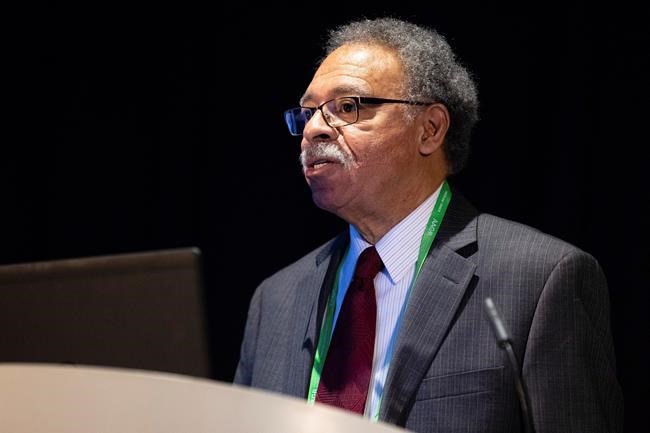
In this Saturday, March 30, 2019 photo provided by the American Association for Cancer Research, Billy Foster speaks during the organization's annual meeting in Atlanta. The jazz pianist and radio show host from Gary, Indiana had a cancerous kidney removed in 1996, but in 2007 learned the disease had spread to his lungs, liver and brain. He joined a study testing an experimental drug that helped him for five years until the company abandoned it.
In this Saturday, March 30, 2019 photo provided by the American Association for Cancer Research, Billy Foster speaks during the organization's annual meeting in Atlanta. The jazz pianist and radio show host from Gary, Indiana had a cancerous kidney removed in 1996, but in 2007 learned the disease had spread to his lungs, liver and brain. He joined a study testing an experimental drug that helped him for five years until the company abandoned it. "It wasn't working for enough people but it was saving my life," Foster said. His doctor persuaded the company to keep making the drug for him for another year, long enough for a new drug to come out that seems to be keeping his cancer in check. (Scott Morgan/AARC via AP)

___

Marilynn Marchione can be followed at http://twitter.com/MMarchioneAP

___

The Associated Press Health & Science Department receives support from the Howard Hughes Medical Institute’s Department of Science Education. The AP is solely responsible for all content.

Report Error Submit a Tip

More Stories

Trailblazing Western Scrap Metals heavy-equipment operator relishes role at massive crane’s control

David Sanderson 7 minute read Preview

Trailblazing Western Scrap Metals heavy-equipment operator relishes role at massive crane’s control

David Sanderson 7 minute read Friday, Aug. 14, 2026

Less than five per cent of heavy-equipment operators in the country are women but that number is trending upward, according to a study conducted by trade magazine Crane & Hoist Canada.

It was reported that in Ontario roughly eight per cent of jobs in the transport and heavy-equipment field are currently held by women. Furthermore, in 2024 almost 20 per cent of graduates at an Edmonton-based heavy-equipment operator training school were female, the article stated.

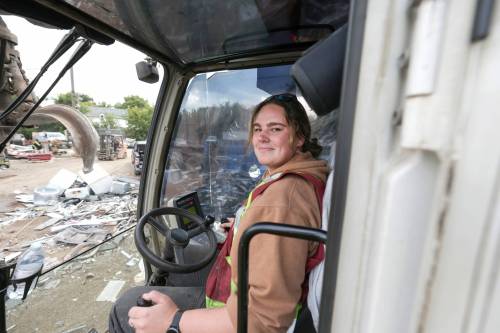
That brings us to Harmony Guspodarchuk, the first female crane operator in the 70-year history of Western Scrap Metals, a family-owned business at 18 Sutherland Ave.

Three years ago, Guspodarchuk literally stepped into the driver’s seat of a 27,500-kilogram, Liebherr C 924 Heavy Lift Litronic crane. The 29-year-old hasn’t looked back much since.

Read
Friday, Aug. 14, 2026

Rainbow Stage’s Legally Blonde a lovely legal musical

Holly Harris 6 minute read Preview

Rainbow Stage’s Legally Blonde a lovely legal musical

Holly Harris 6 minute read Friday, Aug. 14, 2026

Omigod, you guys! Rainbow Stage kicked off its penultimate summer production Thursday with a high-octane joy machine bathed in a sea of pink.

Inspired by the 2001 Hollywood film starring Reese Witherspoon, and Amanda Brown’s same-titled novel, the award-winning Legally Blonde: The Musical — featuring a book by Heather Hach, with music/lyrics by Laurence O’Keefe and Nell Benjamin — opened on Broadway in April 2007, followed by a subsequent West End run.

The tale — equal parts cheesy rom-com and potent siren call for female autonomy and empowerment — focuses on quintessential Cali-girl Elle Woods (a pitch-perfect Claire Mac Master). A proud daughter and president of Delta Nu sorority house, she enrols at Harvard Law School to win back her upwardly mobile ex-boyfriend, Warner Huntington III (Duncan Cox).

Laser-focused on marrying a “Jackie, not a Marilyn,” Warner dreams of becoming an American senator, latching onto uber-preppy fellow pupil Vivienne Kensington (Julie Davis), who becomes Elle’s arch nemesis.

Read
Friday, Aug. 14, 2026

Impaired driving victim honoured

Morgan Modjeski 6 minute read Preview

Impaired driving victim honoured

Morgan Modjeski 6 minute read Yesterday at 6:16 PM CDT

Ten years after he was killed in a collision involving an impaired driver in 2016, Robbie Anderson’s name has been added to MADD Canada’s Manitoba Memorial honouring those killed in drunk and drug-impaired-related crashes.

His older brother Chris Anderson, was one of two dozen people who gathered at the Glen Eden Funeral Home and Cemetery in West St. Paul Saturday to remember their loved ones, 86 victims whose names are etched into the granite monument near the heart of the graveyard.

“It’s heavy,” said Anderson when asked what it was like to be part of the ceremony and see his brother’s name added. “It’s been something I’ve been thinking about for a while.”

Grateful for MADD’s work and its efforts to honour Robbie, who was 27 when he died, Anderson said his brother, represented the “absolute best of us.”

Read
Yesterday at 6:16 PM CDT

Corroded Arlington overpass yields way for new hope of spanning urban chasm

Melissa Martin 6 minute read Preview

Corroded Arlington overpass yields way for new hope of spanning urban chasm

Melissa Martin 6 minute read Yesterday at 2:00 AM CDT

It’s an interesting quirk of timing, perhaps, that the end of two of Winnipeg’s most unlovely features are coming into view in the same few weeks. The rail lines that split the city in half, and the bridge that was built to tie it back together. The original problem, and the solution.

And in the confluence of those two ends, we have an opportunity to dream of what a better Winnipeg can be.

At a news conference on Wednesday, former federal transport minister Lloyd Axworthy laid out a vision for a rail line bypass that would remove more than 120 railway crossings from Winnipeg, route them through Crown and Manitoba Hydro corridor land south of the city, and reclaim 250 acres in the urban core for greenspace and development.

The next step is to focus on how to make it happen. Nothing of this scope comes easy. This new bypass plan emerged from a two-year feasibility study that Premier Wab Kinew had tasked Axworthy with back in 2024. Now, Axworthy will helm a new 90-day feasibility study zooming in on that route specifically.

Read
Yesterday at 2:00 AM CDT

Foster mom pleads guilty to assault that left six-year-old-girl paralyzed

Dean Pritchard 4 minute read Preview

Foster mom pleads guilty to assault that left six-year-old-girl paralyzed

Dean Pritchard 4 minute read Friday, Aug. 14, 2026

A Winnipeg foster mother has admitted to violently assaulting her ill foster daughter and leaving her paralyzed after the girl resisted the woman’s efforts to provide her with medication, a court has heard.

Marilyn Keno, 26, pleaded guilty Friday to one count of aggravated assault.

Keno remains in custody and will be sentenced at a later date following the completion of a court-ordered pre-sentence report.

The maximum sentence for aggravated assault is 14 years in prison. Crown attorney Alanna Littman and defence lawyer Jeremy Kostiuk did not disclose what sentences they will be recommending.

Read
Friday, Aug. 14, 2026

Big Loser’s latest a winning mix of country, folk

Ben Waldman 5 minute read Preview

Big Loser’s latest a winning mix of country, folk

Ben Waldman 5 minute read Yesterday at 6:00 AM CDT

The yellow trucker hat for sale on Facebook Marketplace said “Selkirk Lumber,” so Adam Wayne Brown knew he had to hammer home a deal.

Like the other millennial members of Winnipeg folk-country band Big Loser, the bassist has an affinity for the nostalgic, taking every opportunity — through music, through lyrics and through wardrobe — to recall the unique circumstances of growing up in a changing Interlake.

“I remember the matte yellow trucks driving around — the lumber trucks — and so I’ve had this strange memory of something disappearing from my youth and then persisting,” says Brown, who, like the band’s frontman Alex Paradoski, moved to Winnipeg more than a decade ago.

“I have a photo of the Lockport Bridge in my dining room,” chimes in Paradoski, whose first job as a teenager was bunning wieners and chopping fries at Skinner’s, a drive-in mainstay since 1929 along Highway 44.

Read
Yesterday at 6:00 AM CDT