Philly soda tax study sees sales dip, health impact unclear

Advertisement

Advertise with us

A new study bolsters evidence that soda taxes can reduce sales, but whether they influence health remains unclear.

Read this article for free:


or

Already have an account? Log in here »

To continue reading, please subscribe:

Subscribe and receive a limited-edition Free Press branded hat or tote.

Digital Subscription

One year of digital access for only $205*

  • Enjoy unlimited reading on winnipegfreepress.com
  • Read the E-Edition, our digital replica newspaper
  • Access News Break, our award-winning app
  • Play interactive puzzles

*First annual payment billed as $205.00 + GST for one year. This annual subscription will automatically renew at $233.00 + GST every 52 weeks (10% off the regular annual price of $259.35). Offer available to new and qualified returning subscribers only. Cancel any time.

To continue reading, please subscribe:

Add Free Press access to your Brandon Sun subscription for only an additional

$1 for the first 4 weeks*

  • Enjoy unlimited reading on winnipegfreepress.com
  • Read the E-Edition, our digital replica newspaper
  • Access News Break, our award-winning app
  • Play interactive puzzles
Start now

*Your next Brandon Sun subscription payment will increase by $1.00 and you will be charged $17.95 plus GST for four weeks. After four weeks, your payment will increase to $24.95 plus GST every four weeks.

Hey there, time traveller!
This article was published 14/05/2019 (2661 days ago), so information in it may no longer be current.

A new study bolsters evidence that soda taxes can reduce sales, but whether they influence health remains unclear.

The research found that Philadelphia’s 2017 tax led to a 38 per cent decline in sugary soda and diet drink sales that year, even when taking into account an increase in sales in neighbouring towns.

The results echo previous studies in Philadelphia, Berkeley and other places that have imposed beverage taxes, although the sales decline was larger than in some previous research. Unlike studies in Berkeley and Mexico, nontaxed drink sales didn’t increase during the study, “suggesting consumers were not substituting with these drinks in Philadelphia,” the researchers said.
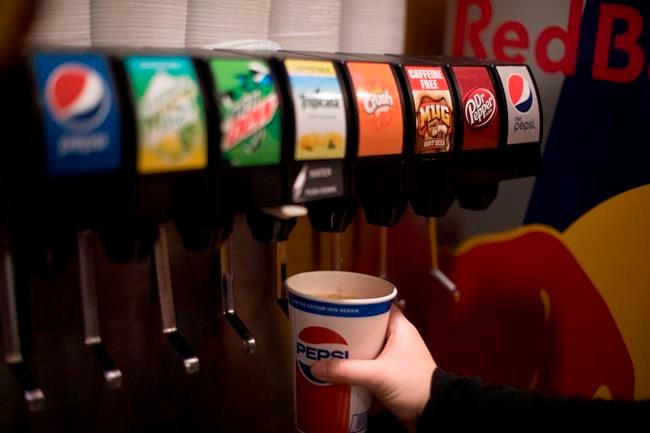
FILE - In this Dec. 25, 2018, file photo a person uses a soda fountain dispenser at the Back Bowl bowling alley in Eagle, Colo. A new study bolsters evidence that soda taxes can reduce sales but whether they influence health remains unclear. The new results were published Tuesday, May 14, 2019, in the Journal of the American Medical Association. (AP Photo/Jenny Kane, File)

The new results were published Tuesday in the Journal of the American Medical Association. Bloomberg Philanthropies, a charitable group that supports anti-obesity measures including soda taxes, paid for the study but otherwise had no role in the research.

While Americans’ soda intake has declined in recent years, physician groups including the AMA support soda taxes as a way to combat obesity. The beverage industry and many merchants have fought back, with court cases and ballot initiatives, with mixed success. Last year, Pennsylvania’s highest court upheld Philadelphia’s tax, which is levied on distributors.

Philadelphia’s tax has generated more than $130 million that’s paying for free preschool programs and other community services. The study has no data on beverage consumption or obesity rates, but lead author Dr. Christina Roberto of the University of Pennsylvania says the sales decline suggests Philadelphians are drinking less soda and is a promising sign.

“I think it’s well on its way to accomplishing its goal” of funding preschool programs and other city projects, said Roberto, an assistant professor of medical ethics and health policy. “It has this side benefit of reducing purchasing of these unhealthy drinks. It’s win-win news for public health.”

The new results are based on sales at nearly 300 supermarkets, big box stores and pharmacies in Philadelphia and its Pennsylvania suburbs. The researchers also looked at Baltimore, which doesn’t have a soda tax, for comparison purposes.

They tracked sales starting in January 2016, the year before the 1.5-cents-per-ounce tax was imposed, through December 2017. Per-ounce soda prices in Philadelphia increased by 1.56 cents at pharmacies, .87 cents at big box stories, and .65 cents at supermarkets. Sales volume decreased by 1.3 billion ounces in Philadelphia, or about 50 per cent, but that dropped to 38 per cent when counting a 308 million-per-ounce sales volume increase in bordering communities, where prices were nearly unchanged. Soda sales prices edged up and soda sales volume dipped slightly in Baltimore.

Despite uncertainty over the potential health benefits, a journal editorial says there’s enough supporting evidence “to move forward with adoption of taxes while continuing to monitor outcomes.” The editorial authors include Dr. James Krieger, a public health physician and executive director of Healthy Food America, an advocacy group that supports soda taxes and other measures aimed at curbing America’s junk food habit.

William Dermody, a spokesman for the American Beverage Association, said the study conflicts with other evidence suggesting a bigger effect from cross-border shopping for untaxed drinks outside of Philadelphia. U.S. drink-makers are reducing sugar in their products and creating smaller bottles and cans — steps he said make more sense than taxes to help Americans cut their sugar intake.
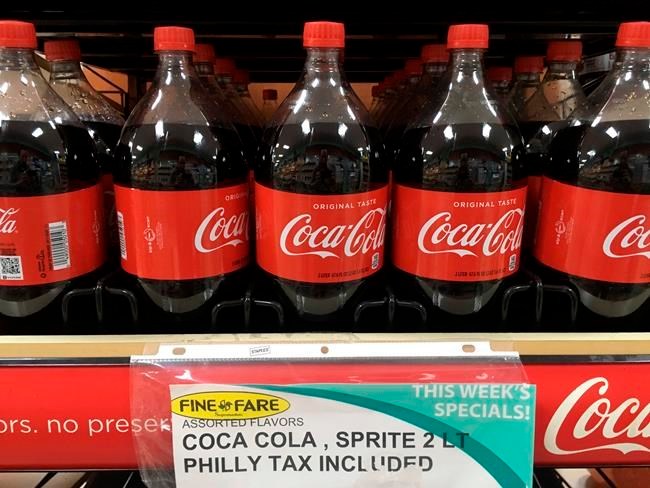
FILE - In this July 18, 2018, file photo, a sweetened beverage tax sign is posted by bottles of drinks at a supermarket in the Port Richmond neighborhood of Philadelphia. A new study bolsters evidence that soda taxes can reduce sales but whether they influence health remains unclear. The new results were published Tuesday, May 14, 2019, in the Journal of the American Medical Association. (AP Photo/Matt Slocum, File)

Soda taxes “hurt working families, small local business and their employees,” he said.

The tax has become a flashpoint in the run-up to the May 21 Philadelphia mayoral primary. Mayor Jim Kenney’s two Democratic challengers have derided the tax as regressive and are calling for it to be repealed.

In a statement, the mayor’s office said the study is “entirely supportive” of the administration’s stance on the tax, and added it doesn’t support industry claims that the tax has led to job losses.

___

The Associated Press Health and Science Department receives support from the Howard Hughes Medical Institute’s Department of Science Education. The AP is solely responsible for all content.
Report Error Submit a Tip

More Stories

Aren’t there other power options?

Jules Legal 4 minute read 2:00 AM CDT

It seems like only yesterday that Manitoba Hydro was basking in the glory of what to do with all the surplus energy being generated by the newly constructed hydro generating stations along the Nelson River. And so it built a multibillion-dollar, high-voltage hydro line to export this surplus energy to the U.S. Bipole III, they called it.

Now, managers at Manitoba Hydro are telling us Manitobans could be facing a power shortage as early as 2029 and that a natural gas turbine generating station is urgently required.

Part of this looming shortfall can be attributed to our growing population and we must not ignore the fact our consumptive lifestyle keeps demanding ever more megawatts.

So what happened to cause such a dramatic turnaround?

Woman dies in house fire on Fleet Avenue

Morgan Modjeski 4 minute read Preview

Woman dies in house fire on Fleet Avenue

Morgan Modjeski 4 minute read Updated: Yesterday at 9:37 AM CDT

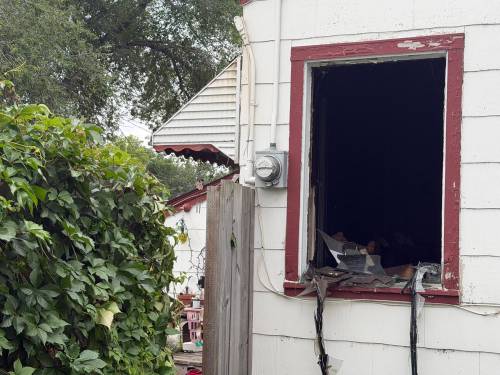
A woman is dead after a fire destroyed part of a house in Winnipeg’s Rockwood community.

Neighbour Russ Kolisnyk said he watched as fire crews battled the blaze at about 10:30 a.m. at 1076 Fleet Ave. Monday.

“They went into the back of the house with hoses, all of the other equipment, they were in their full gear,” the 61-year-old said. “Then we heard a person coming out and they came out the front door with her.”

A couple, believed to be in their 60s, lived in the home, another neighbour said.

Read
Updated: Yesterday at 9:37 AM CDT

Arts & Life team taste-tests new Kraft concoction

AV Kitching 4 minute read Preview

Arts & Life team taste-tests new Kraft concoction

AV Kitching 4 minute read 2:00 AM CDT

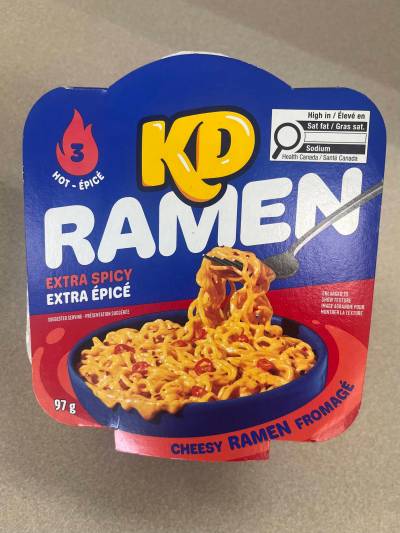
Prepare your tongue for the ultimate thrill, as Kraft Dinner has once again veered wildly out of its box and into new territory.

Just when we all thought the brand had peaked after unleashing its limited-run New York-style KD Mac & Cheesecake earlier this summer, the beloved pantry staple set its sights on dethroning another kitchen cupboard essential: instant noodles.

Emboldened by the rapturous reception of cheesecake lovers nationwide who had clearly been hankering for the savoury-sweet combo, the convenience food’s latest mashup pairs its infamous neon-orange cheese powder with classic ramen soup seasoning and dehydrated noodles.

The resulting bowl is a respectable attempt at creating a North American version of the South Korean trend of noodle lovers adding slices of processed cheese to their ramyeon to temper spice levels and added creaminess.

Read
2:00 AM CDT

Emergency rooms and health-care bottlenecks

Editorial 4 minute read Preview

Emergency rooms and health-care bottlenecks

Editorial 4 minute read 2:00 AM CDT

Manitoba’s emergency rooms are being crushed under the weight of a health-care problem that cannot be fixed inside emergency departments.

The latest picture from Winnipeg hospitals is grim. ER wait times hit an all-time high this year and there appears to be no relief in sight.

Despite a 2023 election pledge by the NDP to shorten wait times, they are getting longer and patient care is suffering. ER doctors and nurses interviewed recently by the Free Press said they have never seen the situation this bad.

The temptation for government is to look for quick fixes: add capacity to emergency departments, redirect patients to clinics or move hospital beds around the system.

Read
2:00 AM CDT

Ottawa to hit U.S. back with tariffs on steel, aluminum, smartphones and golf clubs

Nick Murray, The Canadian Press 5 minute read Preview

Ottawa to hit U.S. back with tariffs on steel, aluminum, smartphones and golf clubs

Nick Murray, The Canadian Press 5 minute read Updated: Yesterday at 6:04 PM CDT

The federal government hit back at the latest escalation in the trade war with the United States on Tuesday, announcing plans to hike American steel and aluminum tariffs from 25 to 50 per cent.

Read
Updated: Yesterday at 6:04 PM CDT

Man sues WRHA, doctors after wrong leg amputated at Grace Hospital in 2024

Erik Pindera 4 minute read Preview

Man sues WRHA, doctors after wrong leg amputated at Grace Hospital in 2024

Erik Pindera 4 minute read Monday, Aug. 24, 2026

A man whose left leg was mistakenly amputated — rather than his infected lower right leg — at the Grace Hospital in 2024 has filed a lawsuit against the Winnipeg Regional Health Authority and two doctors involved in his care.

Jason Kennedy, who lives in Winnipeg and is a member of Bloodvein First Nation, filed his statement of claim in Court of King’s Bench last week, naming the WRHA and orthopedic surgeons Dr. David John Dillon and Dr. Yiyang Zhang as defendants.

He accuses the health authority and doctors of negligence and breach of duty, among other allegations.

Kennedy was 48 when he went to Seven Oaks General Hospital on Oct. 22, 2024, with pain and an infection in his right foot.

Read
Monday, Aug. 24, 2026