Power over the peanut
New treatments help families who live with fears over potentially deadly food allergy
Advertisement
Read this article for free:
or
Already have an account? Log in here »
To continue reading, please subscribe:

Digital Subscription
One year of digital access for only $205*
- Enjoy unlimited reading on winnipegfreepress.com
- Read the E-Edition, our digital replica newspaper
- Access News Break, our award-winning app
- Play interactive puzzles
*First annual payment billed as $205.00 + GST for one year. This annual subscription will automatically renew at $233.00 + GST every 52 weeks (10% off the regular annual price of $259.35). Offer available to new and qualified returning subscribers only. Cancel any time.
To continue reading, please subscribe:
Add Free Press access to your Brandon Sun subscription for only an additional
$1 for the first 4 weeks*
- Enjoy unlimited reading on winnipegfreepress.com
- Read the E-Edition, our digital replica newspaper
- Access News Break, our award-winning app
- Play interactive puzzles
*Your next Brandon Sun subscription payment will increase by $1.00 and you will be charged $17.95 plus GST for four weeks. After four weeks, your payment will increase to $24.95 plus GST every four weeks.
Read unlimited articles for free today:
or
Already have an account? Log in here »
Hey there, time traveller!
This article was published 28/07/2018 (2908 days ago), so information in it may no longer be current.
Every year, Canadians make thousands of emergency-room visits because of food allergies, according to findings from the Canadian Institute for Health Information.
Even touching a surface that previously held peanuts can trigger anaphylaxis, a life-threatening allergic reaction. When a peanut-allergic person starts feeling their throat close up, they inject themselves with an epinephrine, or adrenalin, device and then head to the ER for a few hours of monitoring.
What if there was another way?
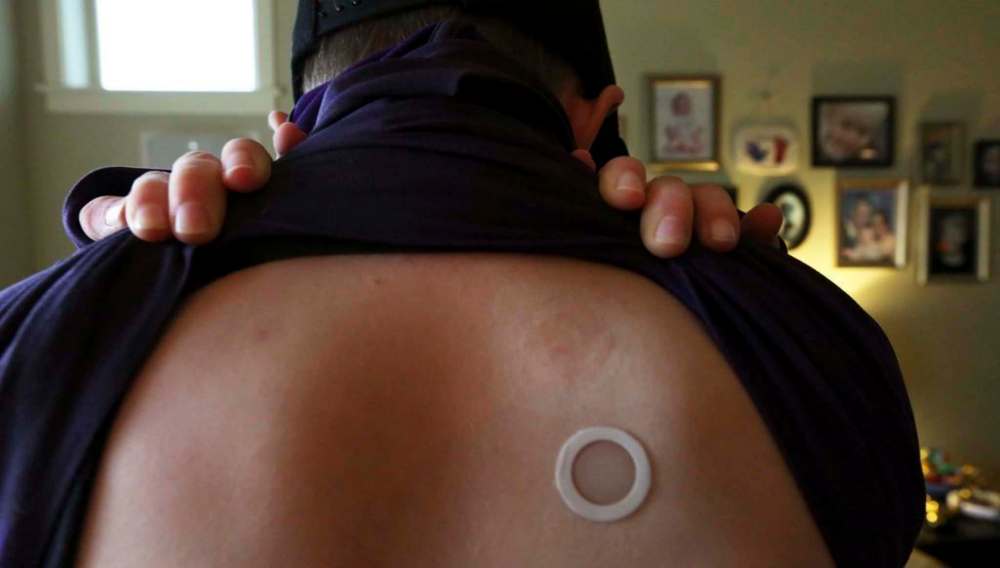
Researchers, doctors and pharmaceutical companies are trying to make people less allergic to peanuts. A peanut pill and a patch could be widely available by the end of 2019.
And in the meantime, a small number of private-practice allergists have been offering oral immunotherapy, in which you gradually eat more peanut products under a doctor’s supervision.
The majority of allergists only prescribe patients an epinephrine device and tell them to strictly avoid peanut protein, in hopes of warding off reactions such as hives, swelling, blood pressure loss and difficulty breathing. Health Canada and the U.S. Food and Drug Administration have not approved any treatments for peanut allergies, which affect two per cent of children.
This spring, Aimmune Therapeutics announced that it had wrapped up a 10-country trial for its “peanut pill,” AR101.
“Our hope all the time is to make a cure, to make this go away permanently and never have to worry about it,” said Dr. Edwin Kim, a researcher at the UNC Food Allergy Institute and the father of a peanut-allergic child. “These kids don’t want to think about it. They don’t want to have to worry about it. They want to be normal.”
Updosing and maintenance
For decades, people with “hay fever” or other environmental allergies have received allergy shots. Allergists inject you with increasing amounts of serum derived from whatever you’re allergic to, building up your tolerance for the allergen. You start twice a week and stretch out the time between injections. After several years, you’ll no longer need the shots.
“What we found out in the ’80s and ’90s was that doing something similar, like putting peanuts into an allergy shot, wasn’t effective,” Kim said. “That’s where the idea of oral immunotherapy was born, since eating the food is how your body learns to tolerate it.”
Oral immunotherapy, or OIT, works the same way the allergy shots do: slowly increase your tolerance for the allergen, until you no longer have allergic reactions to it. You start with a very small amount of the food, check to make sure you don’t have any reactions and then gradually increase that amount in a process called updosing.
Dr. Wesley Burks at Duke University first demonstrated how to increase patients’ tolerance to peanuts in 2009. His 29 patients then started with mixing a few crumbs of peanut flour into applesauce or pudding, then updosed for months by eating a little more each day to build up tolerance for the allergen.
Once they passed a “food challenge” of eating about 16 peanuts at once, the patients entered maintenance, which meant they ate eight peanuts a day for years afterward. Every OIT study since then has followed a similar updose and maintenance pattern, with some including the food challenge.
The path to the peanut pill
In 2011, a parent-run non-profit brought together representatives from the National Institute of Health, the FDA, pharmaceutical companies and academic centres to figure out how to cure food allergies. Aimmune formed from that meeting.
“They asked: ‘What will it take to get a treatment approved for food allergies?’” said Dr. Daniel Adelman, Aimmune’s chief medical officer. “We needed a high-quality, reproducible, reliable product, and there was no such thing at the time.”
By 2013, the company created AR101, capsules of proprietary peanut flour that come with a standardized updose and maintenance schedule. As in the 2009 Duke study, patients mix the peanut product with food and eat it. Aimmune has tested AR101 on more than 1,000 patients.
By the end of this year, Aimmune will apply to the FDA for a licence to sell AR101 in the U.S., Adelman said.
At the same time, another company hopes to offer a “peanut patch,” called Viaskin, which patients will wear for increasing amounts of time to updose and then will wear all the time for maintenance.
Burks has moved to the Food Allergy Institute at UNC, where researchers are also working on peanut “drops” held under the tongue, Kim said. No pharmaceutical company has picked up the drops yet, so they will not be available for consumers for at least several more years.
If they pass, AR101 and Viaskin will be the first FDA-approved products to treat peanut allergies.
Elias’s story
When Elias Kroboth of Raleigh, N.C., was a baby, he broke out in full-body hives when his brother ate a peanut butter sandwich across the table. So after Elias turned two, he started OIT with a private allergist who had worked on the Duke studies. Over the past three years, he updosed from crumbs per day to his maintenance level, when he eats five to eight peanuts per day and then rests for two hours to watch for a reaction.
His mother, Kira Kroboth, said they worked closely with Elias’s allergist. When Elias’s immune system was fighting off colds from the rest of the family or travel, she texted the allergist to ask how much to lower his daily dose. It took her several tries to find an allergist who offered OIT instead of only preaching strict avoidance.
“There was no other option besides ‘here’s an EpiPen, good luck,’” Kroboth said. “When we had that first appointment when he ate three tiny breadcrumbs of peanut, I felt OK, like we were doing something about this. Each updose was empowering.”
Both the peanut pill and private-practice oral immunotherapy claim 80 per cent to 85 per cent success at desensitizing patients to peanut proteins and cross-contamination. Both have strong supporters suspicious of the other regimen.
“If you go to the Whole Foods and get peanut flour, you don’t know the protein content of that peanut flour,” Adelman, the doctor with Aimmune Therapeutics, said. “You either are administering this as a drug where you know exactly what you’re giving and you have confidence you’re administering it in a controlled way, or you can kind of wing it and hope for the best.
“Frankly, as an allergist dealing with life-threatening allergies, I don’t play dice with my patients’ lives.”
Peanut growers hopeful
About one in 13 children has at least one food allergy, according to the non-profit organization Food Allergy Research & Education. Researchers, non-profits and industry have been scrambling for solutions for decades.
Since 2001, the National Peanut Board has put more than US$25.3 million toward peanut-allergy research, including sending funding to Burks, the lead researcher of the 2009 Duke study. They also supported a 2015 study that showed that parents should offer peanut products to very young children at risk of peanut allergy, in hopes of preventing the allergy.
“For years, pediatricians had been telling parents to wait until the child is two years old before peanuts are introduced, and the (2015) study proved that is not the right way to go and that early introduction is going to be a deterrent to keep children from developing peanut allergies,” said Bob Sutter of the North Carolina Peanut Growers Association.
Elias Kroboth, the peanut-allergic Raleigh child, doses with specially produced peanuts, which avoid cross-contamination with tree nuts and other allergens.
“We’re very excited by the possibility that children might be able to not have to avoid everything,” Sutter said. “Hopefully this (pill) will limit the accidental exposure reactions.”
Funding from the National Peanut Board and non-profit organizations support academic research in labs and with small samples, then larger pharmaceutical companies step in for large-scale development and deployment.
If the FDA approves every product, parents will have several options: the pill, the patch, the drops under the tongue and private-practice oral immunotherapy.
“The reason you have FDA approval of drugs is because they have oversight of manufacturing processes — there’s a reason for regulation,” said allergist Dr. Laurie McWilliams, who does not offer private-practice OIT. “That keeps drugs at the level they should be. What if you get a different dose on a different day because that peanut doesn’t have the same high amount of protein content?”
Kim, the allergist and parent from UNC, said the pill was the most effective but also the least convenient treatment. The patch is less effective, but has a short updose period and hassle-free application.
“In a perfect world it would be great to have multiple treatments,” Kim said. “Every child varies. Maybe the child is higher risk, and even if there’s a little more difficulty doing the treatment it’s worth it for those. Maybe for other families it’s all about convenience, and they need protection but they’re pretty good at avoidance.
“I’d love for there to be options. That would give more power to the allergist and to the families as well.”
The success of the peanut pill may spread the popularity of private-practice oral immunotherapy, McWilliams said.
“They might say the peanut product isn’t different from what’s in the grocery store, and they’ll go grind it up,” McWilliams said.
Beyond peanut, Aimmune is working on trials for egg and walnut allergies. The company behind the peanut patch is also developing patches for milk and egg allergies.
Wake County public schools do not have nut-free classrooms. Elias sits at the same lunch table each day for children with allergies, and teachers wipe him with soap and water before eating, as opposed to just water, like allergy-free children. Using oral immunotherapy to increase his tolerance for peanuts has helped the entire family, Kroboth said.
“There’s no doubt in my mind if we had not done OIT it would have been a traumatic first year of school,” Kroboth said. “We eat out, we fly, we’ve been on vacation, and these are all things we did not do in the beginning and we now do without fear. It’s life-changing.”
— News & Observer (Raleigh, N.C.)