WEATHER ALERT

Smart but nosy: Latest gadgets want to peer into our lives

Advertisement

Advertise with us

LAS VEGAS - Many of the hottest new gadgets are also the nosiest ones.

Read this article for free:

or

Already have an account? Log in here »

To continue reading, please subscribe:

Subscribe and receive a limited-edition Free Press branded hat or tote.

Digital Subscription

One year of digital access for only $205*

  • Enjoy unlimited reading on winnipegfreepress.com
  • Read the E-Edition, our digital replica newspaper
  • Access News Break, our award-winning app
  • Play interactive puzzles

*First annual payment billed as $205.00 + GST for one year. This annual subscription will automatically renew at $233.00 + GST every 52 weeks (10% off the regular annual price of $259.35). Offer available to new and qualified returning subscribers only. Cancel any time.

To continue reading, please subscribe:

Add Free Press access to your Brandon Sun subscription for only an additional

$1 for the first 4 weeks*

  • Enjoy unlimited reading on winnipegfreepress.com
  • Read the E-Edition, our digital replica newspaper
  • Access News Break, our award-winning app
  • Play interactive puzzles
Start now

*Your next Brandon Sun subscription payment will increase by $1.00 and you will be charged $17.95 plus GST for four weeks. After four weeks, your payment will increase to $24.95 plus GST every four weeks.

Hey there, time traveller!
This article was published 11/01/2019 (2752 days ago), so information in it may no longer be current.

LAS VEGAS – Many of the hottest new gadgets are also the nosiest ones.

This week’s CES tech show in Las Vegas was a showcase for cameras that livestream the living room, bathroom mirrors that offer beauty tips and gizmos that track the heartbeats of unborn children. All will collect some kind of data about their users, whether photos or monitor readings; how well they’ll protect it and what exactly they plan do with it are the important and often unanswered questions.

These features can be useful — or at least fun — but they all open the door for companies and their workers to peek into your private life. Just this week, The Intercept reported that Ring, a security-camera company owned by Amazon, gave a variety of employees and executives access to recorded and sometimes live video footage from customers’ homes.
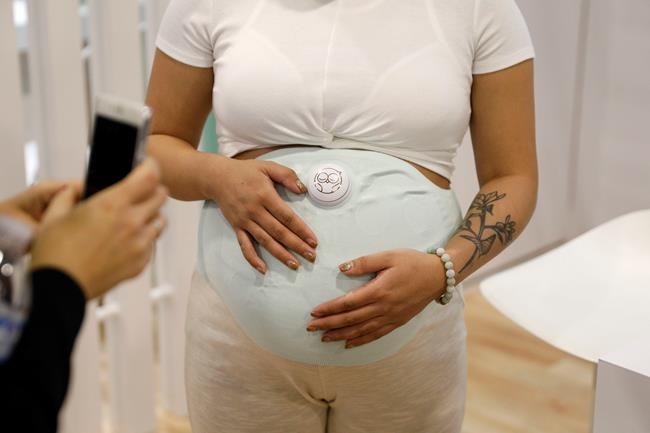
A model wears the Owlet Band pregnancy monitor at the Owlet booth at CES International, Wednesday, Jan. 9, 2019, in Las Vegas. The device can track fetal heart rate, kicks and contractions. (AP Photo/John Locher)

Our data-driven age now forces you to weigh the usefulness of a smart mirror against the risk that strangers might be watching you in your bathroom. Even if a company has your privacy in mind, things can go wrong: Hackers can break in and access sensitive data, or your ex might hold onto a video feed long after you’ve broken up.

“It’s not like all these technologies are inherently bad,” says Franziska Roesner, a University of Washington computer security and privacy researcher.

But she said the industry is still trying to figure out the right balance between providing useful services and protecting people’s privacy in the process.

AMAZON’S VIDEO FEEDS

Like other security devices, Ring cameras can be mounted outside the front door or inside the home; a phone app lets you see who’s there. But the Intercept said the Amazon-owned company was also allowing some high-level engineers in the U.S. to view customers’ video feeds, while others in the Ukraine office could view and download any customer video file.

In a statement, Ring said some Amazon employees have access to videos that are publicly shared through the company’s Neighbors app, which aims to create a network of security cameras in an area. Ring also says employees get additional video from users who consent to such sharing.

At CES, Ring announced an internet-connected video doorbell that fits into the peepholes in apartment or dorm-room doors. Though it doesn’t appear Ring uses facial recognition yet, records show that Amazon recently filed a patent application for a facial-recognition system involving home security cameras.

LIVING ROOM LIVESTREAM

It’s one thing to put cameras in our own homes, but Alarm.com wants us to also put them in other people’s houses.

Alarm’s Wellcam is for caretakers to watch from afar and is mostly designed to check in on aging relatives. Someone who lives elsewhere can use a smartphone to “peek in” anytime, says Steve Chazin, vice-president of products.

The notion of placing a camera in someone else’s living room might feel unsettling.

Wellcam says video streaming isn’t started until someone activates it from a phone and then it stops as soon as the person turns it off. Chazin says such cameras are “becoming more acceptable because loved ones want to know that the ones they care about are safe.”

Just be sure you trust whom you’re giving access to. You can’t turn off the camera unless you unplug it.

BATHROOM CAMERAS

French company CareOS showcased a smart mirror that lets you “try on” different hairstyles. Facial recognition helps the mirror’s camera know which person in a household is there, while augmented-reality technology overlays your actual image with animation on how you might look.

CareOS expects hotels and salons to buy the $20,000 Artemis mirror – making it more important that personal data is protected.

“We know we don’t want the whole world to know about what’s going on in the bathroom,” co-founder Chloe Szulzinger said.

The mirror doesn’t need an internet connection to work, she said. The company says it will abide by Europe’s stronger privacy rules, which took effect in May, regardless of where a customer lives. Customers can choose to share their information with CareOS, but only after they’ve explicitly agreed to how it will be used.

The same applies for the businesses that buy and install the mirror. Customers can choose to share some information — such as photos of the hair cut they got last time they visited a salon — but the businesses can’t access anything stored in user profiles unless users specifically allow them to.

BODILY DATA

Some gadgets, meanwhile, are gathering intimate information.

Yo Sperm sells an iPhone attachment that tests and tracks sperm quality. To protect privacy, the company recommends that users turn their phones to airplane mode when using the test. The company says data stays on the phone, within the app, though there’s a button for sharing details with a doctor.

Owlet, meanwhile, plans to sell a wearable device that sits over a woman’s pregnant belly and tracks fetal heartbeats. The company’s privacy policy says personal data gets collected. And users can choose to share heartbeat information with researchers studying stillbirths.

Though such data can be useful, Forrester analyst Fatemeh Khatibloo warns that these devices aren’t regulated or governed by U.S. privacy law. She warns that companies could potentially sell data to insurance companies who could find, for instance, that someone was drinking caffeine during a pregnancy — potentially raising health risks and policy premiums.

___

Lerman reported from Seattle.

Report Error Submit a Tip

More Stories

Safety assessment planned following drownings

Nicole Buffie 4 minute read Preview

Safety assessment planned following drownings

Nicole Buffie 4 minute read Thursday, Jul. 23, 2026

The Manitoba government will conduct an assessment of high-risk trails and areas in its parks system following the drownings of two siblings at Nutimik Lake in the Whiteshell.

Environment Minister Mike Moyes has ordered his department to identify high-risk areas after Maximo Au Ramirez, 10, slipped on rocks near Sturgeon Falls and fell in the lake Saturday. His brother, Aaron Au Ramirez, 13, went in to try to save him.

The body of Aaron was recovered Thursday evening, 24 hours after his brother’s body was found Wednesday.

“We have a lot of beautiful parks and spaces, but to flag any areas that could need greater improvements for safety, and so we’re going to take a really comprehensive approach to ensuring that Manitobans can enjoy nature, but do it in a way that’s safe,” Moyes said Thursday.

Read
Thursday, Jul. 23, 2026

A distraction for the war-weary

Gwynne Dyer 5 minute read 2:01 AM CDT

I have been writing this column twice a week for a long time, so I have a finely developed sense for when the audience is sick of a subject. We have definitely crossed that boundary with regard to the wars currently being fought up and down the strip of land between the longitudes of 40°E and 50°E (Eastern Ukraine/Persian Gulf/Israel, Gaza and Lebanon).

It’s not just that they are stupid wars, launched by men who were too ignorant or too arrogant to realize that they could not win them (Vladimir Putin, Donald Trump, Benjamin Netanyahu), and it’s certainly not because they are harmless wars.

Not only are they killing thousands of people every week, but in every case the country that started the war also has nuclear weapons. In each case there is a small but real possibility that the leader in question might resort to using at least one “tactical” nuclear weapon as a final warning rather than accept the blame for a humiliating failure to achieve his aims.

Yet nothing much new and interesting is happening from one day to the next in any of these wars, and the audience would really like to move on. I have been trying to write about something else at least once a week, so I thought: maybe I could do a piece about Kim Jong Un’s teenage daughter’s chance of being North Korea’s next dictator.

Telecom on defensive after about 90 emergency calls fail over several hours

Chris Kitching 7 minute read Preview

Telecom on defensive after about 90 emergency calls fail over several hours

Chris Kitching 7 minute read Thursday, Jul. 23, 2026

Bell Canada — Manitoba’s 911 service provider — is facing questions about reliability and redundancy measures after an hours-long outage outside Winnipeg, caused by a severed fibre optic cable, prevented dozens of calls from getting through Wednesday.

Bell spokeswoman Elise von Scheel said backup systems that reroute 911 calls when an outage occurs due to equipment damage also experienced “issues” after a third party cut the cable during construction “near Winnipeg.”

“Manitoba’s 911 system relies on legacy architecture that does not support the failsafes that newer systems have, which is why Bell is in the process of upgrading the ecosystem to next generation 911,” von Scheel wrote in an email.

“All Manitoba public safety answering points are planned to be migrated to the new system by the end of 2026. Migration to NG911 is the fastest and most effective remediation to prevent instances like this in the future.”

Read
Thursday, Jul. 23, 2026

Automation reaches new heights on farm

Laura Rance-Unger 4 minute read Preview

Automation reaches new heights on farm

Laura Rance-Unger 4 minute read 2:01 AM CDT

LANGHAM, Sask. — The thousands of farmers from across the Prairies who flock to the annual Ag in Motion show every July seem oblivious to the possibility the technology on display could one day replace many of them.

Families with children in tow, Hutterite colony workers, grandparents and young couples just starting out roamed through the 600 or more exhibitor displays, amazed at how everything about farming just keeps getting bigger, more efficient and increasingly more automated.

It’s now possible to seed using a 100-foot-wide drill — a 12-foot jump over the widest available a few years ago — provided the farmer can afford a tractor with enough horsepower to pull it. Those sell for around $850,000 and up.

Granted, the number of farms with enough acres to justify that kind of width and drawing power is still relatively small, but farms continue to grow. And it’s no secret the number of people who have the interest, skills and financial wherewithal to run them continues to shrink.

Read
2:01 AM CDT

Firefighter accused of violating protection order jailed for past harassment

Dean Pritchard 5 minute read Preview

Firefighter accused of violating protection order jailed for past harassment

Dean Pritchard 5 minute read Thursday, Jul. 23, 2026

A Winnipeg firefighter accused of violating a protection order this week has been jailed two times in the past decade for criminally harassing two different women, court records show.

In each case, Christopher Goethals was allowed to return to his job with the Winnipeg Fire Paramedic Service.

Goethals, 59, was arrested July 21 after breaching a protection order requiring he not come within 200 metres of a named protected person, police said.

Police allege Goethals was in full uniform and on “modified duties” driving a WFPS fleet vehicle at the time of the offence.

Read
Thursday, Jul. 23, 2026

Convicted sex offender awaits latest sentence

Dean Pritchard 5 minute read Preview

Convicted sex offender awaits latest sentence

Dean Pritchard 5 minute read 2:01 AM CDT

Prosecutors are seeking a 15-year prison sentence for a Red Lake, Ont., man who groomed two Indigenous girls online and drove nearly 500 kilometres to Winnipeg to sexually abuse one of them.

Scott Christopher Alcorn, 50, has pleaded guilty to one count each of child luring, sexual interference and possession of child sexual abuse material.

Alcorn was still on parole for child sex offences at the time of his April 2025 arrest, having been convicted four years earlier of providing a 16-year-old girl a bottle of alcohol in exchange for sex.

“Despite this (prior conviction)… Mr. Alcorn egregiously reoffended, this time to lure two children online and successfully groomed, manipulated and commodified one of (the victims),” Crown attorney Dayna Queau-Guzzi told provincial court Judge Robert Heinrichs at a sentencing hearing Thursday.

Read
2:01 AM CDT