Recipe collection offers insight into 18th century life in the Maritimes
Advertisement
Read this article for free:
or
Already have an account? Log in here »
To continue reading, please subscribe:

Digital Subscription
One year of digital access for only $205*
- Enjoy unlimited reading on winnipegfreepress.com
- Read the E-Edition, our digital replica newspaper
- Access News Break, our award-winning app
- Play interactive puzzles
*First annual payment billed as $205.00 + GST for one year. This annual subscription will automatically renew at $233.00 + GST every 52 weeks (10% off the regular annual price of $259.35). Offer available to new and qualified returning subscribers only. Cancel any time.
To continue reading, please subscribe:
Add Free Press access to your Brandon Sun subscription for only an additional
$1 for the first 4 weeks*
- Enjoy unlimited reading on winnipegfreepress.com
- Read the E-Edition, our digital replica newspaper
- Access News Break, our award-winning app
- Play interactive puzzles
*Your next Brandon Sun subscription payment will increase by $1.00 and you will be charged $17.95 plus GST for four weeks. After four weeks, your payment will increase to $24.95 plus GST every four weeks.
Read unlimited articles for free today:
or
Already have an account? Log in here »
Hey there, time traveller!
This article was published 14/05/2019 (2663 days ago), so information in it may no longer be current.
FREDERICTON – You’re not going to find the latest recipe for avocado toast, but a new collection of recipes is offering an insight into early colonial life in the Maritimes, including advice for making your own medicine, desserts, and even how to catch a rat.
“People had to figure out how to live — not just what to eat, but how to stay dry, get well, grow food and build and maintain houses. Recipes helped with all of that,” said Edith Snook, an English professor at the University of New Brunswick.
Snook and Lyn Bennett, an associate professor of English at Dalhousie University and a team of research assistants have spent the last three years digging through archives to find recipes written in the Maritimes before 1800.
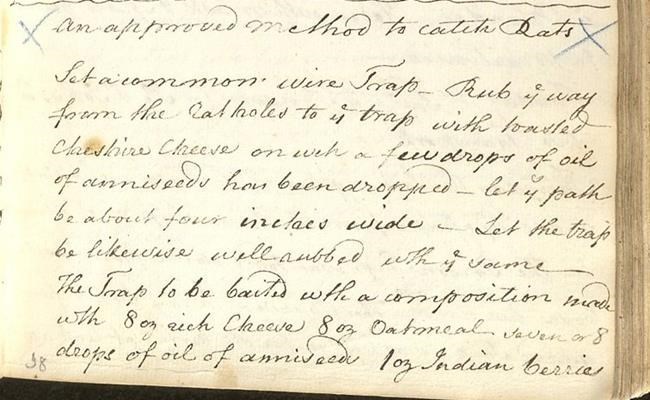
“In the settler society of the 18th century Maritimes, recipes were used for all kinds of things, including food and drinks, but also medicines, household items like shoe polish and construction and agricultural products,” she said.
The team found over 500 recipes in newspapers and hand-written documents.
Snook said in many cases the recipes were included in letters sent to other people, or kept with other important papers.
“The biggest category is medicine for human cures for all kinds of 18th century diseases like gout or whatever, and things that we have now like cancer. There are things for the skin, for pimples, veterinary medicine, or things for cleaning your teeth,” she said.
“Basically everything that you might want to use to cure yourself or clean yourself, there’s a recipe to make it.”
Snook said, in a settler colony, people couldn’t just go to the corner store to get everything they needed, so they often had to make things themselves.
She said she was surprised at the global influence on the recipes, which included knowledge from places as far away as India, China and central Russia.
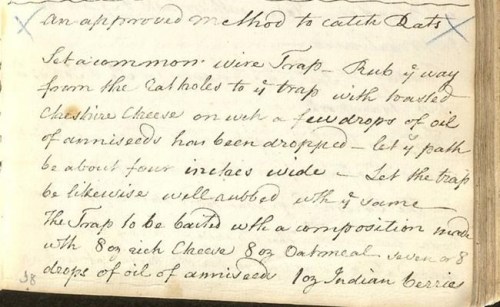
There are instructions for how to make fertilizer, how to grow things, even how to set a rat trap.
As for food recipes, Snook and her colleagues tested a recipe they found for gingerbread, but the results were not very appetizing.
“It was very, very hard,” she said in dismay.
“One issue is that a lot of the recipes do not have very detailed instructions. They kind of assume you already know how to make bread or pudding. It may have some general gesture towards things, but it’s nowhere near the level of detail about temperature and measurements or stirring techniques that we have today,” Snook said.
Asked if she found anything fun, Snook said they found a recipe for rum jellies, which are much like Jell-O shooters.
“That seems like kind of fun. It seemed strangely modern in a way,” she said.
The collection is called Early Modern Maritime Recipes and a searchable database can be found at
https://emmr.lib.unb.ca/