WEATHER ALERT

Reply none: Digital snubs inevitable but consequences can be severe, say experts

Advertisement

Advertise with us

Danielle James' phone just won't stop buzzing.

Read this article for free:

or

Already have an account? Log in here »

To continue reading, please subscribe:

Subscribe and receive a limited-edition Free Press branded hat or tote.

Digital Subscription

One year of digital access for only $205*

  • Enjoy unlimited reading on winnipegfreepress.com
  • Read the E-Edition, our digital replica newspaper
  • Access News Break, our award-winning app
  • Play interactive puzzles

*First annual payment billed as $205.00 + GST for one year. This annual subscription will automatically renew at $233.00 + GST every 52 weeks (10% off the regular annual price of $259.35). Offer available to new and qualified returning subscribers only. Cancel any time.

To continue reading, please subscribe:

Add Free Press access to your Brandon Sun subscription for only an additional

$1 for the first 4 weeks*

  • Enjoy unlimited reading on winnipegfreepress.com
  • Read the E-Edition, our digital replica newspaper
  • Access News Break, our award-winning app
  • Play interactive puzzles
Start now

*Your next Brandon Sun subscription payment will increase by $1.00 and you will be charged $17.95 plus GST for four weeks. After four weeks, your payment will increase to $24.95 plus GST every four weeks.

Hey there, time traveller!
This article was published 07/02/2019 (2726 days ago), so information in it may no longer be current.

Danielle James’ phone just won’t stop buzzing.

She’s fielding a barrage of emails for her work at a Toronto production company when — buzz — her friend sends her a picture of another vegan lunch on Snapchat. She’s coaching her brother through his college applications when — buzz — she gets a LinkedIn message from an old colleague looking to reconnect. She’s finally getting back to a weeks-old email from a relative when — buzz, buzz, buzz — her group chat with her high school classmates starts acting up with plans for drinks.

All day long, it’s like this: a steady thrum of notifications, each seeming to demand the 23-year-old’s immediate and undivided attention. With an influx of hundreds of emails, texts and social media messages per day, James said keeping up with her virtual correspondence could be a “full-time job.” So sometimes, she won’t reply — then the pang of guilt hits.

A woman types on a computer keyboard in North Vancouver, B.C., on Wednesday, December 19, 2012. In the age of ceaseless electronic communication, people are expected to be digitally available on demand, and violating this reply cyber-etiquette can have severe consequences. THE CANADIAN PRESS/Jonathan Hayward

“When you’re always accessible … there’s no escaping keeping up the social pretext and just being on your own,” said James. “Your phone is always demanding that you be present enough to answer all these messages, and I think that’s a lot to ask of people living real lives.”

It’s a problem experts say many are facing in the age of ceaseless electronic communication — people are expected be digitally available on demand, and violating this cyber-etiquette can have severe consequences.

Julian Emilio, 28, said for a period, he was so overwhelmed by his inbox that he wouldn’t check his emails for weeks, and as unread messages from his supervisor piled up, he believes his reply anxiety cost him professional opportunities.

When she moved to Toronto for university, international student Navi Suresh thought social media would help her stay connected with friends back home. But instead, the 22-year-old feels those relationships have suffered because of her lagging response times, so she now limits her social circle to a few friends with lower digital demands.

Meanwhile, on the other end of the digital exchange, jilted interlocutors are filling the void of a non-response with their own social stresses.

Alex Gerdts of Woodstock, N.B., is frustrated by how frequently he’s left hanging in the middle of an online chat, stirring worries about whether he said something wrong or “nuttier” than expected.

“It’s rude, but people don’t see it as rude,” said Gerdts, 27. “We have lost the idea of manners with a conversation.”

Ottawa-based etiquette expert Julie Blais Comeau agrees the obligation to respond has eroded over the years, particularly among millennials, whose “nonchalant” approach to replying can seem uncourteous to older generations.

With the rules of reply reciprocity still being established, she advises manners-minded Canadians to be explicit about their expectations concerning the timing and mode of responses.

Aimee Morrison, an associate English professor at the University of Waterloo who studies the digital humanities, said a one-size-fits-all social protocol may not be realistic due to the sheer volume and variety of electronic forms of communication, each platform with its own conventions.

This is further complicated by tools that allow senders to peer into the other side of their digital transmission — such as read receipts, last-active statuses and blinking dots to indicate someone is typing — which, combined with public displays of online engagement, can invite conflict over how and when a person chooses to respond, said Morrison.

“Your activities online are open to a kind of surveillance that makes you explain yourself to people in ways that we’ve never had to explain ourselves before,” she said.

Lwam Mehari, 30, is all too familiar with these virtual faux pas, and has developed strategies to prevent them. The Toronto resident tries to not open messages until she knows she can respond to them, so as to avoid leaving a friend “on read” — meaning the sender knows a message has been seen, but the recipient hasn’t replied.

“It kind of implies that you’re not a priority, and maybe they want to create some distance,” Mehari explains. “It’s definitely major shade.”

The trouble is that people’s minds tend to leap to the worst explanation for a non-response, said Mehari, when often, the real reasons are quite mundane. Maybe the recipient’s phone ran out of battery, or they could be preoccupied with other concerns in the physical realm.

As Morrison sees it, this is the true social cost of mutually assured reply burden: it distracts from the real-world connections we’re so invested in maintaining.

“You may feel like you need an answer right away, but that’s just because the device has trained you that it’s possible,” she said. “That pressure comes a little bit from the immediacy of the devices, and it doesn’t come from the people.”

For all her digital contact, James said her ever-buzzing phone hasn’t brought her closer to the people she cares about. If anything, it’s strained her in-person interactions, because by the time she sees her friends, there’s not that much to catch up on. Then, another buzz beckons.

“I think it’s really easy to get disconnected when you’re constantly connected,” said James. “It blurs the lines of time spent face-to-face with real people, and time spent being available digitally.”
Report Error Submit a Tip

More Stories

Dropping the gloves to make the point

Editorial 4 minute read Preview

Dropping the gloves to make the point

Editorial 4 minute read Yesterday at 2:01 AM CDT

In hockey parlance, it’s called “shedding,” the moment in a game when you are forced to deal with an instigator by dropping (shedding) your gloves for an all-out brawl.

That term is a deep cut from hockey culture that Prime Minister Mark Carney — he of the “elbows up” phenomenon — may need to not only embrace but practise more often in the face of yet another round of overly punitive tariffs imposed by United States President Donald Trump.

To be fair, under Carney’s leadership, Canada has not exactly rolled over in the face of Trump’s bully-boy tactics.

Yes, Canada has made concessions to placate Trump to further a new continental trade agreement: investing more money to combat the cross-border flow of fentanyl that isn’t actually happening, stalling efforts to tax streaming companies as most European countries already do, and — most recently — giving Trump a cut of profits from the Canadian-made, Canadian-paid Gordie Howe bridge between Windsor and Detroit.

Read
Yesterday at 2:01 AM CDT

For unique Menno-centric take on Free Press, satirist mines her jibes between the lines

David Sanderson 8 minute read Preview

For unique Menno-centric take on Free Press, satirist mines her jibes between the lines

David Sanderson 8 minute read Yesterday at 10:40 AM CDT

Free Press readers of a certain vintage may remember when tuning into a local radio station to hear a pair of disc jockeys perusing a section of the Saturday edition was appointment listening.

On Sunday mornings from 1962 until the mid-1980s, CKRC 630 personalities Bob Washington and Tom Ashmore — better known as Wash and Ash — entertained Winnipeggers of all ages by impersonating the likes of Dennis the Menace, Beetle Bailey and Archie Andrews, as they lent their voices to that weekend’s multi-page, colour comic insert.

In a 1984 interview, Washington, who died in 2016 at the age of 82, attributed the weekly program’s longevity to audiences enjoying the antics of “two middle-aged guys in 24 dialects, giving their version of what Dagwood is saying to Blondie, or what Hägar the Horrible is bragging about.”

More than 40 years later, another Winnipegger is turning to the Free Press for her material. Only instead of reading the paper’s funnies, Lori Klassen, a mother of three and grandmother of two, is funnily reading the paper.

Read
Yesterday at 10:40 AM CDT

A 39-year-old woman has been charged after police say a retail theft attempt led to a knife being used against a security guard at a store on Portage Avenue.

The Winnipeg Police Service said Central District General Patrol officers arrested the woman at about 5:30 p.m. on Thursday in connection with a robbery at a retail store in the 300 block of Portage Avenue.

Police said the woman entered the store shortly before 2 p.m. and attempted to steal merchandise before being confronted by store security. Police said the suspect then brandished a knife and assaulted a security guard.

Security was able to gain control of the suspect, and police were contacted.

Long may you scamper, sweet little Jimothy

Jen Zoratti 5 minute read Preview

Long may you scamper, sweet little Jimothy

Jen Zoratti 5 minute read Yesterday at 2:01 AM CDT

We desperately needed a folk hero this summer, with its wildfires and storms and diarrhea lettuce. Someone to unite us, to inspire us, to get us through.

Enter Jimothy.

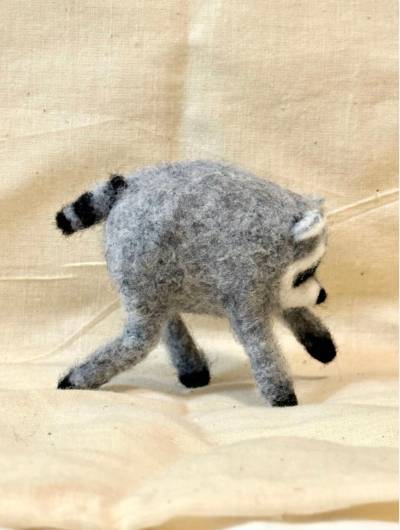
Jimothy is an off-kilter raccoon with an appropriately off-kilter name from Seattle who has gone viral for his short, round body — likely the result of a congenital condition called short spine syndrome.

I have seen various creative descriptions of Jimothy online: “a child’s rendering come to life,” or “a raccoon drawn from memory,” or not a raccoon but a “rcn,” owing to his truncated spine.

Read
Yesterday at 2:01 AM CDT

A distraction for the war-weary

Gwynne Dyer 5 minute read Yesterday at 2:01 AM CDT

I have been writing this column twice a week for a long time, so I have a finely developed sense for when the audience is sick of a subject. We have definitely crossed that boundary with regard to the wars currently being fought up and down the strip of land between the longitudes of 40°E and 50°E (Eastern Ukraine/Persian Gulf/Israel, Gaza and Lebanon).

It’s not just that they are stupid wars, launched by men who were too ignorant or too arrogant to realize that they could not win them (Vladimir Putin, Donald Trump, Benjamin Netanyahu), and it’s certainly not because they are harmless wars.

Not only are they killing thousands of people every week, but in every case the country that started the war also has nuclear weapons. In each case there is a small but real possibility that the leader in question might resort to using at least one “tactical” nuclear weapon as a final warning rather than accept the blame for a humiliating failure to achieve his aims.

Yet nothing much new and interesting is happening from one day to the next in any of these wars, and the audience would really like to move on. I have been trying to write about something else at least once a week, so I thought: maybe I could do a piece about Kim Jong Un’s teenage daughter’s chance of being North Korea’s next dictator.

Automation reaches new heights on farm

Laura Rance-Unger 4 minute read Preview

Automation reaches new heights on farm

Laura Rance-Unger 4 minute read Yesterday at 2:01 AM CDT

LANGHAM, Sask. — The thousands of farmers from across the Prairies who flock to the annual Ag in Motion show every July seem oblivious to the possibility the technology on display could one day replace many of them.

Families with children in tow, Hutterite colony workers, grandparents and young couples just starting out roamed through the 600 or more exhibitor displays, amazed at how everything about farming just keeps getting bigger, more efficient and increasingly more automated.

It’s now possible to seed using a 100-foot-wide drill — a 12-foot jump over the widest available a few years ago — provided the farmer can afford a tractor with enough horsepower to pull it. Those sell for around $850,000 and up.

Granted, the number of farms with enough acres to justify that kind of width and drawing power is still relatively small, but farms continue to grow. And it’s no secret the number of people who have the interest, skills and financial wherewithal to run them continues to shrink.

Read
Yesterday at 2:01 AM CDT