WEATHER ALERT

Report finds few seniors are getting routine memory checkups

Advertisement

Advertise with us

WASHINGTON - Few seniors get their thinking and memory abilities regularly tested during check-ups, according to a new report from the Alzheimer's Association that raises questions about how best to find out if a problem is brewing.

Read this article for free:

or

Already have an account? Log in here »

To continue reading, please subscribe:

Subscribe and receive a limited-edition Free Press branded hat or tote.

Digital Subscription

One year of digital access for only $205*

  • Enjoy unlimited reading on winnipegfreepress.com
  • Read the E-Edition, our digital replica newspaper
  • Access News Break, our award-winning app
  • Play interactive puzzles

*First annual payment billed as $205.00 + GST for one year. This annual subscription will automatically renew at $233.00 + GST every 52 weeks (10% off the regular annual price of $259.35). Offer available to new and qualified returning subscribers only. Cancel any time.

To continue reading, please subscribe:

Add Free Press access to your Brandon Sun subscription for only an additional

$1 for the first 4 weeks*

  • Enjoy unlimited reading on winnipegfreepress.com
  • Read the E-Edition, our digital replica newspaper
  • Access News Break, our award-winning app
  • Play interactive puzzles
Start now

*Your next Brandon Sun subscription payment will increase by $1.00 and you will be charged $17.95 plus GST for four weeks. After four weeks, your payment will increase to $24.95 plus GST every four weeks.

Hey there, time traveller!
This article was published 04/03/2019 (2702 days ago), so information in it may no longer be current.

WASHINGTON – Few seniors get their thinking and memory abilities regularly tested during check-ups, according to a new report from the Alzheimer’s Association that raises questions about how best to find out if a problem is brewing.

Medicare pays for an annual “wellness visit” that is supposed to include what’s called a cognitive assessment — a brief check for some early warning signs of dementia, so people who need a more thorough exam can get one.

But doctors aren’t required to conduct a specific test, and there’s little data on how often they perform these cognitive snapshots.
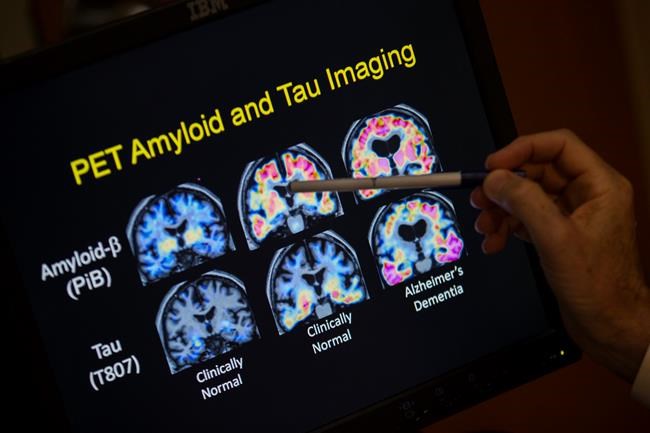
FILE - In a May 19, 2015 file photo, R. Scott Turner, Professor of Neurology and Director of the Memory Disorder Center at Georgetown University Hospital, points to PET scan results that are part of a study on Allheimer's disease at Georgetown University Hospital, in Washington. An Alzheimer’s Association survey being released Tuesday, March 5, 2019 found about half of seniors say they’ve ever discussed thinking or memory with a health provider, and less than a third report ever getting formally assessed for cognitive problems. (AP Photo/Evan Vucci, File)

About half of seniors say they’ve ever discussed thinking or memory with a health care provider, and less than a third say they’ve ever been assessed for possible cognitive problems, according to an Alzheimer’s Association survey being released Tuesday.

Even fewer, 16 per cent, said they get regular cognitive assessments — a stark contrast to the blood pressure and cholesterol checks that just about everyone gets routinely. Just 1 in 3 knew cognition is supposed to be part of the annual wellness visit.

Even though many older adults say they’ve noticed changes in their mental abilities, “the majority of the time seniors are waiting for the physician to bring it up,” said Alzheimer’s Association chief program officer Joanne Pike.

WHY IS THIS IMPORTANT?

About 50 million people worldwide have dementia, and Alzheimer’s is the most common type, affecting 5.8 million people in the U.S. The disease takes root in the brain decades before symptoms appear. There is no cure, and today’s treatments only ease symptoms, not blocking the disease from gradually worsening.

Still, it’s important to be alert to signs of mental decline. Some slowing of memory is a normal part of aging, like temporarily misplacing your keys. But more significant declines in memory, thinking skills or behaviour can require medical care.

It might be something treatable like sleep apnea, depression or a side effect of medication.

But if someone is developing dementia, knowing early allows people time to plan for their future care — and to participate in research studies of possible new treatments, Pike said.

WHAT’S INVOLVED IN A COGNITIVE ASSESSMENT?

The doctor looks for any signs of impairment as the check-up gets under way, asks the patient directly about any changes over time, and asks any family members who came along for the visit if they have concerns.

Then the doctor sometimes, not always, administers a test, such as telling the senior to remember a short list of words or to draw a clock showing a certain time.

Some written tests excel at spotting subtle problems, but they’re too simplistic to rule out trouble in high-functioning people. Nor does a poor score mean there’s really a problem, just that more sophisticated testing is required.

WHY DON’T ALL SENIORS GET SCREENED?

Medical guidelines don’t say everyone needs a formal assessment with those memory quizzes, cautioned Dr. Sumi Sexton of Georgetown University’s School of Medicine and editor of the journal American Family Physician, who wasn’t involved with the survey.

In fact, you might be getting assessed and not realize it, she said. Maybe a conversation with the doctor shows that you’re pretty active and doing well. Or maybe the doctor spots that you’re taking medications that can impede cognition — and changes your prescription, waiting to see if that solved any problem before looking for other potential causes.

“We are all attuned to memory issues,” said Sexton, who tends to screen frequently — but wasn’t surprised at the report’s low screening numbers, because a discussion about cognitive impairment takes time in an already crammed check-up.

And it’s hard for patients to bring up, said Jim Gulley, 69, who was diagnosed with early-stage Alzheimer’s in 2015. He marked “memory issues” on a check-up questionnaire but then crossed it out — only to have his longtime doctor insist on a discussion.

“I was definitely afraid,” said Gulley, of Penfield, New York. His father had had dementia, and he knew “the stigma is not dead.” But after Gulley told his church about his diagnosis, he was inundated with help — and with other seniors asking how to know if something’s wrong. He now counsels people to talk to their doctors early.

___

The Associated Press Health & Science Department receives support from the Howard Hughes Medical Institute’s Department of Science Education. The AP is solely responsible for all content.

Report Error Submit a Tip

More Stories

Ref ‘dominates’ game in Sea Bears loss to Honey Badgers, says coach

Joshua Frey-Sam 7 minute read Preview

Ref ‘dominates’ game in Sea Bears loss to Honey Badgers, says coach

Joshua Frey-Sam 7 minute read Yesterday at 7:40 PM CDT

Following a festive Christmas-in-July-themed Saturday afternoon inside Canada Life Centre, Winnipeg Sea Bears head coach Mike Raimbault didn’t mince words about who he thought was the Grinch in a hard-fought 88-86 loss to the visiting Brampton Honey Badgers that ended in controversy.

As the Sea Bears owned a one-point lead in Target Score Time, Brampton guard Sean East II was awarded three free throws — all of which he converted — after a questionable foul called on Teddy Allen by official Perry Stothart.

Raimbault, who has been known to bite his tongue on such topics, left nothing to the imagination about where he stood on the game-deciding judgment made in a game that had major post-season implications.

“I just felt like it was a fitting ending to the game where Perry Stothart had dominated the flow of the game from the start,” he said. “For him to call a bit of a guess foul and end the game on the foul, I felt like it’s disappointing that he can come in and dictate how the game’s going to be played and flow, and (that) continues to be a bit of an M.O. for him. So I think we’re disappointed with the fact that the league continues to let that happen.”

Read
Yesterday at 7:40 PM CDT

Men cycling across Canada for charity have bikes stolen in Winnipeg

Chris Kitching 5 minute read Preview

Men cycling across Canada for charity have bikes stolen in Winnipeg

Chris Kitching 5 minute read Friday, Jul. 24, 2026

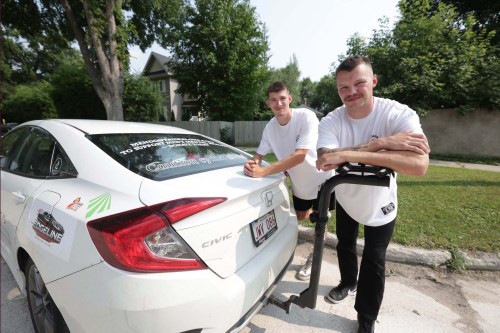
Thomas Clark and Valentin Duquenne were devastated after their bikes went missing outside CBC Manitoba’s headquarters, but uplifted by the outpouring of support from Manitobans afterward.

Read
Friday, Jul. 24, 2026

Trailblazer returns to share success, inspire next generation

Grace Penner 6 minute read Preview

Trailblazer returns to share success, inspire next generation

Grace Penner 6 minute read Yesterday at 5:14 PM CDT

Starstruck kids and fans zigzagged throughout the rink, anxiously waiting to get an autograph from Kati Tabin and to see their role model on the same side of the glass.

Tabin, Montreal Victoire defender and Team Canada silver medallist, on Saturday came home to the rink where it all began, the Oakbank Community Club. She brought the PWHL championship trophy, the Walter Cup, won in her third season with the club, as well as her 2026 Milan Cortina Olympic medal.

The arena was packed to the brim with fans from all over coming to see Tabin — the local player who made history in women’s hockey. Hundreds of enthusiasts of all ages lined up with their Victoire or Team Canada merchandise, some waiting over two hours to see their idol.

Eight-year-old Loxley Cierzan came with her mother, Ainsley, and other family members to meet the one and only Tabin. Cierzan has loved seeing other girls grace the ice and play the competitive sport she adores. When the PWHL takeover stopped in Winnipeg in March, she not only got to watch the game but also a practice beforehand where Tabin signed her Victoire hat.

Read
Yesterday at 5:14 PM CDT

Puzzles Palace

1 minute read Monday, Jul. 13, 2026

To solve our puzzles, please subscribe with this special offer: |

Selfie part of investigation into Grant Park football coach

Maggie Macintosh 4 minute read Preview

Selfie part of investigation into Grant Park football coach

Maggie Macintosh 4 minute read Friday, Jul. 24, 2026

A selfie of a high school football coach grinning beside a Free Press front-page story about the investigation into his professional conduct has become part of the case.

Doug Kovacs, a resource teacher at Grant Park High School who runs the Pirates football program, was put on leave in the spring.

The Winnipeg School Division employee is the subject of an investigation into allegations that athletes on his AAAA varsity team engaged in hazing that led to at least one player getting injured last year.

The Free Press has learned that on July 8 — the day it was revealed in print that Manitoba’s teacher commissioner had launched a third-party probe — a photo of Kovacs posing with a newspaper began circulating in the football community.

Read
Friday, Jul. 24, 2026

For unique Menno-centric take on Free Press, satirist mines her jibes between the lines

David Sanderson 8 minute read Preview

For unique Menno-centric take on Free Press, satirist mines her jibes between the lines

David Sanderson 8 minute read Yesterday at 10:40 AM CDT

Free Press readers of a certain vintage may remember when tuning into a local radio station to hear a pair of disc jockeys perusing a section of the Saturday edition was appointment listening.

On Sunday mornings from 1962 until the mid-1980s, CKRC 630 personalities Bob Washington and Tom Ashmore — better known as Wash and Ash — entertained Winnipeggers of all ages by impersonating the likes of Dennis the Menace, Beetle Bailey and Archie Andrews, as they lent their voices to that weekend’s multi-page, colour comic insert.

In a 1984 interview, Washington, who died in 2016 at the age of 82, attributed the weekly program’s longevity to audiences enjoying the antics of “two middle-aged guys in 24 dialects, giving their version of what Dagwood is saying to Blondie, or what Hägar the Horrible is bragging about.”

More than 40 years later, another Winnipegger is turning to the Free Press for her material. Only instead of reading the paper’s funnies, Lori Klassen, a mother of three and grandmother of two, is funnily reading the paper.

Read
Yesterday at 10:40 AM CDT