

In defence of Pluto
But what's better — being a runt or the king of dwarf planets?
Advertisement
Read this article for free:
or
Already have an account? Log in here »
To continue reading, please subscribe:
Monthly Digital Subscription
$1 per week for 24 weeks*
- Enjoy unlimited reading on winnipegfreepress.com
- Read the E-Edition, our digital replica newspaper
- Access News Break, our award-winning app
- Play interactive puzzles
*Billed as $4.00 plus GST every four weeks. After 24 weeks, price increases to the regular rate of $19.95 plus GST every four weeks. Offer available to new and qualified returning subscribers only. Cancel any time.
Monthly Digital Subscription
$4.99/week*
- Enjoy unlimited reading on winnipegfreepress.com
- Read the E-Edition, our digital replica newspaper
- Access News Break, our award-winning app
- Play interactive puzzles
*Billed as $19.95 plus GST every four weeks. Cancel any time.
To continue reading, please subscribe:
Add Free Press access to your Brandon Sun subscription for only an additional
$1 for the first 4 weeks*
*Your next subscription payment will increase by $1.00 and you will be charged $16.99 plus GST for four weeks. After four weeks, your payment will increase to $23.99 plus GST every four weeks.
Read unlimited articles for free today:
or
Already have an account? Log in here »
Hey there, time traveller!
This article was published 09/08/2014 (4276 days ago), so information in it may no longer be current.
MELVILLE, N.Y. — Pluto, a distant world on the frigid outskirts of the solar system, was downgraded eight years ago when scientists changed its status from full-fledged planet to planetary dwarf.
Scores of Pluto fans booed the decision and terminology — dwarf planet — imposed by the International Astronomical Union, which voted in Prague to reduce the number of planets to eight.
Controversy has yet to wane. There’s a Face-book page devoted to reinstating Pluto. Elsewhere, a permanent online petition still invites the public to voice disagreement with the union. And the editor of a popular astronomy magazine is calling for a presidential-style debate to settle Pluto’s status in the heavens — once and for all.

The maelstrom mounts as Earthlings prepare for a first-ever rendezvous: An American data-gathering spacecraft will make a historic Pluto flyby next year. Ironically, the New Horizon space probe was launched the year the far-flung orb was demoted.
The spacecraft will hurtle breathtakingly close to the Plutonian surface, having traveled seven years and 4.5 billion miles to reach Pluto, deep in the icy Kuiper belt.
Astronomers are certain new insights will emerge from the mission, but that probably won’t change Pluto’s status, they say.
“Clearly, Pluto is a touchy subject,” said Fred Walter, a professor of astronomy at Stony Brook University.
As Walter sees it, powerful scientific evidence undergirded Pluto’s downgrade from planet to dwarf.
“It has the most extreme orbit of any of the planets, at least when it was a planet,” Walter said, noting Pluto, about the size of Earth’s moon, is highly dependent on a larger, full-fledged celestial body, a guardian planet in the cosmos.
“Pluto isn’t gravitationally independent,” Walter added. “It’s gravitationally tied to Neptune.”
But just as mystery has shrouded Pluto because of its multibillion-mile distance from Earth, semantics have affected it, too, Walter said.
“We haven’t really fully demoted Pluto. The word ‘planet’ is still there,” he said, referring to the term dwarf planet.
“But if you were Pluto,” he asked, “would you rather be the runt among planets, or the king of the dwarf planets?”
Denton Ebel, who chairs the earth and planetary sciences department at the American Museum of Natural History in Manhattan, cringes at the thought of “the Pluto discussion.”
Discord, he asserted, is inevitable when the subject is Pluto. He doesn’t think it’s a full-fledged planet, either.
He scoffs at Pluto proponents who say scientists are prejudiced just because it’s small. “It’s not in the same class of objects as Earth and Mars and the other bodies we think of as planets,” Ebel said. “There’s an object in the Kuiper belt that is larger than Pluto, and it isn’t a planet.
“There are lots of objects out there and we are still finding new ones. But everything can’t be a planet.”
In recent years, space hunters have found hundreds of new objects in the Kuiper belt, Pluto’s home, a region far beyond the solar system. Ebel refers to the area as the deep freeze, a vast expanse populated by comets and alien planet-like objects.
On Pluto itself, the average temperature is minus 380 degrees. And, it’s not just dark, it’s superdark: Sunlight is 1,000 times fainter than on Earth.
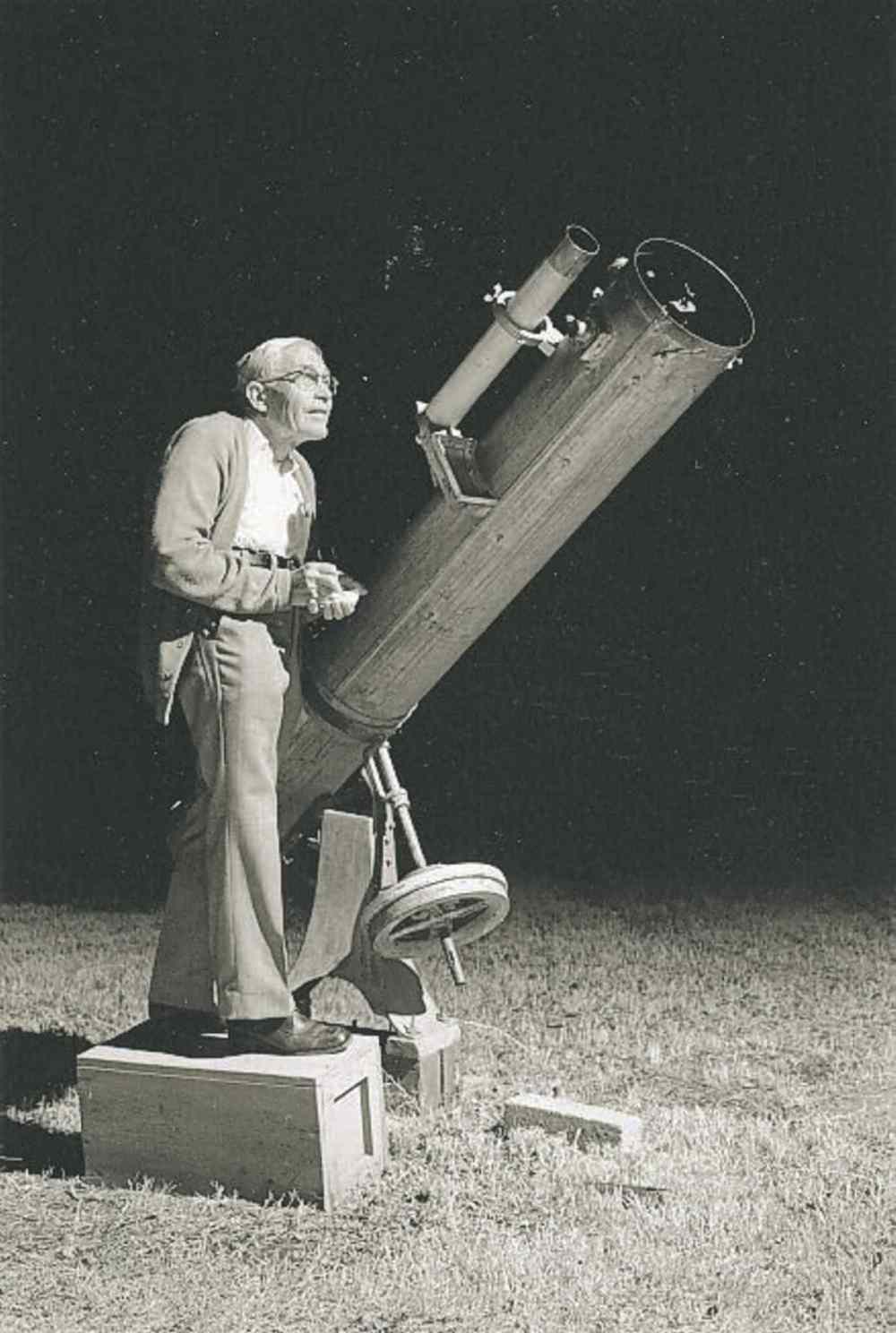
Scientists who oppose Pluto’s return to full planetary status say it may have been misdesignated upon discovery in 1930 by Clyde Tombaugh at the Lowell Observatory in Arizona.
Tombaugh died in 1997, but a portion of his ashes was placed aboard the New Horizon probe and are en route to the world once called Planet X. In 1930, there were no official definitions of a planet.
Before 1996, Walter said, “no one ever sat down and determined what a planet is.”
The astronomical union has three key criteria for a celestial body to make the cut. Dinky Pluto had trouble making the grade.
The union’s rules say a planet must orbit the sun and be massive enough to exist in “hydrostatic equilibrium,” which means having its own potent gravitational pull. Hydrostatic equilibrium is the reason planets are spherical.
The third criterion: A planet must “clear the neighbourhood” of smaller bodies within its orbit. This complicated wording means a planet must be dominant in its orbital zone, Ebel said, and Pluto isn’t because it’s in a complex dance with several satellites surrounding it.

Yet, Pluto’s ban from the solar system still stokes powerful emotions in legions of fans.
“In my heart, I know that it really can’t be a planet anymore,” said Ken Spencer, an amateur astronomer and president of the Astronomical Society of Long Island. “I was really sad to see it demoted. But after reading why, it’s hard to argue with those reasons.”
— Newsday