

Re-release of cult favourite as strange as the original
Advertisement
Read this article for free:
or
Already have an account? Log in here »
To continue reading, please subscribe:
Digital Subscription
One year of digital access for only $75*
- Enjoy unlimited reading on winnipegfreepress.com
- Read the E-Edition, our digital replica newspaper
- Access News Break, our award-winning app
- Play interactive puzzles
*Billed as $5.77 plus GST every four weeks. After 52 weeks, price increases to the regular rate of $19.95 plus GST every four weeks. Offer available to new and qualified returning subscribers only. Cancel any time.
Monthly Digital Subscription
$4.99/week*
- Enjoy unlimited reading on winnipegfreepress.com
- Read the E-Edition, our digital replica newspaper
- Access News Break, our award-winning app
- Play interactive puzzles
*Billed as $19.95 plus GST every four weeks. Cancel any time.
To continue reading, please subscribe:
Add Free Press access to your Brandon Sun subscription for only an additional
$1 for the first 4 weeks*
- Enjoy unlimited reading on winnipegfreepress.com
- Read the E-Edition, our digital replica newspaper
- Access News Break, our award-winning app
- Play interactive puzzles
*Your next Brandon Sun subscription payment will increase by $1.00 and you will be charged $17.95 plus GST for four weeks. After four weeks, your payment will increase to $24.95 plus GST every four weeks.
Read unlimited articles for free today:
or
Already have an account? Log in here »
Hey there, time traveller!
This article was published 26/03/2015 (4070 days ago), so information in it may no longer be current.
In 1998, Nintendo released The Legend of Zelda: Ocarina of Time for the Nintendo 64. It was a sprawling fantasy epic that somehow improved on a series formula that seemed to have been perfected with the Super Nintendo classic A Link to the Past. It retold the usual tale of each Zelda game — a young hero named Link adventuring throughout the land of Hyrule to defeat the evil Gannon and save Princess Zelda — but on a scale that had not been seen in many games up until that point.
It was followed in 2000 by Majora’s Mask, a strange, sparse sequel that seemed almost like a direct response to the grand traditionalism of Ocarina. It immediately became the black sheep of the Zelda games; some praised its elegiac tone, others called it the worst game of the series, but it slowly built up a devoted cult following over the years.
When Ocarina of Time was re-released on the 3DS in 2011, it was only a matter of time before its counterpart followed. Majora’s Mask has finally returned to befuddle a whole new generation of gamers.
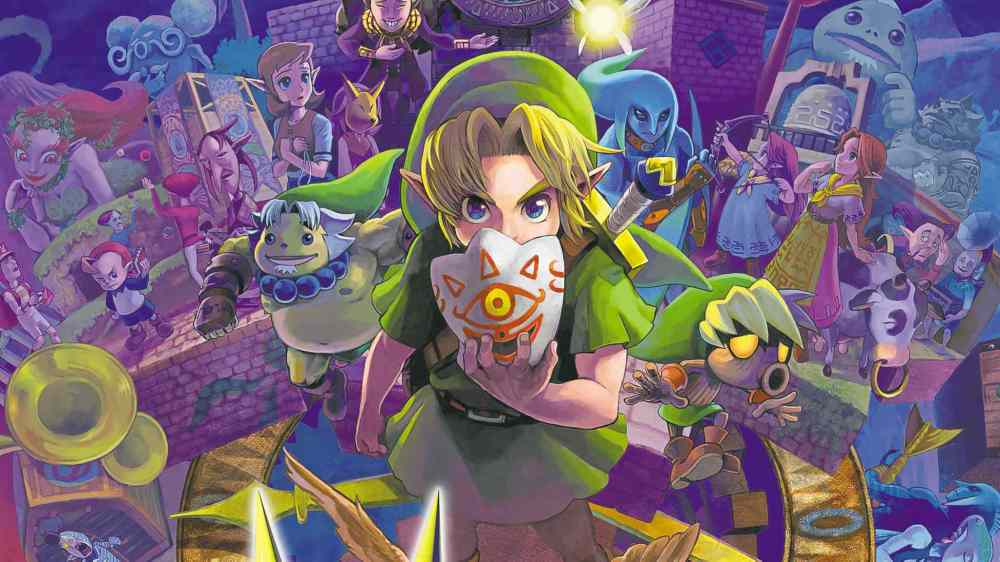
If Ocarina was a typical tale of an unlikely hero summoning the courage and strength to defeat a monster, Majora’s Mask is about that same hero learning humility and accepting help from others to defeat something far greater than himself. The bad guy in Majora’s Mask is not some cape-wearing supervillain; it is, in fact, the moon, which is barrelling towards the land of Termina, set to collide with it in three days.
Link’s only means of preventing this from happening is the ability to continually travel back to the start of the three-day period at a moment’s notice, creating a Groundhog Day-like scenario where he must put things right to prevent the disaster and move on.
There are traditional elements to Majora’s Mask — huge dungeons to explore, a succession of new weapons and tools to collect, boss fights that feel like puzzles — but they take a backseat as focus falls on helping the citizens of Termina get their lives in order as they face an impending apocalypse. You’re provided with an in-game schedule and notepad that let you track the movement of side characters over the three days; you are left on your own to deduce which of their problems need rectifying. Link’s progression comes not from the usual quests and heroics, but through interactions with those around him, making this one of the few games of this ilk driven by character, not plot.
The 3DS remake cleans the game up well, updating the visuals and streamlining the time-travel mechanic without ever sacrificing the oddball design and esthetics that made the game a cult classic to begin with.
Majora’s Mask followed a masterpiece not by trying to top it, but by subverting it, telling a far more intimate tale that found something new to say about an iconic character. Fifteen years later, it remains as weird, affecting and brilliant as ever.
Mel Stefaniuk is a freelance writer whose love of both video games and writing have been intertwined since growing up with the text adventures of the ’80s. He can be found on Twitter as @DisgracedCop.