CRTC needs to take new approach on wireless price reductions, advocate says
Advertisement
Read this article for free:
or
Already have an account? Log in here »
To continue reading, please subscribe:

Digital Subscription
One year of digital access for only $205*
- Enjoy unlimited reading on winnipegfreepress.com
- Read the E-Edition, our digital replica newspaper
- Access News Break, our award-winning app
- Play interactive puzzles
*First annual payment billed as $205.00 + GST for one year. This annual subscription will automatically renew at $233.00 + GST every 52 weeks (10% off the regular annual price of $259.35). Offer available to new and qualified returning subscribers only. Cancel any time.
To continue reading, please subscribe:
Add Free Press access to your Brandon Sun subscription for only an additional
$1 for the first 4 weeks*
- Enjoy unlimited reading on winnipegfreepress.com
- Read the E-Edition, our digital replica newspaper
- Access News Break, our award-winning app
- Play interactive puzzles
*Your next Brandon Sun subscription payment will increase by $1.00 and you will be charged $17.95 plus GST for four weeks. After four weeks, your payment will increase to $24.95 plus GST every four weeks.
Read unlimited articles for free today:
or
Already have an account? Log in here »
Hey there, time traveller!
This article was published 28/02/2020 (2393 days ago), so information in it may no longer be current.
Canadians are frustrated by the high prices they pay for wireless internet and the problem will only get worse unless the industry’s regulator makes a dramatic move to increase competition, a consumer advocacy group said Friday.
“Mobile services are at a crisis point,” OpenMedia executive director Laura Tribe said at the end of nine days of hearings at CRTC headquarters in Gatineau, Que.
“For far too long, excessively high prices have discouraged Canadians from realizing the full potential of their mobile devices. Some Canadians have been priced out of participating in the mobile data revolution altogether,” Tribe said.
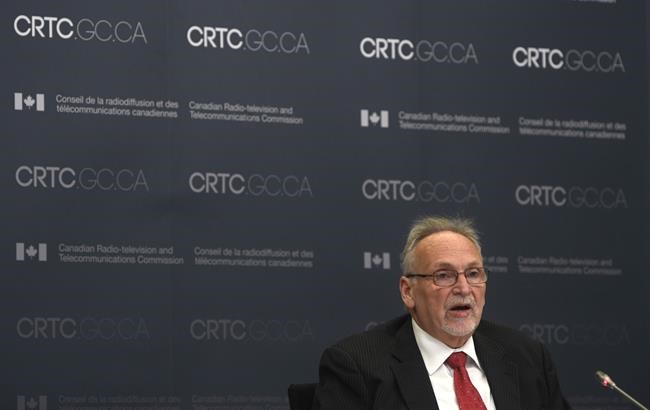
Canada’s current wireless companies have spent the past two weeks telling the CRTC it would be a terrible mistake to abandon a policy that favours facilities-based carriers that build and operate their own networks.
They have stressed that retail prices have fallen since 2018 due to competition between incumbent facilities-based carriers Rogers, Bell, Telus, Freedom, Videotron, Eastlink, SaskTel and TBayTel.
OpenMedia supports an alternative policy that would make it easier for another category of competitor — known as mobile virtual network operators (MVNOs) — to enter the market and compete with the facilities-based carriers.
Executives from the three big national carriers and the smaller regional carriers say the CRTC shouldn’t force them to rent out capacity on their networks, which include cell towers, antennas, and spectrum licenses.
Several warned that a pro-MVNO policy from the CRTC would reduce, slow or prevent their further investments in fifth-generation wireless networks, a faster technology that’s being rolled out around the world.
OpenMedia’s position is that MVNOs should be able to buy access to the Bell, Telus and Rogers networks at reasonable wholesale prices so they can compete without having to build national or regional networks.
Tribe noted in an interview Friday that the federal Competition Bureau told the CRTC on Feb. 18 that the Big Three have been able to keep their prices higher than they would be if they faced stronger competition.
But the bureau advised against opening the three national networks to all MVNOs because they would compete head-on with country’s regional carriers and weaken their ability to counter the market power of the Big Three.
“For far too long, excessively high prices have discouraged Canadians from realizing the full potential of their mobile devices. Some Canadians have been priced out of participating in the mobile data revolution altogether.”–Laura Tribe
Instead, the bureau said the MVNO approach should be available on a limited-time basis for facilities-based regional carriers such as Freedom, Videotron and Eastlink, making it easier for them to expand into new territories.
“We disagree with the Competition Bureau on the path forward,” Tribe said. “We need something different.”
“We have watched, for years, as — week after week — we read stories of people feeling like they’ve been ripped off. People unable to get the services that they need. The stories all read the same, just insert a different person or place.”
Tribe said most Canadians are increasingly reliant on the ability to access the internet with mobile devices and they’ve become frustrated by the difficulty in finding a choice of providers offering an affordable rate.
“This not an issue that stays the same. It gets worse by doing nothing,” Tribe said
Earlier in the hearings, various telco executives pushed back at the notion that they’re doing nothing to lower prices.
SaskTel vice-president Katrine White said the provincially-owned company faces 13 different competitors “and we compete daily in hand-to-hand combat from a pricing perspective, acquisition and retention.”
Bell Mobility president Claire Gillies told the commission on Feb. 19 that she’s never seen the industry so competitive in 20 years, pointing to unlimited data plans introduced last summer by Rogers, Bell and Telus.
“We have watched, for years, as– week after week — we read stories of people feeling like they’ve been ripped off. People unable to get the services that they need. The stories all read the same, just insert a different person or place.” –Laura Tribe

“I think it’s an absolute example of the rivalry we have in the market. No one gets an inch,” Gillies said.
But Tribe said thousands of comments received by OpenMedia and the CRTC have shown that Canadians feel they still pay too much for their wireless services and they want significant change quickly.
“This particular hearing is the first time in years that true change is possible for Canada’s wireless market,” she said. “I think that opportunity is what’s excited people, knowing that change is possible.”
Companies in this story: (TSX:BCE, TSX:RCI.B, TSX:QBR.B, TSX:T, TSX:SJR.B)
This report by The Canadian Press was first published Feb. 28, 2020.
Related Articles
Rogers prices now below Verizon's: Natale



Advertisement Advertise With Us
Advertisement Advertise With Us