Quebec tech leaders call for changes to taxation of data centres, other assets
Advertisement
Read this article for free:
or
Already have an account? Log in here »
To continue reading, please subscribe:

Digital Subscription
One year of digital access for only $205*
- Enjoy unlimited reading on winnipegfreepress.com
- Read the E-Edition, our digital replica newspaper
- Access News Break, our award-winning app
- Play interactive puzzles
*First annual payment billed as $205.00 + GST for one year. This annual subscription will automatically renew at $233.00 + GST every 52 weeks (10% off the regular annual price of $259.35). Offer available to new and qualified returning subscribers only. Cancel any time.
To continue reading, please subscribe:
Add Free Press access to your Brandon Sun subscription for only an additional
$1 for the first 4 weeks*
- Enjoy unlimited reading on winnipegfreepress.com
- Read the E-Edition, our digital replica newspaper
- Access News Break, our award-winning app
- Play interactive puzzles
*Your next Brandon Sun subscription payment will increase by $1.00 and you will be charged $17.95 plus GST for four weeks. After four weeks, your payment will increase to $24.95 plus GST every four weeks.
Read unlimited articles for free today:
or
Already have an account? Log in here »
Hey there, time traveller!
This article was published 04/11/2022 (1378 days ago), so information in it may no longer be current.
Tech companies are warning businesses could flee Quebec after a pair of court cases paved the way for property tax bills to jump by more than 250 per cent at data centres, medical clinics and even supermarkets.
A recent ruling from the Quebec Court of Appeal found that current laws allow for tax on “movable assets” such as server coolers and power supply equipment when attached to an “immovable asset” like a building.
The technology sector is warning that it’s particularly at risk for big tax bills because of the sophisticated equipment they use.
Todd Coleman, chief executive of data centre company eStruxture, and Maxime Guévin, vice-president and general manager of Vantage Data Centers, worry the interpretation of the regulations will squeeze out burgeoning companies that stand to boost the economy.
“Quebec, you’re making it super difficult … for new companies, new job creators to come into the market because of the uncertainty that you’re creating around a tax issue that could take our tax bill six, seven times (higher than) what it used to be,” said Coleman.
Quebec’s information technology industry includes 7,000 companies employing more than 160,000 workers in Greater Montreal alone, economic development agency Montreal International says. The province is one of Canada’s largest hubs for data firms, video game developers, visual effects studios and artificial intelligence research.
High tax bills could deter more firms from setting up in Quebec, Coleman and Guévin argue.
“It’s hard looking into a crystal ball in reverse, but I can assure you when we were both trying to underwrite business cases for investment had we known this (taxation was coming), I can almost assure you I would have gone somewhere else,” said Coleman.
Coleman and Guévin formed a group called the Quebec Data Center Coalition to call on the Quebec government to make changes to the Act Respecting Municipal Taxation.
They want the government to exempt equipment used in the digital economy and technology sector being taxed — an exception already available to manufacturing and agriculture businesses.
Sébastien Gariépy, a spokesperson for the Ministry of Municipal Affairs and Housing, maintained that the rulings do not change municipal policies or taxation and argued the province is still a good place for tech companies.
“It’s a given that our electricity rates are among the most attractive in the world that encourage data centers to set up in Quebec,” he wrote, in an email.
The taxation issue ended up in the spotlight because two companies had tax bills go before the Administrative Tribunal of Quebec and were ultimately given different rulings.
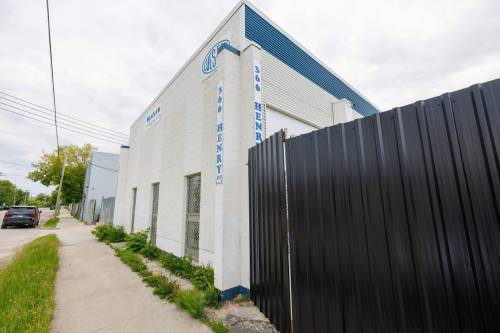
Court filings show the first company, Locoshop Angus, which owns industrial and office buildings on William-Tremblay Street, had a tax bill from the City of Montreal which included an assessment of some cooling and electrical systems used by video game company and tenant Ubisoft.
Real estate company Imso Inc. was similarly taxed for its tenant iWeb Technologies Inc.’s air conditioning system, a generator that ensures a continuous supply of electricity to servers in the event of a service breakdown, and electrical equipment for hosting.
In Locoshop’s case, the Administrative Tribunal of Quebec found the equipment did not have to be entered on the property assessment roll, said Nicolas Cloutier, a McCarthy Tétrault partner advising the coalition.
However, in Imso’s case the opposite ruling was made.
In an appeal in Locoshop’s case, Cloutier said the Court of Québec sided with the tribunal, so the equipment was not taxable, and then, in a judicial review, the Quebec Superior Court upheld that ruling with the Court of Quebec. Later, the Quebec Court of Appeal studied the tribunal’s decision and concluded the equipment was taxable.
In Imso’s case, Cloutier said the tribunal found the equipment was taxable, but when the Court of Quebec heard an appeal, it concluded the items should not be taxed. Like in Locoshop’s case, the Quebec Superior Court sided with the Court of Quebec, but then the Quebec Court of Appeal studied the tribunal decision and concluded the equipment was taxable.
“In short, the Québec Court of Appeal set a very high threshold to exclude an object that is physically attached to a building from the municipal assessment roll, thereby creating what many perceive as a windfall for cities,” said Cloutier.
The Supreme Court of Canada declined to hear both cases.
Imso president Richard Corso declined to discuss the matter and Locoshop directed The Canadian Press to a May statement warning other jurisdictions might follow Quebec’s lead.
“Now that the Supreme Court of Canada dismissed our application following an unfavourable judgment from the Quebec Court of Appeal, we are opening the door to municipalities that were waiting for this decision to tax equipment that was not taxed in the past,” said Christian Yaccarini, Locoshop president and chief executive, in the statement.
“Unfortunately, these are the companies that will pick up the bill and ultimately the citizens who consume the products and services.”
The City of Montreal, which was involved in both cases, said the rationale used by its appraiser has been confirmed “many times” by the Quebec Court of Appeal and did not result in a new source of income or a broadening of the city’s tax base.
Amending the law to exempt data centres and other tech companies is a question for the province, not municipal assessors, said city spokesperson Gonzalo Nunez in an email.
Cloutier argues there is still room to push for the exceptions for the digital economy Guévin and Coleman are calling for.
While critics might say the companies want avoid paying taxes, Guévin insists they’re just looking to be treated fairly.
“We’re not asking for charity. We’re not asking for a free ride,” he said.
“We’re just asking to pay property taxes on the building. We don’t want to pay property taxes on our refrigerator on our dishwasher or our microwave oven.”
This report by The Canadian Press was first published Nov. 4, 2022.