Scientists confirm first Canadian fossil of Ice Age predator the dire wolf
Advertisement
Read this article for free:
or
Already have an account? Log in here »
To continue reading, please subscribe:

Digital Subscription
One year of digital access for only $205*
- Enjoy unlimited reading on winnipegfreepress.com
- Read the E-Edition, our digital replica newspaper
- Access News Break, our award-winning app
- Play interactive puzzles
*First annual payment billed as $205.00 + GST for one year. This annual subscription will automatically renew at $233.00 + GST every 52 weeks (10% off the regular annual price of $259.35). Offer available to new and qualified returning subscribers only. Cancel any time.
To continue reading, please subscribe:
Add Free Press access to your Brandon Sun subscription for only an additional
$1 for the first 4 weeks*
- Enjoy unlimited reading on winnipegfreepress.com
- Read the E-Edition, our digital replica newspaper
- Access News Break, our award-winning app
- Play interactive puzzles
*Your next Brandon Sun subscription payment will increase by $1.00 and you will be charged $17.95 plus GST for four weeks. After four weeks, your payment will increase to $24.95 plus GST every four weeks.
Read unlimited articles for free today:
or
Already have an account? Log in here »
Hey there, time traveller!
This article was published 05/04/2023 (1266 days ago), so information in it may no longer be current.
Canada now has its first dire wolf.
For the first time, a Canadian fossil has been confirmed as coming from the Ice Age predator featured in the TV series “Game of Thrones.” The specimen, from near Medicine Hat in southern Alberta, was tentatively identified decades ago but a team from the Royal Ontario Museum used new technology to finally lock it down.
“It had never been fully described,” said evolutionary biologist Ashley Reynolds, lead author of the paper published in the Journal of Quaternary Science. “This had never been done for this specimen.”
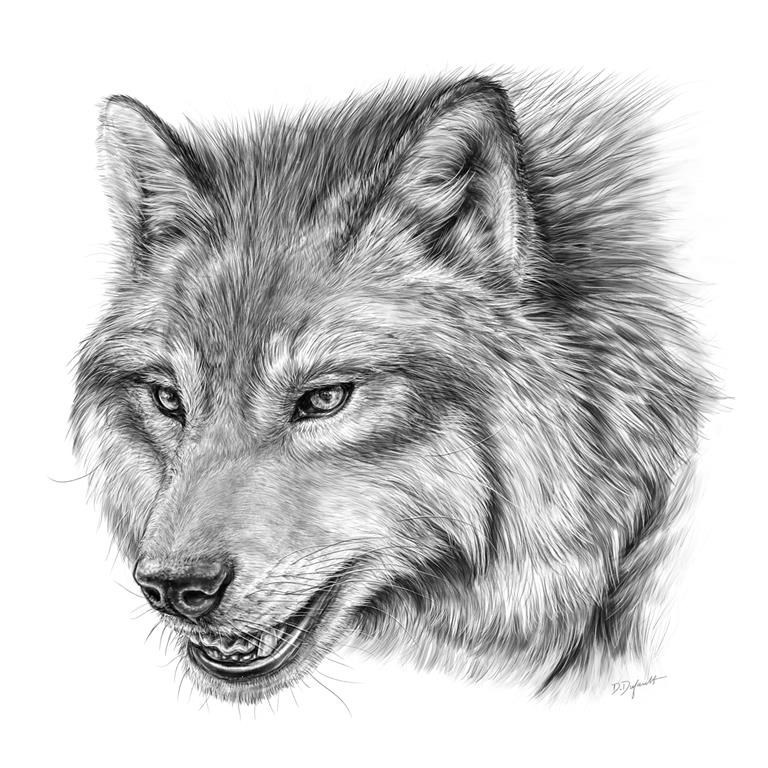
It wasn’t easy. The entire specimen, between 25,000 and 50,000 years old, consists of one jaw, badly crushed, with some remaining teeth.
“We could tell pretty clearly right away it was a member of the dog family, about the size of a wolf,” Reynolds said.
So, it was either a grey wolf or a dire wolf. There are ways to tell them apart based on teeth, but this animal was too old for that.
“When an animal gets really old, it starts to wear down its teeth and this can mean that features of the teeth get worn away,” Reynolds said.
Although dire wolves tend to be significantly bigger than grey wolves, this individual was within the size range of both species. So the researchers tried something else.
The team took points along the outline of the fossil and used a computer program to estimate its shape. They compared that with known values from grey and dire wolves.
“Based on the parts of the shape we do have, which does it look more like,” Reynolds said.
This dire wolf is the northernmost confirmed example of the species ever found. That’s because in those days, most of what is now Canada, was covered by a massive ice sheet.
But every now and then the ice retreated, opening up habitat from Yukon down through central and southeast Alberta and making way for an Ice Age bestiary that’s hard to imagine on the rolling, grassy plains along the South Saskatchewan River where the dire wolf was found.
There were giant ground sloths, wild horses, camels, mammoths and mastodons. Reynolds’ previous research found sabre-tooth cats in the same deposit as the dire wolf.
Confirming the presence of dire wolves adds to our picture of what the Ice Age looked like in Canada, Reynolds said.
“We’re starting to get a better picture of what lived in Canada in ages past. We see a fauna that is very similar to what we would see even in California.”
But this area would also have seen a unique mixing of southern and Arctic species. There’s some evidence, for example, that cave lions could have lived in the area.
There’s not much Reynolds can say about the dire wolf she studied.
It was relatively small for the species. It was very old, so it must have been a successful wolf. At some point in its life, it lost one of its big teeth and had to make do.
Much about Ice Age Canada remains to be learned, Reynolds said.
“Canadian fossils, especially from the time the after the dinosaurs, are relatively understudied,” Reynolds said. “We’re really just starting to figure out what the landscape looked like.”
This report by The Canadian Press was first published April 5, 2023.
— Follow Bob Weber on Twitter at @row1960