Scientist: Progress in identifying Tulsa massacre victims
Advertisement
Read this article for free:
or
Already have an account? Log in here »
To continue reading, please subscribe:

Digital Subscription
One year of digital access for only $205*
- Enjoy unlimited reading on winnipegfreepress.com
- Read the E-Edition, our digital replica newspaper
- Access News Break, our award-winning app
- Play interactive puzzles
*First annual payment billed as $205.00 + GST for one year. This annual subscription will automatically renew at $233.00 + GST every 52 weeks (10% off the regular annual price of $259.35). Offer available to new and qualified returning subscribers only. Cancel any time.
To continue reading, please subscribe:
Add Free Press access to your Brandon Sun subscription for only an additional
$1 for the first 4 weeks*
- Enjoy unlimited reading on winnipegfreepress.com
- Read the E-Edition, our digital replica newspaper
- Access News Break, our award-winning app
- Play interactive puzzles
*Your next Brandon Sun subscription payment will increase by $1.00 and you will be charged $17.95 plus GST for four weeks. After four weeks, your payment will increase to $24.95 plus GST every four weeks.
Read unlimited articles for free today:
or
Already have an account? Log in here »
Hey there, time traveller!
This article was published 12/04/2023 (1253 days ago), so information in it may no longer be current.
A forensic anthropologist believes investigators are a step closer to identifying victims of the 1921 Tulsa Race Massacre with the discovery of 19 surnames possibly connected to remains excavated from a Tulsa cemetery.
Although the six bodies associated with the names are not confirmed massacre victims, nor do they show signs of trauma such as gunshot wounds, identifying them would provide a possible roadmap to the most likely areas of the cemetery to search for victims, according to Phoebe Stubblefield.
Identifying the remains would help lead to death certificates that contain the date of death, indicating when the person was buried, said Stubblefield, a member of the team that conducted excavations in the cemetery the past three years.
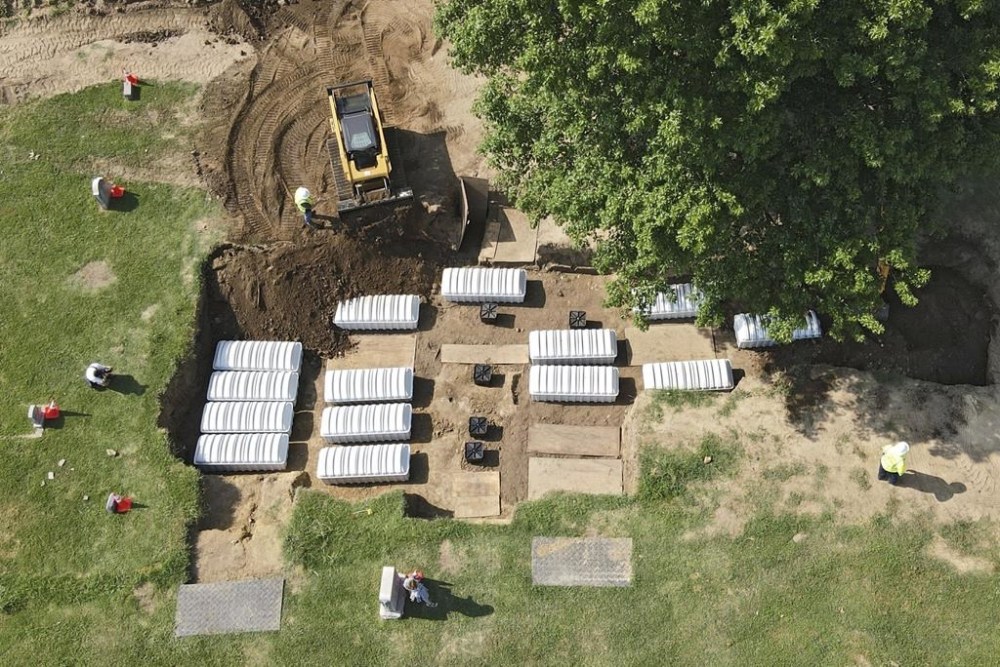
“We get closer to figuring out who was buried in that cemetery and when,” Stubblefield said.
Investigators could “maybe get the pattern of how people were buried in that cemetery. By that I mean burials for January, burials for February, burials for March, and we’re moving toward June” when massacre victims were buried, said Stubblefield. “We can find a greater concentration of probable victims.”
The massacre occurred May 31 and June 1, 1921, when a white mob descended on Greenwood — the Black section of Tulsa. More than 1,000 homes were burned, hundreds more were looted and destroyed and a thriving business district known as Black Wall Street was decimated.
Most historians who have studied the event estimate the death toll to be between 75 and 300. Historians say many of the victims were buried in unmarked graves, their locations never recorded and rumors have persisted for decades of mass graves in the area.
Two of the 66 sets of remains found thus far have gunshot wounds, officials have said, and those remains are among 10 sets still being analyzed.
Those with gunshot wounds or trauma would indicate the remains were more likely to have been victims of the violence, according to Stubblefield.
City officials and Intermountain Forensics have sought DNA from people who believe they may be a relative or descendant of a massacre victim and others with a historical connection to Tulsa.
That DNA was being compared to samples from the excavated bodies in the effort to identify the remains.
None of the remains have yet been confirmed as massacre victims.
Identifying the surnames helps “move the needle on a more than century-old event,” Tulsa Mayor G.T. Bynum said in a statement. “We are still in the beginning stages of this process. There is a lot more investigative work that is happening.”
Investigators have tracked the surnames associated with the six bodies, four male and two female, to at least seven states: North Carolina, Georgia, Texas, Mississippi, Louisiana, Oklahoma and Alabama.