Robo umps reach Triple-A, but MLB rollout still uncertain
Advertisement
Read this article for free:
or
Already have an account? Log in here »
To continue reading, please subscribe:

Digital Subscription
One year of digital access for only $205*
- Enjoy unlimited reading on winnipegfreepress.com
- Read the E-Edition, our digital replica newspaper
- Access News Break, our award-winning app
- Play interactive puzzles
*First annual payment billed as $205.00 + GST for one year. This annual subscription will automatically renew at $233.00 + GST every 52 weeks (10% off the regular annual price of $259.35). Offer available to new and qualified returning subscribers only. Cancel any time.
To continue reading, please subscribe:
Add Free Press access to your Brandon Sun subscription for only an additional
$1 for the first 4 weeks*
- Enjoy unlimited reading on winnipegfreepress.com
- Read the E-Edition, our digital replica newspaper
- Access News Break, our award-winning app
- Play interactive puzzles
*Your next Brandon Sun subscription payment will increase by $1.00 and you will be charged $17.95 plus GST for four weeks. After four weeks, your payment will increase to $24.95 plus GST every four weeks.
Read unlimited articles for free today:
or
Already have an account? Log in here »
Hey there, time traveller!
This article was published 09/05/2023 (1250 days ago), so information in it may no longer be current.
WORCESTER, Mass. (AP) — Trailing Nashville with two outs in the bottom of the ninth, St. Paul Saints first baseman Alex Kirilloff watched the 3-2 pitch go by for strike three. He thought it might have missed the high and inside corner.
There was no point in arguing.
The game was being umped by the Automatic Ball-Strike system that Major League Baseball is testing in Triple-A this season, which means the strike was called by a computer and merely relayed to Kirilloff and the crowd by home plate umpire Brock Ballou.
“Nobody complains about anything anymore with the strike zone because there’s nothing to complain about,” Saints manager Toby Gardenhire said after his first series with the so-called ”robo-ump.” “You take that as good and bad. It’s kind of entertaining to watch a guy argue.”
Much like the pitch clock that had purists panicking, only to quickly and quietly blend into the flow of the game, automatic balls and strikes could soon be coming to the major leagues. And much like the players themselves, the robo-umps are working their way up through the minors on their way to the show.
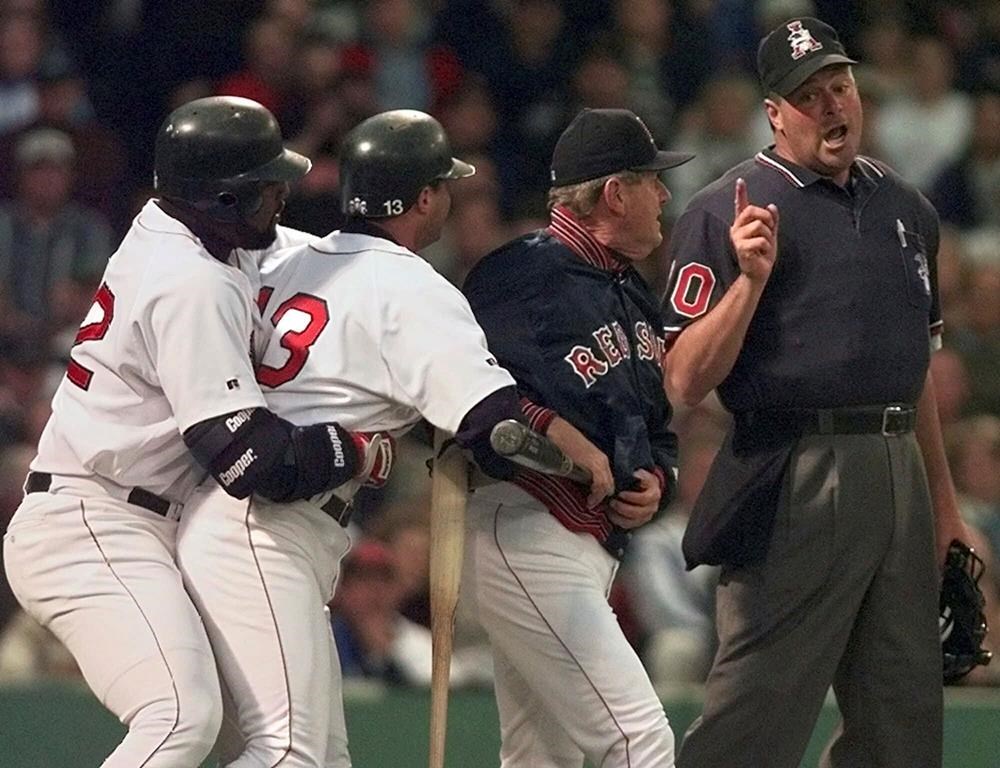
The goal: Eliminate the individual and sometimes inconsistent strike zones that vary from umpire to umpire, and with it the possibility that a game can turn on a bad ball/strike call. And disappearing with that are the stink-eye from batters or pitchers and the helmet-slamming, dirt-kicking dustups that are practically as old as the sport itself.
“There’s no arguing. Guys get rung up and they think that maybe that wouldn’t have been called with a human calling it, but there’s no yelling about it,” Worcester Red Sox manager Chad Tracy said after his team played a pair of games umped by the ABS system this month.
“But you’re also losing some of the human emotion of the game, and the excitement of it. You know, coaches chirping from the dugout, whatever. You lose that,” he said. “It just becomes just this game.”
MLB officials say say there is no timetable for a potential robo-ump callup. The league has been testing the technology in games since introducing it at the independent Atlantic League in 2019. Another system being tested in Triple-A this season would rely on the human umpires for calling pitches, with the ABS as a backup for a limited number of challenges by each team.
“There are several important questions about how best to deploy this powerful technology that remain unanswered at this point,” said Morgan Sword, an MLB executive vice president of baseball operations who was the point person on the pitch clock and is now working on robo-umps. “We hope to use this season’s test at Triple-A to make progress on those questions.”
Among the issues: In transitioning from the differing strike zones of the individual human umpires, someone needs to decide what the new, uniform strike zone should be. The official rule book definition of the strike zone is laughably ignored, and interpreted by each umpire in his own way.
“What they want to achieve is consistency,” said Shelley Duncan, the manager of the Triple-A Scranton-Wilkes Barre RailRiders. “They want every pitcher, every player to know what the strike zone is. They want every fan to have a good understanding that they weren’t screwed. It’s going to be the talent on the field that wins games, not umpires calls.”
At a recent game between the WooSox and RailRiders, the top farm clubs of the Boston Red Sox and New York Yankees, there was an announcement before first pitch informing fans that the system was being used. Otherwise, the system worked out of the crowd’s consciousness, with the unseen cameras deployed around the ballpark scanning the home plate area to determine pitch location.
The ruling was relayed to home plate umpire Matt Bates through an earpiece; he announced it as if he were calling it himself. The delay was short enough to leave no hint that he wasn’t.
“It’s so minuscule. The naked eye probably won’t even notice it,” said Cody Oakes, the crew chief in Worcester. “It’s only noticeable to us.”
Oakes said most of the umpires gained experience with the ABS system while it made its way up the lower minors or when it was tested in the Pacific Coast League last season. The hardest part, he said, is reconciling what he hears in his ear with what he’s seeing with his eyes. For example, the ABS system will still shout “BALL” even if a player swings.
“You’re always checking the count a lot more,” Oakes said. “You might have heard three balls in a row, but the count’s 1-2 because he’s fouled off a couple pitches.”
Other times, the catcher may ask the umpire if a ball was too wide or too low — part of the normal and usually respectful interaction between the players and the umpiring crew.
“I don’t want to say,” Oakes said. “I just don’t want to get into that one when it’s not me calling it.”
Players have mixed opinions on the robo-umps — just like their human predecessors — often colored by whether the most recent call went with them or not. Catchers lament the death of framing, the skill of presenting borderline pitches to make it look like they caught the strike zone.
“It’s an art form, and it’s taking away people’s strengths,” WooSox catcher Caleb Hamilton said.
Of course, all those catchers are also batters who will benefit from a more consistent strike zone when at the plate. And pitchers who lose the strike that just missed the edge of the plate might get it back elsewhere.
“It’s going to be a love-hate relationship,” Saints right-hander Randy Dobnak said.
RailRiders reliever Aaron McGarity said he threw a fastball that was supposed to be up and away and wound up high and inside. His catcher had to reach across his body to get it, which often triggers a human umpire to call a ball; all the robo-ump saw was the ball nipping a part of the plate.
“Didn’t look very good, but ended up getting a strike call,” McGarity said. “So I got a plus-one on the ABS.”
The batter didn’t complain, but the Worcester crowd moaned.
“Yeah,” McGarity said with a smile, “I don’t care about their opinion, anyway.”
Tracy said after that one game, when the WooSox made a late-inning rally, that knowing the balls and strikes would be consistent gave him a sense of calm when the team was rallying from a big deficit in the late innings.

“I was kind of relaxed, knowing ‘OK, we’re either going to lose or win, but it’s not going to be because somebody gets a bad call against them,’” he said. “That was refreshing.”
But Worcester hitting coach Rich Gedman, a longtime major league catcher, said that tension isn’t necessarily a bad thing. Fans and players yelling at umpires has a long history, with arguments often making the highlight reels alongside tape-measure home runs.
“It kind of takes a little emotion out of it,” he said. “I think human beings live on the controversy.”
___
AP Sports Writer Dave Campbell in St. Paul, Minnesota and AP Baseball Writer Ronald Blum in New York contributed to this story.