

Red Sea corals threatened by mass sea urchin die-off, Israeli researchers say
Advertisement
Read this article for free:
or
Already have an account? Log in here »
To continue reading, please subscribe:
Monthly Digital Subscription
$0 for the first 4 weeks*
- Enjoy unlimited reading on winnipegfreepress.com
- Read the E-Edition, our digital replica newspaper
- Access News Break, our award-winning app
- Play interactive puzzles
*No charge for 4 weeks then price increases to the regular rate of $19.95 plus GST every four weeks. Offer available to new and qualified returning subscribers only. Cancel any time.
Monthly Digital Subscription
$4.99/week*
- Enjoy unlimited reading on winnipegfreepress.com
- Read the E-Edition, our digital replica newspaper
- Access News Break, our award-winning app
- Play interactive puzzles
*Billed as $19.95 plus GST every four weeks. Cancel any time.
To continue reading, please subscribe:
Add Free Press access to your Brandon Sun subscription for only an additional
$1 for the first 4 weeks*
*Your next subscription payment will increase by $1.00 and you will be charged $16.99 plus GST for four weeks. After four weeks, your payment will increase to $23.99 plus GST every four weeks.
Read unlimited articles for free today:
or
Already have an account? Log in here »
Hey there, time traveller!
This article was published 24/05/2023 (958 days ago), so information in it may no longer be current.
JERUSALEM (AP) — Sea urchins in Israel’s Gulf of Eilat have been dying off at an alarming rate, researchers announced Wednesday — a development that threatens the Red Sea’s prized coral reef ecosystems.
According to Tel Aviv University scientists, an unknown pathogen is killing off the black sea urchin, Diadema setosum. The massive die-off was first observed in the eastern Mediterranean Sea in July and gradually spread. It was observed in the northern Gulf of Eilat in January, and researchers have since seen it spread south to the neighboring Red Sea, the scientists said.
The black sea urchin is critical to maintaining a healthy reef habitat. Without them, algae grow unchecked, choking off corals and compromising the delicate balance of the reef ecosystem.
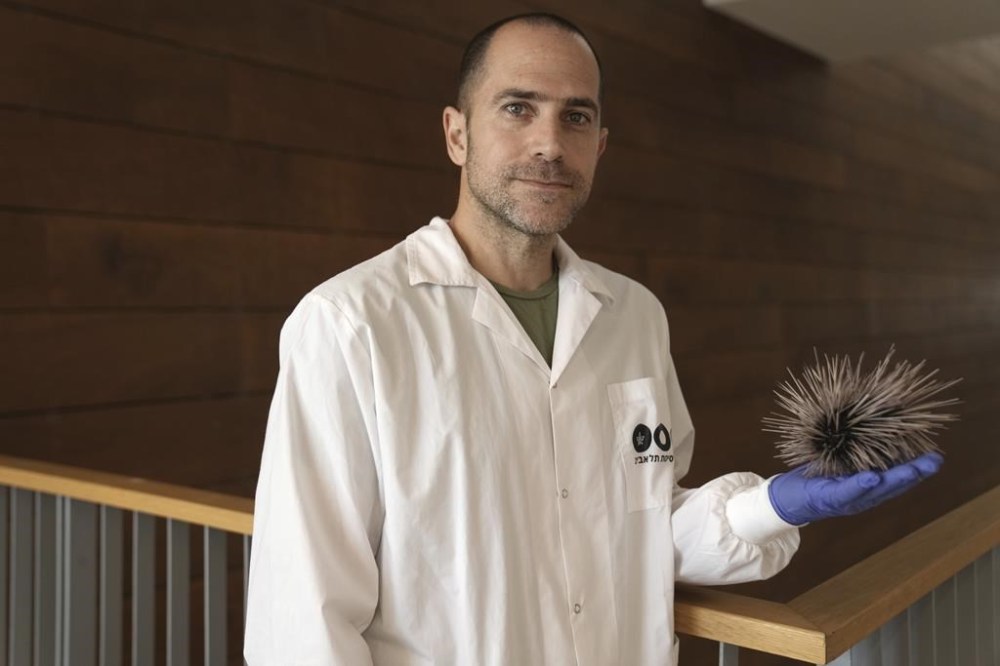
A paper outlining the findings was published Wednesday in the journal Royal Society Open Science.
“It’s a fast and violent death: within just two days a healthy sea urchin becomes a skeleton with massive tissue loss,” said Omri Bronstein, a marine biologist at Tel Aviv University and lead author on a series of papers on the sea urchin deaths.
He added that they have ruled out localized poisoning or pollution, and instead suspect a “rapidly spreading epidemic” caused by an as-yet-unidentified pathogen.

Last month, researchers in the United States identified a single-celled parasite responsible for a similar mass die-off of sea urchins in the Caribbean that has laid waste to reef ecosystems.
The Israeli researchers believe a similar pathogen might also be responsible for killing sea urchins in the Mediterranean and the Red Sea, and have called for urgent action by the Nature and Park Authority to protect Israel’s already endangered reef ecosystems.
“This new outbreak of disease is a grave concern,” said Ian Hewson, a professor at Cornell University’s Marine Mass Mortality Lab who was not involved in the Tel Aviv University study.
He added that it “would be interesting to know if the same agent is at work” in the Mediterranean as has been identified killing sea urchins in the Caribbean. “If that is the case it will raise questions about how it is vectored between such geographically separated sites.”
The Gulf of Eilat, a branch of the Red Sea shared by Israel, Jordan, Egypt and Saudi Arabia, is home to exquisite coral reefs that scientists believe might be more resilient to warming waters resulting from human-caused climate change.