In unusual orca sighting, tour spots at least 20 killer whales off San Francisco
Advertisement
Read this article for free:
or
Already have an account? Log in here »
To continue reading, please subscribe:

Digital Subscription
One year of digital access for only $205*
- Enjoy unlimited reading on winnipegfreepress.com
- Read the E-Edition, our digital replica newspaper
- Access News Break, our award-winning app
- Play interactive puzzles
*First annual payment billed as $205.00 + GST for one year. This annual subscription will automatically renew at $233.00 + GST every 52 weeks (10% off the regular annual price of $259.35). Offer available to new and qualified returning subscribers only. Cancel any time.
To continue reading, please subscribe:
Add Free Press access to your Brandon Sun subscription for only an additional
$1 for the first 4 weeks*
- Enjoy unlimited reading on winnipegfreepress.com
- Read the E-Edition, our digital replica newspaper
- Access News Break, our award-winning app
- Play interactive puzzles
*Your next Brandon Sun subscription payment will increase by $1.00 and you will be charged $17.95 plus GST for four weeks. After four weeks, your payment will increase to $24.95 plus GST every four weeks.
Read unlimited articles for free today:
or
Already have an account? Log in here »
Hey there, time traveller!
This article was published 07/06/2023 (1207 days ago), so information in it may no longer be current.
SAN FRANCISCO (AP) — An uncommonly large grouping of orcas for Northern California — roughly two dozen killer whales — were spotted by a whale watching tour off the coast of San Francisco last month, likely gathered together to celebrate a successful hunt for sea lions or seals.
“I screamed ‘orca!’” recalled Michael Pierson, a Oceanic Society naturalist leading the tour, after noticing “those distinct dorsal finds poking out of the water.”
“It was really, really special,” Pierson said in an interview Wednesday.
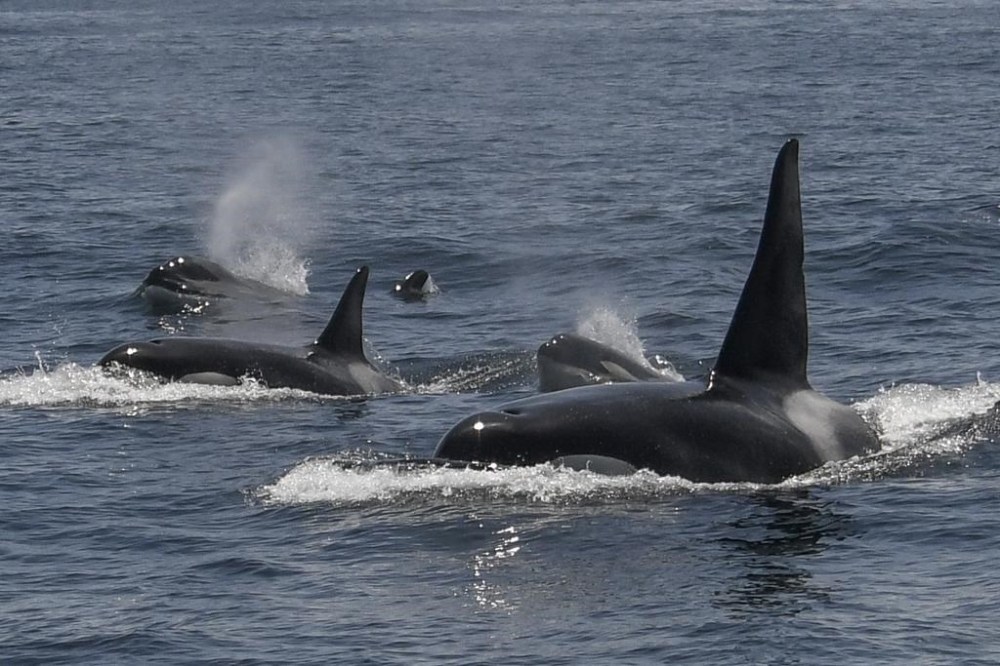
The big group of whales was seen on May 7 near the Farallon Islands, about 28 miles (45 kilometers) west of San Francisco. Killer whales are more commonly found around the deep ocean canyon beneath Monterey Bay — about 75 miles south of the city — and can be spotted anywhere from the coastline to just 5 miles off shore, according to Nancy Black, a marine biologist and owner of Monterey Bay Whale Watch.
It’s easier for whale-watching tours to see them in Monterey Bay because the canyon is so close to the beach, while the Farallon Islands require a miles-long boat ride from San Francisco, and the water still may not be deep enough there, Black said.
“They’re the whale that most people want to see when they go whale-watching,” she said, “you just don’t know when they’re going to be around.”
Black, who is also the director of the nonprofit California Killer Whale Project, said she’s seen larger groupings of orcas than last month’s two dozen but added that any sighting is special. As she spoke, she watched five swim together in Monterey Bay.
The Oceanic Society regularly does tours to the Farallon Islands — which include collecting data for scientists and conservationists — and spring is migration season. Pierson and the boat’s captain, Jared Davis, decided to try a different route on May 7 to head out over deeper water.

When spotted during Farallon Islands tours, the orcas are usually in a family group of three to six whales. They typically range from Baja California up the West Coast and Canada to Alaska.
Last month, however, the tour stumbled across several family groups congregating together, for a total of 20 to 24. They were likely near the islands because it’s where pregnant sea lions and seals give birth this time of year — and the mammal-eating whales had probably just feasted.
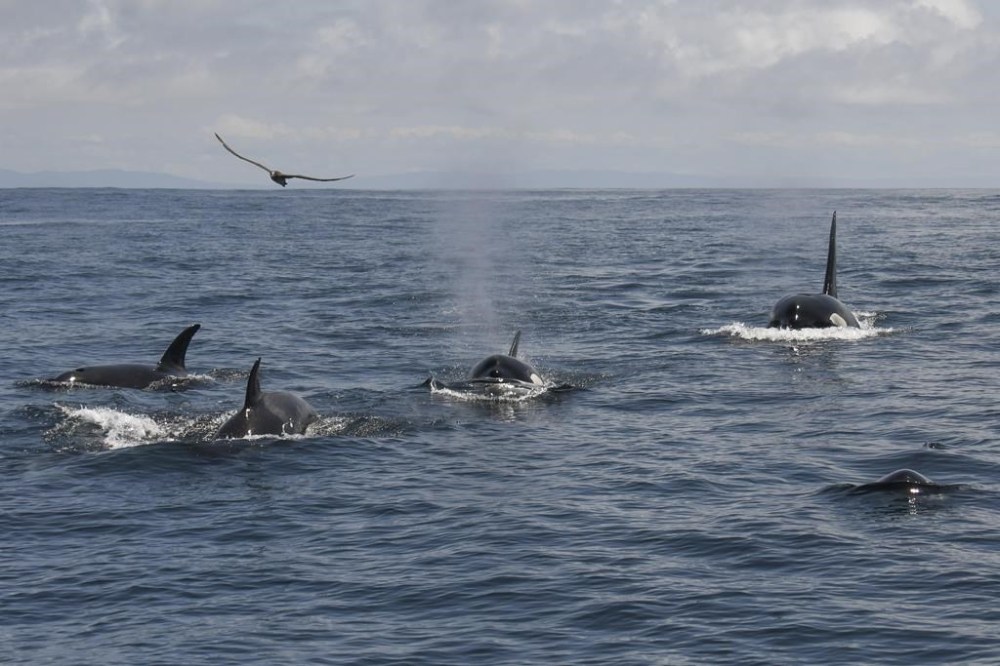
“We don’t know exactly why this particular group was so big,” he said.
While the adult males, with their distinctive 6 feet-tall (2-meter) dorsal fins, were “definitely a showstopper,” Pierson said the mothers and their calves were also a big hit.
“You could hear the coos and awws from everyone on board,” he said.