As climate warms, US allows moving species threatened with extinction as a last resort

Advertisement

Advertise with us

BILLINGS, Mont. (AP) — U.S. officials on Friday said they will make it easier for scientists to relocate plants and animals outside their historical ranges as a last resort to save species threatened with extinction by climate change.

Read this article for free:


or

Already have an account? Log in here »

To continue reading, please subscribe:

Subscribe and receive a limited-edition Free Press branded hat or tote.

Digital Subscription

One year of digital access for only $205*

  • Enjoy unlimited reading on winnipegfreepress.com
  • Read the E-Edition, our digital replica newspaper
  • Access News Break, our award-winning app
  • Play interactive puzzles

*First annual payment billed as $205.00 + GST for one year. This annual subscription will automatically renew at $233.00 + GST every 52 weeks (10% off the regular annual price of $259.35). Offer available to new and qualified returning subscribers only. Cancel any time.

To continue reading, please subscribe:

Add Free Press access to your Brandon Sun subscription for only an additional

$1 for the first 4 weeks*

  • Enjoy unlimited reading on winnipegfreepress.com
  • Read the E-Edition, our digital replica newspaper
  • Access News Break, our award-winning app
  • Play interactive puzzles
Start now

*Your next Brandon Sun subscription payment will increase by $1.00 and you will be charged $17.95 plus GST for four weeks. After four weeks, your payment will increase to $24.95 plus GST every four weeks.

Hey there, time traveller!
This article was published 30/06/2023 (1189 days ago), so information in it may no longer be current.

BILLINGS, Mont. (AP) — U.S. officials on Friday said they will make it easier for scientists to relocate plants and animals outside their historical ranges as a last resort to save species threatened with extinction by climate change.

Relocations of species struggling because of climate change have been carried out on a limited basis to date, including in Hawaii where researchers have raced to move seabirds to new islands to save them from rising ocean waters.

A change in federal regulations published Friday by the Biden administration would allow similar relocations for some of the most imperiled plants and animals protected under the Endangered Species Act.
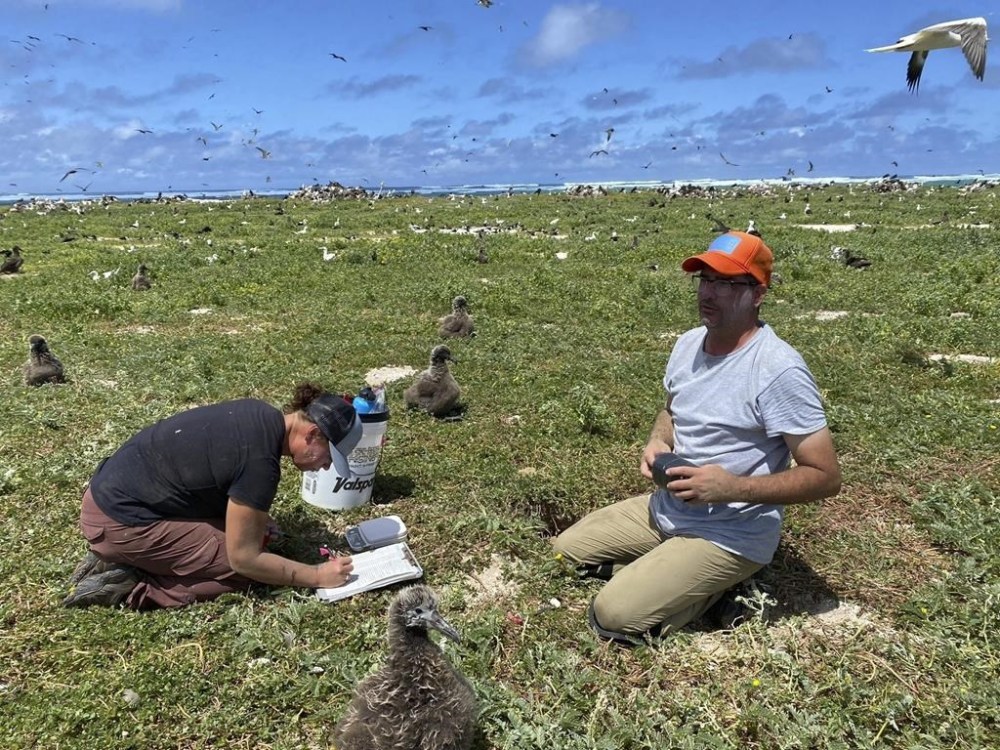
FILE- In this photo provided by the Pacific Rim Conservation, wildlife workers relocate Tristram's storm petrels on Hawaii's Tern Island, on March 29, 2022. U.S. officials on Friday, June 30, 2023, said they will make it easier for scientists to relocate plants and animals outside their historical ranges as a last resort to save species threatened with extinction by climate change. (L. Young/Pacific Rim Conservation via AP)

It also allows for relocations when a species is being crowded out by nonnative plants or wildlife. This summer officials plan to introduce Guam kingfishers on the Palmyra Atoll south of Hawaii, after brown tree snakes accidentally brought to Guam around 1950 decimated their population. The birds are extinct in the wild but maintained in zoos.

Moving species into new areas was long considered taboo because of the potential to disrupt native ecosystems and crowd out local flora and fauna. The practice is gaining acceptance among many scientists and government officials as climate change alters habitats around the globe.

Federal officials said the impacts of climate change had not been fully realized when they adopted previous rules preventing endangered species relocations. As global warming intensifies, habitat changes are “forcing some wildlife to new areas to survive, while squeezing other species closer to extinction,” Interior Secretary Deb Haaland said in a statement.

She said allowing relocations would strengthen conservation efforts and help protect species for coming generations.

Republicans in Western states — where gray wolves were reintroduced two decades ago over strong local objections — opposed the proposal. Officials in Montana, New Mexico and Arizona warned relocations could wreak ecological havoc as “invasive species” get purposefully introduced.

Montana Gov. Greg Gianforte’s spokesperson, Jack O’Brien, said state officials would review the changes but expressed disappointment federal officials announced them heading into a holiday weekend.

Examples abound of ecological disasters caused by species introduced to new areas — from Asian carp spreading through rivers and streams across the U.S., to starlings from Europe destroying crops and driving out songbirds.

Other state wildlife officials were supportive of the change and along with outside scientists have suggested species that could benefit. Those include Key deer of southern Florida, desert flowers in Nevada and California and the St. Croix ground lizard in the Virgin Islands.

Patrick Donnelly with the Center for Biological Diversity said he was concerned the rule could be abused to allow habitat destruction to make way for development. His group has fought plans for a Nevada lithium mine where an endangered desert wildflower is found. The developer has proposed transplanting the Tiehm’s buckwheat and growing new plants elsewhere.

“The Tiehm’s buckwheat situation has raised the specter of a mining company intentionally destroying an endangered species’ habitat and then attempting to create new habitat elsewhere as compensation,” Donnelly said. “It’s troubling that this new rule doesn’t contain an explicit prohibition on such an arrangement.”

The new species relocation rule follows recent steps by the Biden administration to reverse major changes to the endangered species program during the Trump administration. Industry groups lobbied for those earlier changes, but they were heavily criticized by environmentalists.

The Fish and Wildlife Service last week said it would reinstate a decades-old regulation that mandates blanket protections for species newly classified as threatened. Officials also said they would no longer consider economic impacts when deciding if animals and plants need protection.

___

Follow Matthew Brown: @MatthewBrownAP

Report Error Submit a Tip

More Stories

Obsessed stalker who shot, killed young woman at bus stop in 1993 dies behind bars at age 74

Erik Pindera 3 minute read Preview

Obsessed stalker who shot, killed young woman at bus stop in 1993 dies behind bars at age 74

Erik Pindera 3 minute read Tuesday, Sep. 29, 2026

A Winnipeg man who stalked a woman for several years before shooting her dead in the street in 1993 has died in Stony Mountain prison.

On Monday, 74-year-old Ronald Edd Bell died of apparent natural causes at the federal prison just north of Winnipeg, the Correctional Service of Canada said.

Bell had been in prison since May 30, 1994, when he was given a life sentence with no chance of parole for 18 years for killing Terry-Lyn Babb, 25, on Jan. 21, 1993.

Bell walked up behind an unsuspecting Babb, who was waiting at a bus stop at Sherbrook Street and Wolseley Avenue, and shot her in the head with a pistol in front of horrified witnesses, says the Free Press report of his sentencing hearing.

Read
Tuesday, Sep. 29, 2026

Woman took ‘meaningful’ responsibility after disposing of body: lawyer

Dean Pritchard 5 minute read Preview

Woman took ‘meaningful’ responsibility after disposing of body: lawyer

Dean Pritchard 5 minute read Yesterday at 6:00 AM CDT

A woman who was threatened with death if she didn’t help dispose the body of a Mexican man murdered in the basement of a North End home should serve no more jail time, a judge has been told.

Devlin Langlois, 25, has pleaded guilty to accessory after the fact to murder in the March 2025 killing of 28-year-old Diego Moscoza.

“By pleading guilty, Ms. Langlois has already taken meaningful accountability for her actions,” defence lawyer Joshua Rogala told King’s Bench Justice Candace Grammond at a sentencing hearing Monday.

He urged the judge to sentence Langlois to the equivalent of 14 months already served, plus two years supervised probation.

Read
Yesterday at 6:00 AM CDT

Collisions send people to hospital; one fatality

2 minute read Yesterday at 10:42 AM CDT

Five people are in hospital following a two-vehicle collision on Monday at the corner of Pembina Highway and Plaza Drive in which three pedestrians were struck.

On Sept. 28, just after 4:30 p.m., a Ford Fusion was travelling northbound on Pembina Highway through the Plaza Drive intersection with a green light when it was struck by a westbound Honda Fit that failed to stop for a red light at Plaza Drive. The Honda Fit mounted the sidewalk, striking three young children who were with an adult.

The three children were transported to hospital in stable condition with minor injuries. The driver of the Honda, a woman in her 70s, and the passenger, a man in his 80s, were transported to hospital in unstable condition. They were both upgraded to stable condition. The driver was issued a ticket under the Highway Traffic Act.

The Winnipeg Police Service’s Traffic Division is investigating.

Manitoba PCs choose Narth as interim leader; ‘deeply hurt’ Khan blasts former caucus colleagues

Carol Sanders 7 minute read Preview

Manitoba PCs choose Narth as interim leader; ‘deeply hurt’ Khan blasts former caucus colleagues

Carol Sanders 7 minute read Tuesday, Sep. 29, 2026

Manitoba’s Progressive Conservative caucus chose MLA Konrad Narth as interim party leader Tuesday to replace Obby Khan, who quit a day earlier after he said he was stabbed in the back by a small group of caucus members plotting in secret to oust him.

Read
Tuesday, Sep. 29, 2026

Winnipeg Rifles can still secure post-season berth despite starting season 0-4

Joshua Frey-Sam 5 minute read Preview

Winnipeg Rifles can still secure post-season berth despite starting season 0-4

Joshua Frey-Sam 5 minute read Yesterday at 12:47 PM CDT

The Winnipeg Rifles have a seat at the table, something they would’ve certainly taken a few weeks ago.

A solid three-phase performance in a 25-13 win over the Edmonton Huskies on Sunday kept the junior football club’s playoff hopes alive as the team heads into the final week of the regular season in the Prairie Football Conference.

The path to punching their ticket isn’t easy, however. The Rifles must travel to a perennially difficult environment in Saskatoon to face the Hilltops (4-3) on Sunday (1 p.m.), a contest that only matters if the Huskies beat the Edmonton Wildcats on Saturday.

But after starting the season 0-4, it’s a deal that the Rifles will happily take.

Read
Yesterday at 12:47 PM CDT

What does the PC stand for in party’s name? Seems to be Pretty Confused

Tom Brodbeck 5 minute read Preview

What does the PC stand for in party’s name? Seems to be Pretty Confused

Tom Brodbeck 5 minute read Tuesday, Sep. 29, 2026

It should have been obvious from the beginning that the Manitoba Progressive Conservative party was going to have trouble holding itself together under Obby Khan.

Read
Tuesday, Sep. 29, 2026