

Lavish tomb in ancient Spain belonged to a woman, not a man, new research shows
Advertisement
Read this article for free:
or
Already have an account? Log in here »
To continue reading, please subscribe:
Monthly Digital Subscription
$0 for the first 4 weeks*
- Enjoy unlimited reading on winnipegfreepress.com
- Read the E-Edition, our digital replica newspaper
- Access News Break, our award-winning app
- Play interactive puzzles
*No charge for 4 weeks then price increases to the regular rate of $19.00 plus GST every four weeks. Offer available to new and qualified returning subscribers only. Cancel any time.
Monthly Digital Subscription
$4.75/week*
- Enjoy unlimited reading on winnipegfreepress.com
- Read the E-Edition, our digital replica newspaper
- Access News Break, our award-winning app
- Play interactive puzzles
*Billed as $19 plus GST every four weeks. Cancel any time.
To continue reading, please subscribe:
Add Free Press access to your Brandon Sun subscription for only an additional
$1 for the first 4 weeks*
*Your next subscription payment will increase by $1.00 and you will be charged $16.99 plus GST for four weeks. After four weeks, your payment will increase to $23.99 plus GST every four weeks.
Read unlimited articles for free today:
or
Already have an account? Log in here »
Hey there, time traveller!
This article was published 06/07/2023 (882 days ago), so information in it may no longer be current.
WASHINGTON (AP) — When archaeologists first discovered the 5,000-year-old ornate tomb in Spain, they assumed it was for a man. It held a rock crystal dagger, ivory tusks and other lavish items. But now they’ve determined the remains are those of a woman, and all it took was two teeth.
The researchers used a new method of determining sex that analyzes tooth enamel. This technique, developed about five years ago, is more reliable than analyzing skeletal remains in poor condition, according to their study published Thursday in the journal Scientific Reports.
Most details about the life of the “Ivory Lady,” as researchers dubbed her, remain a mystery but there are some clues.
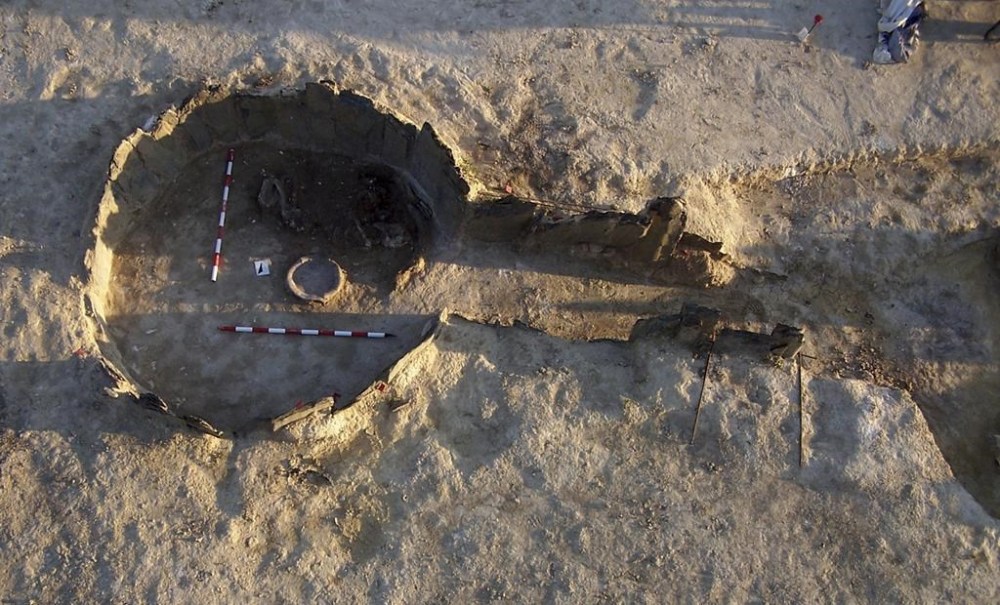
“She was buried alone in a tomb with very special artifacts,” said Leonardo Garcia Sanjuan, a co-author and archaeologist at the University of Seville in Spain. “That shows that she was a special person.”
The tomb is located a few miles west of Seville, near Spain’s southern coast, and was excavated in 2008. Archaeologists thought it contained a young man based on an examination of the poorly preserved bones and the fact that several precious items found in the tomb — including ostrich eggshells and amber along with the tusks and dagger — indicated that the individual held a high social status.
The new technique detects differences in the chemistry of tooth enamel between males and females and can be used even when full DNA is not available.
“This research provides one more piece of evidence questioning old historical narratives,” said Alison Beach, an historian at the University of St. Andrews in Scotland, who was not involved in the study. It shows that “it’s not exclusively true that men have always been the most revered or held the most authority.”
Marta Cintas-Pena, a co-author and archaeologist at the University of Seville, maintains a database of Copper Age burials found at 21 different archaeological sites on the Iberian Peninsula, which includes Spain and Portugal. It currently has records for 1,723 individuals.
“The Ivory Lady’s burial stands out, head and shoulders, above everyone else — there is absolutely no known male or female burial that compares to hers,” said Garcia Sanjuan.
For around 250 years after the Ivory Lady’s burial, newer graves were built around hers — but always with a 100-foot (30-meter) buffer zone, he said. And around 80 years after her death, people reentered her tomb and placed additional votive objects inside, including the crystal dagger.
Researchers know little about the social or political structure of the society that she belonged to — which was roughly contemporaneous with the rise of the pharaohs in Egypt’s Nile River Valley and with the construction of the first planned city on the banks of the Euphrates in Mesopotamia.
Katharina Rebay-Salisbury, a co-author and archaeologist at the University of Vienna in Austria, suspects the same misidentification might be true at other ancient tombs where researchers assumed, “Oh, this is a rich and prominent person, it must be a male.”
Recently other researchers determined through DNA analysis that a decorated Viking warrior buried in Sweden was a woman, upending prior assumptions.

“If we go back and test, we will get a few more surprises,” Rebay-Salisbury said.
___
Follow Christina Larson on Twitter at @larsonchristina
___
The Associated Press Health and Science Department receives support from the Howard Hughes Medical Institute’s Science and Educational Media Group. The AP is solely responsible for all content.