Voting fraud claims spread ahead of Spain’s pivotal election
Advertisement
Read this article for free:
or
Already have an account? Log in here »
To continue reading, please subscribe:

Digital Subscription
One year of digital access for only $205*
- Enjoy unlimited reading on winnipegfreepress.com
- Read the E-Edition, our digital replica newspaper
- Access News Break, our award-winning app
- Play interactive puzzles
*First annual payment billed as $205.00 + GST for one year. This annual subscription will automatically renew at $233.00 + GST every 52 weeks (10% off the regular annual price of $259.35). Offer available to new and qualified returning subscribers only. Cancel any time.
To continue reading, please subscribe:
Add Free Press access to your Brandon Sun subscription for only an additional
$1 for the first 4 weeks*
- Enjoy unlimited reading on winnipegfreepress.com
- Read the E-Edition, our digital replica newspaper
- Access News Break, our award-winning app
- Play interactive puzzles
*Your next Brandon Sun subscription payment will increase by $1.00 and you will be charged $17.95 plus GST for four weeks. After four weeks, your payment will increase to $24.95 plus GST every four weeks.
Read unlimited articles for free today:
or
Already have an account? Log in here »
Hey there, time traveller!
This article was published 18/07/2023 (1156 days ago), so information in it may no longer be current.
WASHINGTON (AP) — Days before Spain holds a pivotal election, misleading claims about mail ballots and election fraud are spreading on social media and casting doubts about the results even before the votes have been counted.
The allegations, amplified by supporters of the center-right Popular Party and the far-right Vox Party, bear striking similarities to the baseless claims spread by then-President Donald Trump ahead of his 2020 U.S. election defeat and offer a reminder that the distrust of elections that has marred U.S. politics has taken root in Europe, too.
Sunday’s general election could tilt Spain in favor of the populist right, as the Popular Party looks to take power away from the Spanish Socialist Worker’s Party and its far-left coalition partner, Unidas Podemos (United We Can).
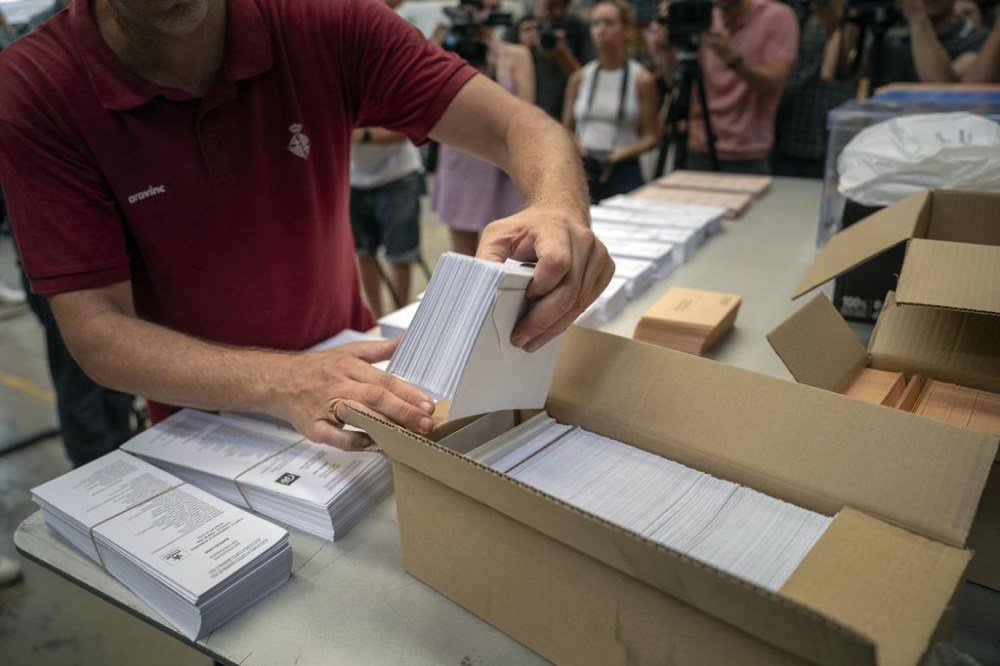
Prime Minister Pedro Sánchez called the early election after his left-leaning coalition lost big in this year’s local and regional elections that were also marked by online misinformation about voting, as well as a surge in hateful content about Muslims and immigrants.
Most polls favor the Popular Party, but it will likely need the support of the Vox to form a governing majority.
In recent weeks, debunked videos claiming to show election workers stuffing the ballot box have circulated widely on Facebook and Twitter; Facebook labeled the videos as false while Twitter has taken no action. Other videos spreading on Facebook and TikTok allege Sanchez’s party will steal the election to prevent a defeat. Many bear the hashtag #pucherazo, a Spanish term for electoral fraud.
As in the United States, the use of mail ballots is a particular focus of election conspiracy theories, with some far-right voters suggesting the post office would be used to throw the election to Sanchez. It’s a narrative that Alberto Feijoo, the Popular Party leader, has helped to amplify. At a rally last week, he urged Spain’s postal employees to remain independent.
“I ask the postmen in Spain to work to the maximum, morning, afternoon and night,” Feijóo said during a campaign rally in Murcia on Wednesday. “Regardless of your bosses, I urge you to distribute all the mail-in ballots on time.”
Feijoo later said he was not trying to suggest the postal service would try to steal the election but was instead referring to the challenges of handling so many mail ballots.
“Nobody here is talking about pucherazo,“ Feijoo said.
Social media researchers at the nonprofit Reset identified numerous examples of election-related misinformation spreading on Twitter, Facebook, YouTube and TikTok. While the specific kinds of content varies by platform — anti-Muslim hate is particularly prevalant on Twitter, for instance — election denialism was found wherever the researchers looked.
Some of the accounts spreading disinformation about the Spanish election have enormous and growing reach. Analysts at Reset identified 88 social media accounts that have repeatedly spread extremist content in Spain that have more than 14 million followers, including about a million recent ones. Posts flagged by Reset for containing hate or election conspiracy theories have been seen nearly 100 million times since January.
“Election fraud narratives that undermine trust in democratic processes – and which also dominated the regional elections in Spain – are spread across platforms,” concluded the researchers at Reset, who shared their findings with The Associated Press. Reset is based in London and studies the ways social media affects democracies around the globe.
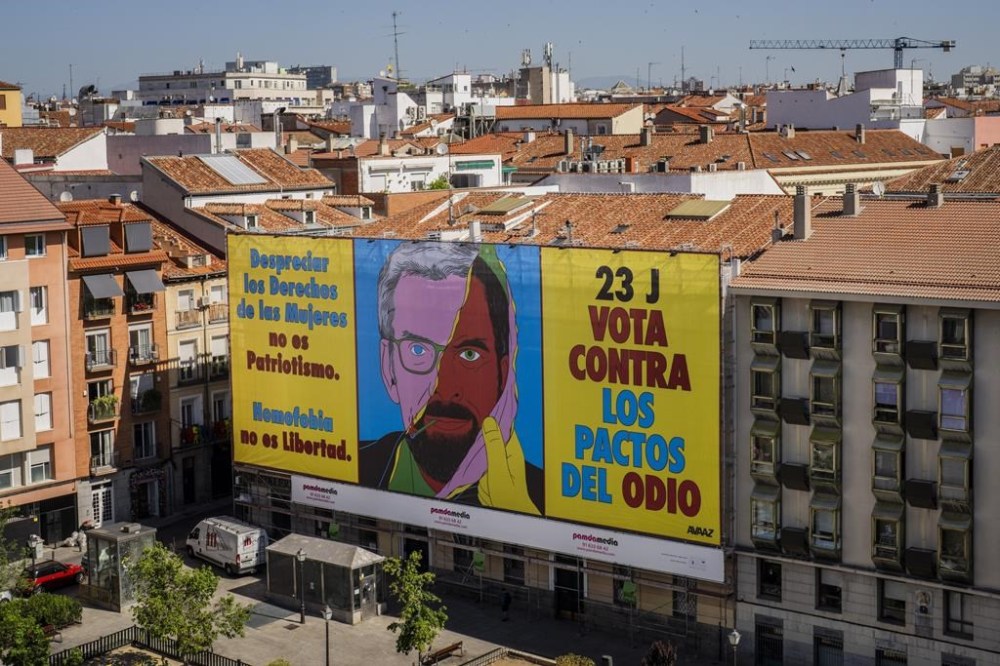
Spain’s contentious election comes amid a recent uptick in online hate speech directed at the country’s immigrants and Muslim residents. Some election ads run by the far-right Vox Party strike a similarly anti-immigrant chord, highlighting a conspiracy theory known as the Great Replacement, which suggests that democratic leaders in nations including Spain and the U.S. are trying to replace white residents with non-white immigrants.
“In 2070, there will be no Spanish families,” claims one online ad from Vox.

Like in the U.S., Spain has laws, audits and independent checks-and-balances designed to ferret out electoral fraud. And just as in the U.S., the cases of actual fraud that are identified and exposed are often exaggerated and taken out of context to suggest far wider problems.
In May, police arrested 10 people in the city of Melilla, a small Spanish enclave on the African coast, after investigators turned up suspected election fraud. Even though the alleged attempt to cheat was uncovered and stopped, it’s being held up on social media as evidence of far more widespread fraud.
When it comes to identifying and removing false claims, Reset’s report faulted tech platforms for inconsistency, noting that conspiracy theories or misleading claims about the election may be labeled or removed from one platform and left alone on another.
Marc Esteve Del Valle, professor at the University of Groningen in the Netherlands, said the amount of false and misleading information about the Spanish election, and the many platforms spreading it, can make it difficult for voters to know what to believe. Esteve Del Valle is Spanish and has researched the far-right’s use of anti-immigrant rhetoric.
“The further we go, the more difficult it is to differentiate reliable information from mis/disinformation,” he said.
Related Articles
Separating digital fact from fiction
Advertisement Advertise With Us
Advertisement Advertise With Us