As temperatures rise, mosquitoes are also on the move. Scientists worry that could mean more malaria
Advertisement
Read this article for free:
or
Already have an account? Log in here »
To continue reading, please subscribe:

Digital Subscription
One year of digital access for only $205*
- Enjoy unlimited reading on winnipegfreepress.com
- Read the E-Edition, our digital replica newspaper
- Access News Break, our award-winning app
- Play interactive puzzles
*First annual payment billed as $205.00 + GST for one year. This annual subscription will automatically renew at $233.00 + GST every 52 weeks (10% off the regular annual price of $259.35). Offer available to new and qualified returning subscribers only. Cancel any time.
To continue reading, please subscribe:
Add Free Press access to your Brandon Sun subscription for only an additional
$1 for the first 4 weeks*
- Enjoy unlimited reading on winnipegfreepress.com
- Read the E-Edition, our digital replica newspaper
- Access News Break, our award-winning app
- Play interactive puzzles
*Your next Brandon Sun subscription payment will increase by $1.00 and you will be charged $17.95 plus GST for four weeks. After four weeks, your payment will increase to $24.95 plus GST every four weeks.
Read unlimited articles for free today:
or
Already have an account? Log in here »
Hey there, time traveller!
This article was published 20/07/2023 (1156 days ago), so information in it may no longer be current.
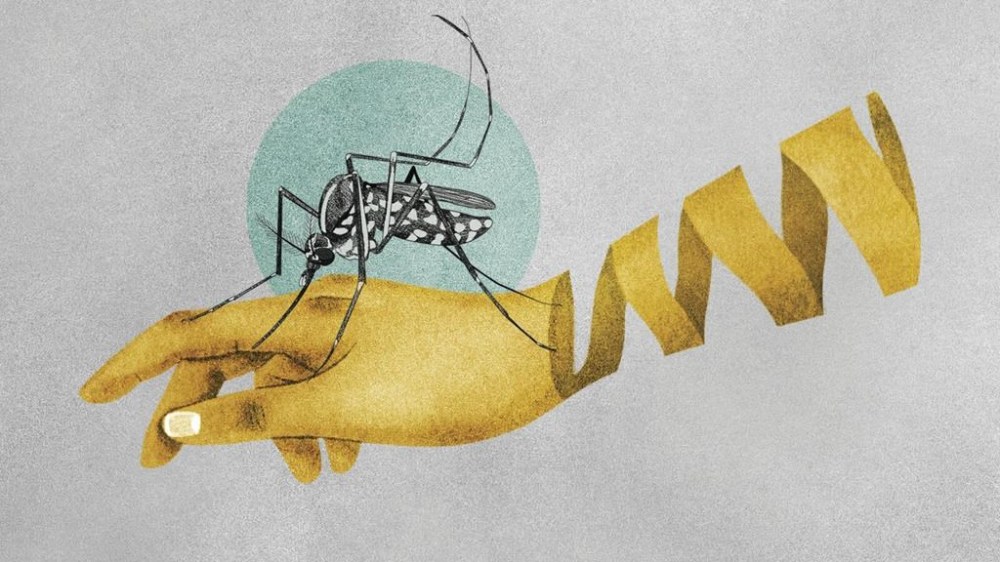
As the planet warms, mosquitoes are slowly migrating upward.
The temperature range where malaria-carrying mosquitoes thrive is rising in elevation. Researchers have found evidence of the phenomenon from the tropical highlands of South America to the mountainous, populous regions of eastern Africa.
Scientists now worry people living in areas once inhospitable to the insects, including the slopes of Mt. Kilimanjaro and the mountains of eastern Ethiopia, could be newly exposed to the disease.
“As it gets warmer at higher altitudes with climate change and all of these other environmental changes, then mosquitoes can survive higher up the mountain,” said Manisha Kulkarni, a professor and researcher studying malaria in sub-Saharan Africa at the University of Ottawa.
___
EDITOR’S NOTE: This story is part of a collaboration between The Associated Press and Grist exploring the intersection of climate change and infectious diseases.
___
Kulkarni led a study published in 2016 that found the habitat for malaria-carrying mosquitoes had expanded in the high-elevation Mt. Kilimanjaro region by hundreds of square kilometers in just 10 years. Lower altitudes, in contrast, are becoming too hot for the bugs.
Similar occurrences have been found elsewhere. For example, researchers in 2015 also noticed native Hawaiian birds were squeezed out of lower elevation habitats as mosquitoes carrying avian malaria slowly migrated upward into their territory. But given 96% of malaria deaths occurred in Africa in 2021, most research on the trend is found there.
The region Kulkarni studied, which is growing in population, is close to the border of Tanzania and Kenya. Together, the two countries accounted for 6% of global malaria deaths in 2021.
Global deaths from malaria declined by 29% between 2002 and 2021, as countries have taken more aggressive tactics in fighting the disease. However, the numbers remain high, especially in Africa where children under 5 years old account for 80% of all malaria deaths. The latest world malaria report from the WHO recorded 247 million cases of malaria in 2021 — Nigeria, the Democratic Republic of the Congo, Uganda and Mozambique alone accounted for almost half of those cases.
“The link between climate change and expansion or change in mosquito distributions is real,” said Doug Norris, a specialist in mosquitoes at the Johns Hopkins Bloomberg School of Public Health, who was not involved in the research.
Despite this, uncertainty remains on the extent of how shifting mosquito populations will affect people in the future. A recent Georgetown University study investigating the movement of mosquitoes across all of sub-Saharan Africa also found the vectors have moved upward in elevation at a rate of 6.5 meters (roughly 21 feet) each year.
Mosquitoes are picky about their habitat, Norris added, and the various malaria-carrying species have different preferences in temperature, humidity and amount of rainfall. Add on the fact that people are fighting malaria with bed nets, insecticides and other tools, and it becomes hard to pin any single trend to climate change, he said.
Jeremy Herren, who studies malaria at the Nairobi-based International Centre of Insect Physiology and Ecology, said there is evidence that climate change is already impacting where mosquito populations choose to live. But, he said, it is still difficult to predict how malaria will spread.
For example, in Kenya, Herren said researchers have documented “massive shifts” in malaria in mosquitoes. A species that was once dominant is now almost impossible to find, he said. But those changes are probably not due to climate change, he said, adding that the rollout of insecticide-treated nets is one explanation for that shift.
In general, however, mosquitoes grow faster in warmer conditions, Norris said.
Rising temperatures are also not the only way a changing climate gives mosquitoes the upper hand. The bugs tend to thrive in the kind of extremes that are happening more frequently because of human-caused climate change.
Longer rainy seasons can create better habitats for mosquitoes, which breed in water. But conversely, while droughts can dry up those habitats, they also encourage people to store water in containers, creating perfect breeding sites. An outbreak of chikungunya, another mosquito-borne disease, between 2004 and 2005 was linked to drought in coastal Kenya for these reasons.
Researchers were also able to tie a reduction in malaria cases in the highlands of Ethiopia in the early 2000s to a decline in temperatures happening at the same time.
Weather patterns in the years prior had stalled the effects of global warming.
Pamela Martinez, a researcher at the University of Illinois Urbana-Champaign, said her team’s findings on malaria trends in Ethiopia, which were published in 2021 in the journal Nature, lent more confidence to the idea that malaria and temperature — and, therefore, climate change— are linked.
“We see that when temperature goes down, the overall trend of cases also goes down, even in the absence of intervention,” Martinez said. “That proves the case that temperature has an impact on transmission.”

The researchers also noticed mosquito populations creeping upward during warmer years.
Temperatures began to warm again in the mid-2000s, but public health officials also ramped up efforts to control malaria in the highlands region of Ethiopia around that time, which has led to a sustained decline in cases.
But even as the Ethiopian Ministry of Health drafted a plan to eliminate malaria by 2030, its authors laid out the threats to that goal: population shifts, a lack of funding, the invasion of a new mosquito species and climate change.
___
Associated Press climate and environmental coverage receives support from several private foundations. See more about AP’s climate initiative here. The AP is solely responsible for all content.