Congress urged to revive long-stalled debate about regulating self-driving vehicles
Advertisement
Read this article for free:
or
Already have an account? Log in here »
To continue reading, please subscribe:

Digital Subscription
One year of digital access for only $205*
- Enjoy unlimited reading on winnipegfreepress.com
- Read the E-Edition, our digital replica newspaper
- Access News Break, our award-winning app
- Play interactive puzzles
*First annual payment billed as $205.00 + GST for one year. This annual subscription will automatically renew at $233.00 + GST every 52 weeks (10% off the regular annual price of $259.35). Offer available to new and qualified returning subscribers only. Cancel any time.
To continue reading, please subscribe:
Add Free Press access to your Brandon Sun subscription for only an additional
$1 for the first 4 weeks*
- Enjoy unlimited reading on winnipegfreepress.com
- Read the E-Edition, our digital replica newspaper
- Access News Break, our award-winning app
- Play interactive puzzles
*Your next Brandon Sun subscription payment will increase by $1.00 and you will be charged $17.95 plus GST for four weeks. After four weeks, your payment will increase to $24.95 plus GST every four weeks.
Read unlimited articles for free today:
or
Already have an account? Log in here »
Hey there, time traveller!
This article was published 26/07/2023 (1172 days ago), so information in it may no longer be current.
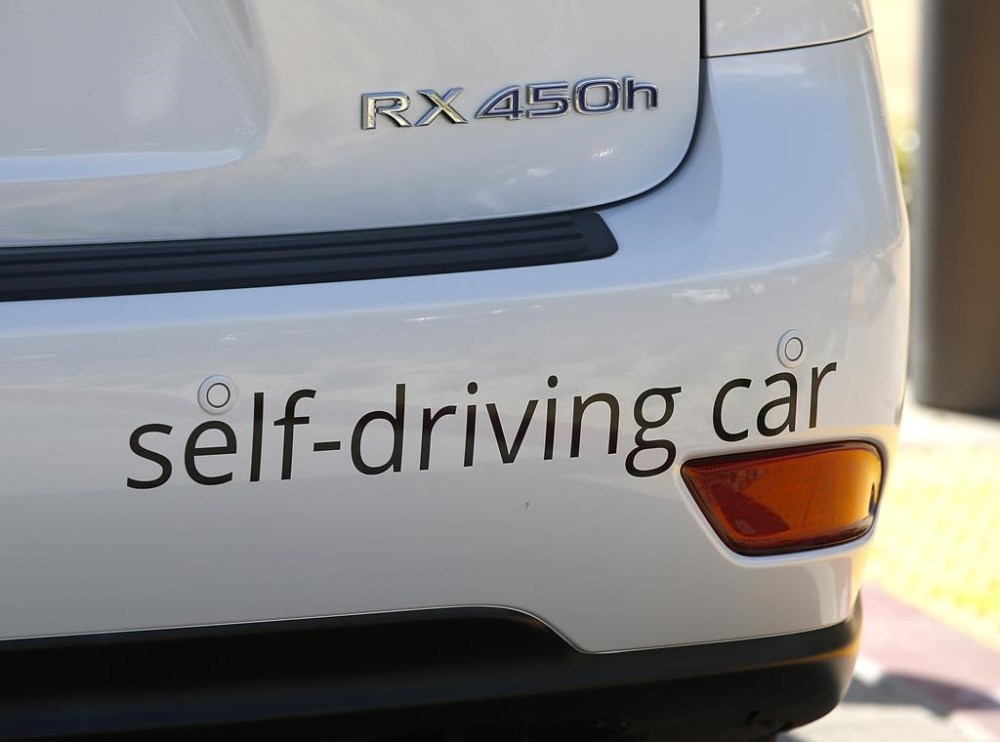
WASHINGTON (AP) — Advocates for the self-driving vehicle industry on Wednesday warned that years of regulatory inaction is putting American manufacturers at a competitive disadvantage and urged Congress to expand their ability to test and eventually sell autonomous cars and trucks.
“I’m sure it’s rare for you that someone from the private sector comes before you to ask, to plead, for their business to be regulated,” said John Bozzella, president for the Alliance for Automotive Innovation, which represents several major auto manufacturers. “We’re at a crossroads, and without a comprehensive AV framework, companies are not going to succeed.”
While most Republicans, and some Democrats, on the House Energy and Commerce Committee seemed enthusiastic about speeding up the pace of AV research and testing in America, others warned about going too fast without addressing long-standing issues of safety and liability.
Rep. Frank Pallone of New Jersey, the committee’s ranking Democrat, warned that Congress “cannot simply dust off 6-year-old legislation and ignore the substantial issues that have emerged in recent years … Troubling safety incidents are mounting, liability loopholes are emerging.”
The legislation in question is a 2017 bill on AV regulations that passed the House but stalled in the Senate.
Currently AV manufacturers can deploy a maximum of 2,500 self-driving vehicles for testing, provided they have permission from the National Highway Traffic Safety Administration. AV advocates have complained that the limits represent a bottleneck that is holding back the growth of the industry at a crucial time. Currently the NHTSA has spent more than a year considering a petition from General Motors to deploy 2,500 vehicles from its Cruise AV unit for street testing and a ride-hailing service.
Among the new proposals currently before the committee is one that would provide exemptions for manufacturers to deploy thousands of autonomous vehicles without meeting existing auto safety standards.
One of the main sticking points surrounds liability in case of an accident caused by a malfunctioning AV. Industry advocates argued Wednesday that accidents involving self-driving vehicles are exaggerated and that the machines are already far more reliable than human beings. Gary Shapiro, head of the Consumer Technology Association, told the committee that self-driving vehicles, “are never distracted, never tired, they don’t get drunk and they don’t fall asleep.”
But Rep. Kelly Armstrong, R-N.D., countered that the human driving model at least provides clarity on who to blame and who should pay for the damage.
“When somebody gets injured, somebody gets sued,” he said. “When a minivan goes off the road in Florida and five people are killed, somebody is getting sued … Each one of these (crashes) is still going to be subject to a plaintiff’s lawyer, an insurance company and a defense lawyer. And until we’ve figured that out, this is just a science project.”
On General Motors’ earnings conference call Tuesday, Cruise CEO Kyle Vogt said his company’s analysis of the first million miles of autonomous vehicle use shows they had 54% fewer collisions than humans in similar environments, and 92% fewer crashes where the autonomous vehicle was at fault.
“The vast majority of collisions are caused by inattentive or impaired human drivers, not the AV,” he said.
But auto safety advocates have cast doubt on industry claims about the safety of autonomous vehicles and the numbers they use to back up those claims.
Missy Cummings, a former senior safety adviser to the National Highway Traffic Safety Administration who is now an engineering and computer science professor at George Mason University, said that analysis of available data challenges those safety claims.
Robotaxis from Cruise are eight times more likely to get into a crash than humans, she said, while autonomous vehicles from Waymo, a spinoff of Google, are four times more likely than humans to crash.
“I think we need to take their claims of being safer with a grain of salt,” Cummings said.
—-
Krisher reported from Detroit.
Related Articles
The backup driver in the 1st death by a fully autonomous car pleads guilty to endangerment
Advertisement Advertise With Us
Advertisement Advertise With Us