Once nearing extinction, Brazil’s golden monkeys have rebounded from yellow fever, scientists say
Advertisement
Read this article for free:
or
Already have an account? Log in here »
To continue reading, please subscribe:
Digital Subscription
One year of digital access for only $1.44 a week*
- Enjoy unlimited reading on winnipegfreepress.com
- Read the E-Edition, our digital replica newspaper
- Access News Break, our award-winning app
- Play interactive puzzles
*Billed as $5.77 plus GST every four weeks. After 52 weeks, price increases to the regular rate of $19.95 plus GST every four weeks. Offer available to new and qualified returning subscribers only. Cancel any time.
To continue reading, please subscribe:
Add Free Press access to your Brandon Sun subscription for only an additional
$1 for the first 4 weeks*
- Enjoy unlimited reading on winnipegfreepress.com
- Read the E-Edition, our digital replica newspaper
- Access News Break, our award-winning app
- Play interactive puzzles
*Your next Brandon Sun subscription payment will increase by $1.00 and you will be charged $17.95 plus GST for four weeks. After four weeks, your payment will increase to $24.95 plus GST every four weeks.
Read unlimited articles for free today:
or
Already have an account? Log in here »
Hey there, time traveller!
This article was published 01/08/2023 (1176 days ago), so information in it may no longer be current.
There are now more golden lion tamarins bounding between branches in the Brazilian rainforest than at any time since efforts to save the species started in the 1970s, a new survey reveals.
Once on the brink of extinction, with only about 200 animals in the wild, the population has rebounded to around 4,800, according to a study released Tuesday by the Brazilian science and conservation nonprofit Golden Lion Tamarin Association.
“We are celebrating, but always keeping one eye on other threats, because life’s not easy,” said the nonprofit’s president, Luís Paulo Ferraz.
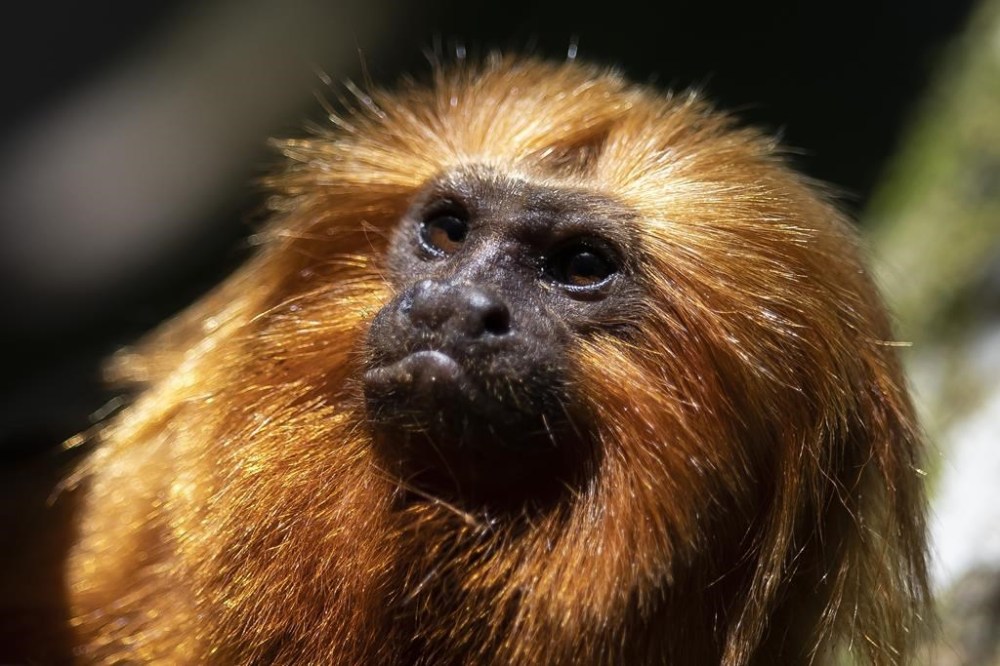
Golden lion tamarins are small monkeys with long tails and copper-colored fur that live in family groups led by a mated pair. Usually, they give birth annually to twins, which all family members help to raise by bringing them food and carrying them on their backs.
The monkeys, which live only in Brazil’s Atlantic Forest, are still considered endangered.
The population survey was conducted over roughly a year. Researchers went to specific locations and checked whether monkeys responded to recordings of the tamarins’ long call, which basically means “I’m here. Are you there?” said James Dietz, a biologist and vice president of the U.S.-based nonprofit Save the Golden Lion Tamarin.
The new population figures are notable because the species had experienced a sharp decline from a yellow fever outbreak. In 2019, there were 2,500 monkeys, down from 3,700 in a 2014 survey.
Scientists intervened by vaccinating more than 370 monkeys against yellow fever, using shots adapted from a formula for humans — a fairly novel approach for conservation.
Scientists “cannot pinpoint a single exact cause for the recovery,” but believe several factors may be at play, said Carlos R. Ruiz-Miranda, a State University of Northern Rio de Janeiro biologist who advised on the population study.
Firstly, the yellow fever outbreak has subsided, perhaps due to a combination of the virus’ natural cycle and the vaccination campaign.
The animals may also be benefiting from an increase in forest habitat, said Dietz, who is also a research associate at the Smithsonian Institution’s Conservation Biology Institute. Between 2014 and 2022, the amount of connected forest habitat increased 16%, mostly through forests regrown on converted cattle pasture, he said.
Currently about three dozen farmers and ranchers in the Atlantic Forest region participate in such reforestation programs.
“It makes me so happy to see the tamarins playing free on my farm. They don’t only live in protected areas,” said Ayrton Violento, a farmer and entrepreneur in the small city of Silva Jardim. His family’s Fazenda dos Cordeiros has planted native fruit trees and also manages a tree nursery for native Atlantic Forest seedlings to plant on other farms.
“Recently, every year I see more tamarin families, more frequently,” he said.
Ferraz, of the nonprofit Golden Lion Tamarin Association, said that despite the good news, he was still concerned about a renewed risk of trafficking for the illegal pet trade. The problem was rampant in the 1960s, but had almost disappeared in recent decades due to enforcement.
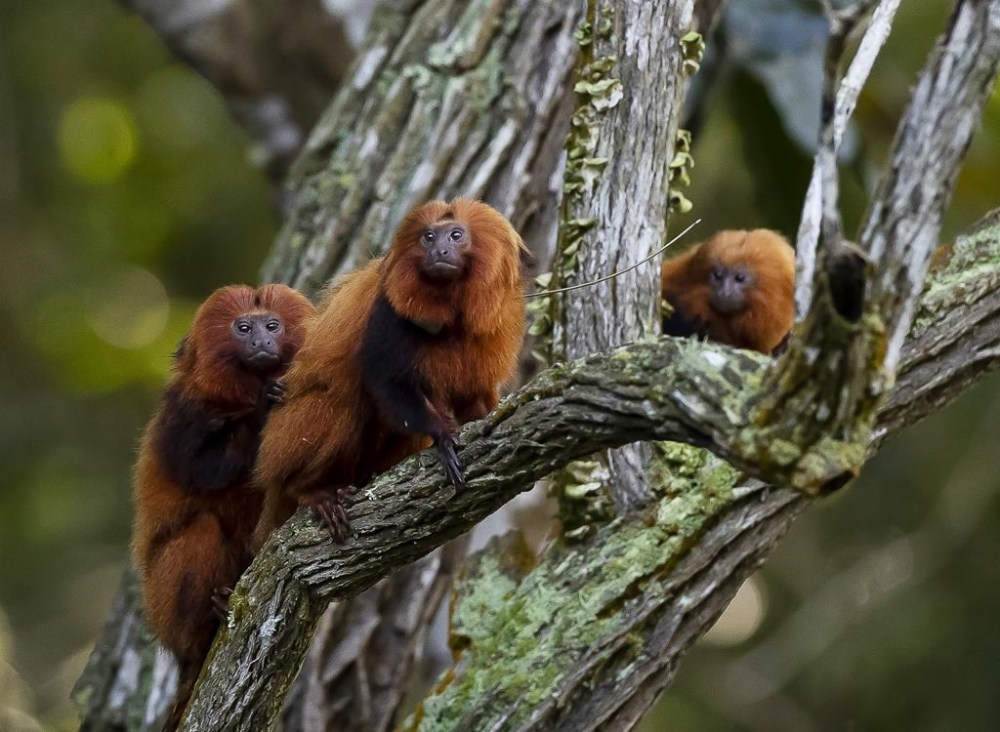
In July, the anti-poaching nonprofit Freeland Brazil reported that Suriname’s forest service had seized seven golden lion tamarins and 29 endangered Lear’s macaws believed to have been trafficked from Brazil for sale in Europe.
“We have seen the resilience of the species, but also know they are still vulnerable,” said Ferraz.
___

Follow Christina Larson on Twitter at @larsonchristina
___
The Associated Press Health and Science Department receives support from the Howard Hughes Medical Institute’s Science and Educational Media Group. The AP is solely responsible for all content.
___
This story has been corrected to show that Deitz is vice president, not president, of Save the Golden Lion Tamarin.