Judge tosses charges against executive in South Carolina nuclear debacle, but case may not be over
Advertisement
Read this article for free:
or
Already have an account? Log in here »
To continue reading, please subscribe:

Digital Subscription
One year of digital access for only $205*
- Enjoy unlimited reading on winnipegfreepress.com
- Read the E-Edition, our digital replica newspaper
- Access News Break, our award-winning app
- Play interactive puzzles
*First annual payment billed as $205.00 + GST for one year. This annual subscription will automatically renew at $233.00 + GST every 52 weeks (10% off the regular annual price of $259.35). Offer available to new and qualified returning subscribers only. Cancel any time.
To continue reading, please subscribe:
Add Free Press access to your Brandon Sun subscription for only an additional
$1 for the first 4 weeks*
- Enjoy unlimited reading on winnipegfreepress.com
- Read the E-Edition, our digital replica newspaper
- Access News Break, our award-winning app
- Play interactive puzzles
*Your next Brandon Sun subscription payment will increase by $1.00 and you will be charged $17.95 plus GST for four weeks. After four weeks, your payment will increase to $24.95 plus GST every four weeks.
Read unlimited articles for free today:
or
Already have an account? Log in here »
Hey there, time traveller!
This article was published 03/08/2023 (1142 days ago), so information in it may no longer be current.
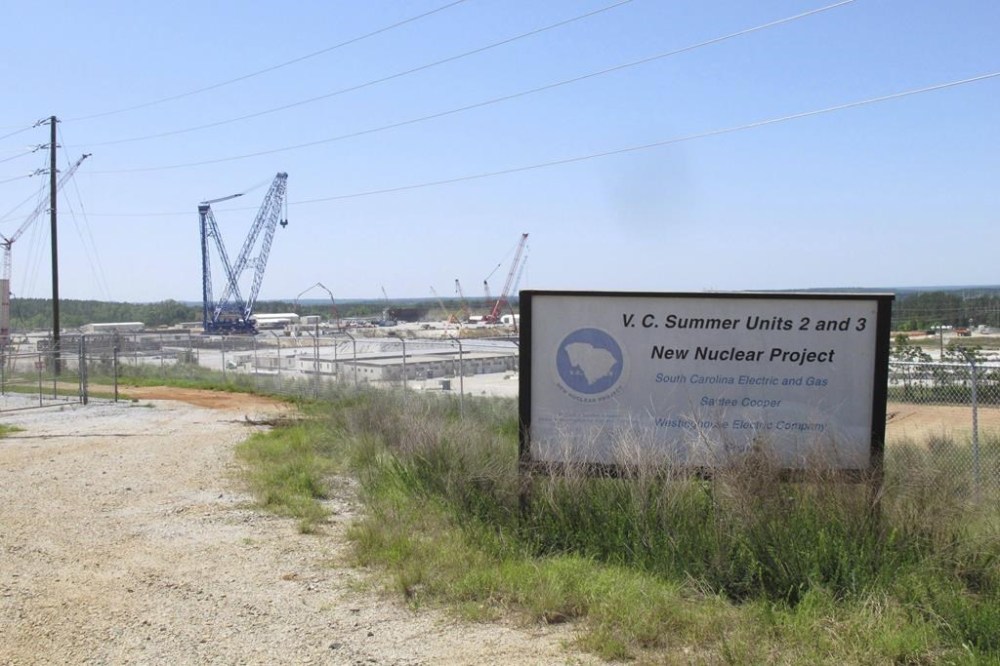
COLUMBIA, S.C. (AP) — A judge has ordered criminal charges dropped against the final executive accused of lying about problems building two nuclear reactors in South Carolina that were abandoned without generating a watt of power.
The judge tossed the charges Wednesday because ratepayers of the utility that lost billions of dollars on the project were improperly allowed on the grand jury that indicted Westinghouse Electric Co. executive Jeffrey Benjamin.
But federal judge Mary Geiger Lewis also ruled that nothing is stopping prosecutors from properly seeking another indictment.
“We’re not going away,” said assistant U.S. Attorney Winston Holliday, who said prosecutors are still reviewing the ruling to decide their next steps.
Benjamin faced 16 charges including securities fraud, mail fraud and causing the failure to keep accurate corporate records in his role in the failure to build two reactors for SCANA Corp. at the V.C. Summer site in Jenkinsville.
The project fell apart in 2017 after nearly a decade of work, when executives and regulators determined construction of the reactors was so hopelessly behind schedule they could not get nearly $2 billion of tax breaks needed to help pay for the work.
SCANA contracted with Westinghouse to build the reactors. Prosecutors said Benjamin , who was in charge of major projects, knew of delays and cost overruns but lied to regulators, utility executives and others. The lies led to electric rate increases while keeping the price of SCANA’s stock from plummeting.
Benjamin’s lawyers asked for the indictments to be tossed because the grand jury pool was pulled from several counties where utility ratepayers on the hook to pay for the project were at least 60% of the population and prosecutors didn’t exclude them from the grand jury or assure they were not angry and biased against SCANA and the people involved in the project’s failure.
“Mr. Benjamin’s unequivocal Fifth Amendment right to an unbiased grand jury was compromised in this case,” defense attorney William Sullivan Jr. said in a statement that also praised the judge’s “lucid and articulate ruling.”
Lewis called her ruling a “drastic remedy,” but said it was necessary since prosecutors cited ratepayers as victims of Benjamin’s lies and schemes along with investors and utility executives.
“It is common sense that in a robbery case, the person who allegedly had their belongings taken would be barred, as a victim, from participating in indicting the accused, no matter if there was a mountain of evidence against the accused or if the victim insisted they could remain impartial,” Lewis said in her ruling.
Benjamin’s trial had already been moved to Greenville after his attorneys said the broad coverage of the nuclear debacle and the majority of ratepayers in a jury pool would make a fair trial in the Columbia area impossible. Only about 10% of potential jurors around Greenville were SCANA customers.

Benjamin is the final executive to face charges.
Two former SCANA executives have been sentenced to federal prison after pleading guilty to their roles in lying to ratepayers, regulators and investors. Former CEO Kevin Marsh received two years while chief operating officer Stephen Byrne was sentenced to 15 months.
Former Westinghouse project director Carl Churchman has pleaded guilty to lying to FBI agents investigating the project’s failure and is awaiting sentencing.
The fiasco exposed problems in building nuclear reactors in the U.S. from drawing up easy-to-use construction plans to making them an affordable, carbon-free power source.
Earlier this week, Georgia Power Co. announced commercial power was finally being generated from its Unit 3 at Plant Vogtle, southeast of Augusta. The reactor was seven years late and $17 billion over budget — more than doubling the unit’s original cost. It is the first nuclear reactor built from scratch in the U.S. in more than three decades.