White House science adviser calls for more safeguards against artificial intelligence risks

Advertisement

Advertise with us

When President Joe Biden has questions about artificial intelligence, one expert he turns to is his science adviser Arati Prabhakar, director of the White House Office of Science and Technology Policy.

Read this article for free:


or

Already have an account? Log in here »

To continue reading, please subscribe:

Subscribe and receive a limited-edition Free Press branded hat or tote.

Digital Subscription

One year of digital access for only $205*

  • Enjoy unlimited reading on winnipegfreepress.com
  • Read the E-Edition, our digital replica newspaper
  • Access News Break, our award-winning app
  • Play interactive puzzles

*First annual payment billed as $205.00 + GST for one year. This annual subscription will automatically renew at $233.00 + GST every 52 weeks (10% off the regular annual price of $259.35). Offer available to new and qualified returning subscribers only. Cancel any time.

To continue reading, please subscribe:

Add Free Press access to your Brandon Sun subscription for only an additional

$1 for the first 4 weeks*

  • Enjoy unlimited reading on winnipegfreepress.com
  • Read the E-Edition, our digital replica newspaper
  • Access News Break, our award-winning app
  • Play interactive puzzles
Start now

*Your next Brandon Sun subscription payment will increase by $1.00 and you will be charged $17.95 plus GST for four weeks. After four weeks, your payment will increase to $24.95 plus GST every four weeks.

Hey there, time traveller!
This article was published 21/08/2023 (1113 days ago), so information in it may no longer be current.

When President Joe Biden has questions about artificial intelligence, one expert he turns to is his science adviser Arati Prabhakar, director of the White House Office of Science and Technology Policy.

Prabhakar is helping to guide the U.S. approach to safeguarding AI technology, relying in part on cooperation from big American tech firms like Amazon, Google, Microsoft and Meta.

The India-born, Texas-raised engineer and applied physicist is coming at the problem from a career bridging work in government — including leading the Defense Department’s advanced technology research arm — and the private sector as a former Silicon Valley executive and venture capitalist.

She spoke with The Associated Press earlier this month ahead of a White House-organized test of AI systems at the DefCon hacker convention in Las Vegas. The interview has been edited for length and clarity.

Q: Does the president come to ask you about AI?

A: I’ve had the great privilege of talking with him several times about artificial intelligence. Those are great conversations because he’s laser-focused on understanding what it is and how people are using it. Then immediately he just goes to the consequences and deep implications. Those have been some very good conversations. Very exploratory, but also very focused on action.

Q: Senate Majority Leader Chuck Schumer (who’s pushing for AI regulations) says making AI models explainable is a priority. How realistic is that?

A: It’s a technical feature of these deep-learning, machine-learning systems, that they are opaque. They are black box in nature. But most of the risks we deal with as human beings come from things that are not explainable. As an example, I take a medicine every single day. While I can’t actually predict exactly how it’s going to interact with the cells in my body, we have found ways to make pharmaceuticals safe enough. Think about drugs before we had clinical trials. You could hawk some powder or syrup and it might make you better or it might kill you. But when we have clinical trials and a process in place, we started having the technical means to know enough to start harnessing the value of pharmaceuticals. This is the journey we have to be on now for artificial intelligence. We’re not going to have perfect measures, but I think we can get to the point where we know enough about the safety and effectiveness of these systems to really use them and to get the value that they can offer.

Q: What are some specific AI applications you’re concerned about?

A: Some of the things we see are big and obvious. If you break the guardrails of a chatbot, which people do routinely, and coax it to tell you how to build a weapon, well, clearly that’s concerning. Some of the harms are much more subtle. When these systems are trained off human data, they sometimes distill the bias that’s in that data. There’s now a fairly substantial, distressing history of facial recognition systems being used inappropriately and leading to wrongful arrests of Black people. And then privacy concerns. All of our data that’s out in the world, each individual piece may not reveal much about us, but when you put it all together it tells you rather a lot about each of us.

Q: Seven companies (including Google, Microsoft and ChatGPT-maker OpenAI) agreed in July to meet voluntary AI safety standards set by the White House. Were any of those commitments harder to get? Where’s the friction?

A: I want to start by just acknowledging how fortunate we are that so many of the companies that are driving AI technology today are American companies. It reflects a long history of valuing innovation in this country. That’s a tremendous advantage. We also just have to be very, very clear that with every good intention in the world, the realities of operating in the market are, by definition, a constraint on how far these individual companies can go. We hope many more will join them and voluntary commitments will grow. We just have to be clear that’s only one part of it. That’s companies stepping up to their responsibilities. But we in government need to step up to ours, both in the executive branch and for the legislative branch.

Q: Do you have a timeline for future actions (such as a planned Biden executive order)? Will it include enforceable accountability measures for AI developers?

A: Many measures are under consideration. I don’t have a timeline for you. I will just say fast. And that comes directly from the top. The president has been clear that this is an urgent issue.

Report Error Submit a Tip

More Stories

‘Soapy disco’ for your ride

Aaron Epp 4 minute read Preview

‘Soapy disco’ for your ride

Aaron Epp 4 minute read Friday, Sep. 4, 2026

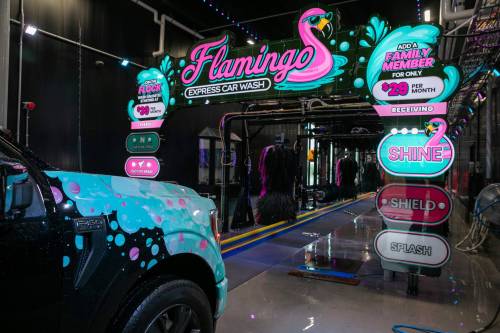
For Kyle Thompson, foam is where the heart is.

As a high school student at Winnipeg’s Transcona Collegiate, one of his classes required him to create a business plan. He was cleaning vehicles part-time at the Chamois Car Wash and Detail Centre, so he used the assignment to envision a car wash of his own — one with a Regent Avenue address.

Fast forward some 25 years later and that dream is a reality. Thompson is the co-owner and general manager at Flamingo Express Car Wash.

Located at 868 Regent Ave. West — east of the row of car dealerships that call the thoroughfare home and across the street from an Amazon distribution hub — Flamingo opened last month.

Read
Friday, Sep. 4, 2026

US tourism groups want to win Canadian visitors back. A testy trade war isn’t helping

Rio Yamat, The Associated Press 7 minute read Preview

US tourism groups want to win Canadian visitors back. A testy trade war isn’t helping

Rio Yamat, The Associated Press 7 minute read Updated: Yesterday at 5:03 PM CDT

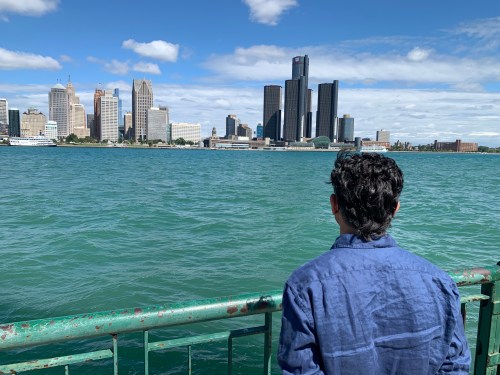
LAS VEGAS (AP) — Appeals from American tourism organizations seemed to be everywhere Josh Loewen looked over the last year. Billboards and banners proclaimed a state or city's love for Canada. Online and social media ads offered special deals for travelers from north of the border.

As a Vancouver resident and marketing executive himself, Loewen said he understands the conciliatory overtures. The number of Canadians traveling to the United States plunged after President Donald Trump returned to office with remarks about making Canada the 51st state. An acrimonious trade war between the two countries now is threatening to reinforce the informal boycott just as it appeared to be easing slightly.

"It’s such a big ask right now,” Loewen, 45, said of the U.S. tourism industry's attempts to woo Canadians like him back before a new president occupies the White House. “It’s just a wasted effort.”

Relations between the U.S. and Canadian governments have deteriorated sharply since their trade negotiations collapsed last month. Trump imposed import taxes of up to 50% on a range of Canadian products. Canada’s government responded in kind. Trump ordered the U.S. government to change the name of border-spanning Lake Ontario to “Lake America.” Canadian Prime Minister Mark Carney dismissed insults from members of Trump's Cabinet as childish and undignified.

Read
Updated: Yesterday at 5:03 PM CDT

‘Quite a journey’: dozens move into transitional housing downtown

Carol Sanders 3 minute read Preview

‘Quite a journey’: dozens move into transitional housing downtown

Carol Sanders 3 minute read Updated: Yesterday at 9:54 AM CDT

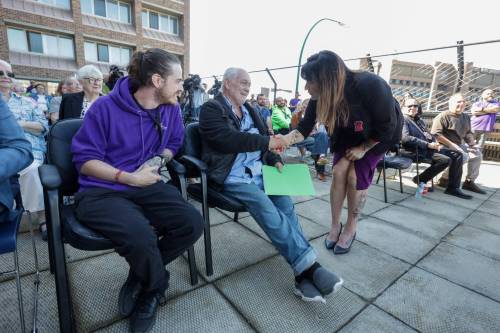
Dozens of residents have moved into transitional housing units in a former university building in downtown Winnipeg.

Housing, Addictions and Homelessness Minister Bernadette Smith said 42 residents have moved into suites on the third and fourth floors of a seven-storey building previously owned by Providence University College and Theological Seminary. There will be space for as many as 118 people who were in encampments or otherwise homeless.

The remaining units under renovation are expected to be ready and occupied in the coming weeks, Smith said.

“This has been two years in the making,” the minister said at a media event with residents, staff, neighbours and supporters. The building cost the province $24.4 million to purchase and renovate.

Read
Updated: Yesterday at 9:54 AM CDT

‘We belong… and we are giving back”: Sikh celebration enlivens downtown Winnipeg

Melissa Martin 2 minute read Preview

‘We belong… and we are giving back”: Sikh celebration enlivens downtown Winnipeg

Melissa Martin 2 minute read Updated: Yesterday at 5:59 PM CDT

Downtown Winnipeg came alive with vibrant sights, sounds, and scents on Sunday, as Manitoba’s Sikh community flocked to Memorial Park to celebrate its annual Nagar Kirtan procession and festival.

This year marked the 422nd anniversary of the completion of the Guru Granth Sahib, the holy scripture central to the Sikh faith. Shortly after 1 p.m., a palanquin bearing a copy of the scripture was led in parade through downtown Winnipeg, with musical accompaniment.

“This is a chance to tell the public and the whole community where we come from and who we are,” said volunteer Prabh Grewal shortly before the procession got underway. “In a community there are people from every race and every country, and our main objective is to have everybody live in peace and harmony together.”

Before, during, and after the procession, the park hummed with life. As many as 55,000 people converged on the site, with the majority dressed in festive traditional attire. Near the height of the day’s 30 C heat, families relaxed in patches of shade, enjoying plates of Punjabi cuisine dished out for free at dozens of tents sponsored by local businesses.

Read
Updated: Yesterday at 5:59 PM CDT

Smith’s pretzel logic confuses

Editorial 4 minute read Preview

Smith’s pretzel logic confuses

Editorial 4 minute read Saturday, Sep. 5, 2026

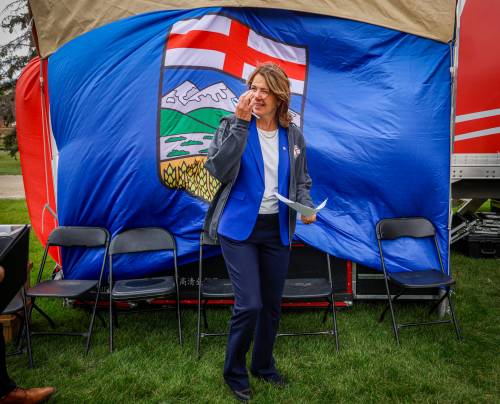
Alberta Premier Danielle Smith had both sides of her mouth working overtime on Aug. 30, when she spoke at an event in Calgary to commemorate Alberta Day, the annual celebration of the province’s entry into Confederation in 1905 (officially Sept. 1, it was celebrated on the weekend).

Smith’s comments — and the things she did not say — revealed a lot about the political tightrope the premier is trying to walk over the challenges currently faced by her province. At the top of that list of challenges is a persistent campaign to separate Alberta from the aforementioned Confederation. A campaign that Smith appears to both support and oppose, depending on which day of the week it is.

Her Alberta Day remarks were an excellent case in point.

Smith has decided that on Oct. 19, Albertans will vote on a series of non-binding propositions in a province referendum. One of those questions will ask Albertans whether they want to hold a referendum on separation, thus making this fall’s vote a “referendum on whether to hold a referendum,” as some observers have dubbed it.

Read
Saturday, Sep. 5, 2026

Man who pleaded guilty to killing three cats dies before sentencing

Morgan Modjeski 2 minute read Preview

Man who pleaded guilty to killing three cats dies before sentencing

Morgan Modjeski 2 minute read Friday, Sep. 4, 2026

A Winnipeg man awaiting sentencing after admitting he strangled three cats to death and dumped two of their carcasses under a city bridge, has died, the Free Press has learned.

Randy Jensen, 25, pleaded guilty on May 13 to one count of wilfully causing injury or suffering to animals in connection to the 2024 killings.

He was scheduled to be sentenced in January.

“That’s not something that anybody wanted,” said Kristy Zamonsky, founder of Project Artemis Animal Advocates. “We were all hoping for justice through the courts.”

Read
Friday, Sep. 4, 2026