Fukushima’s radioactive wastewater is being released in the Pacific. Here’s what you need to know

Advertisement

Advertise with us

OKUMA, Japan (AP) — Treated and diluted but still slightly radioactive wastewater from the wrecked Fukushima Daiichi nuclear power plant is being discharged into the Pacific Ocean.

Read this article for free:


By clicking the button above, an account will be created and you will begin to receive some of our recommended newsletters. You may opt out of any newsletter by visiting your Email and Communication Preferences page or by clicking "unsubscribe" at the bottom of any email.

or

Already have an account? Log in here »

To continue reading, please subscribe:

Digital Subscription

One year of digital access for only $1.44 a week*

  • Enjoy unlimited reading on winnipegfreepress.com
  • Read the E-Edition, our digital replica newspaper
  • Access News Break, our award-winning app
  • Play interactive puzzles

*Billed as $5.77 plus GST every four weeks. After 52 weeks, price increases to the regular rate of $19.95 plus GST every four weeks. Offer available to new and qualified returning subscribers only. Cancel any time.

To continue reading, please subscribe:

Add Free Press access to your Brandon Sun subscription for only an additional

$1 for the first 4 weeks*

  • Enjoy unlimited reading on winnipegfreepress.com
  • Read the E-Edition, our digital replica newspaper
  • Access News Break, our award-winning app
  • Play interactive puzzles
Start now

*Your next Brandon Sun subscription payment will increase by $1.00 and you will be charged $17.95 plus GST for four weeks. After four weeks, your payment will increase to $24.95 plus GST every four weeks.

Hey there, time traveller!
This article was published 23/08/2023 (1155 days ago), so information in it may no longer be current.

OKUMA, Japan (AP) — Treated and diluted but still slightly radioactive wastewater from the wrecked Fukushima Daiichi nuclear power plant is being discharged into the Pacific Ocean.

The first batch being released over the next 17 days is a small part of the tons of water that have accumulated at the plant. But the Japanese government and the plant’s operator say releasing the water is an unavoidable step in the decommissioning of the plant, which already will take decades. They say the water is treated and diluted to levels that are safer than international standards. But the plan faces opposition in and outside Japan. Here is a look at the controversy.

WHY IS THERE SO MUCH WASTEWATER?

This aerial view shows the Fukushima Daiichi nuclear power plant in Fukushima, northern Japan, on Aug. 22, 2023. Officials plan to start discharging treated radioactive wastewater from the damaged Fukushima Daiichi nuclear power plant into the Pacific Ocean on Thursday, a contentious step more than 12 years after a massive earthquake set off a battle with ever-growing amounts of cooling water.(Kyodo News via AP)

The March 2011 earthquake and tsunami destroyed the plant’s cooling systems, causing three reactors to melt. Highly contaminated cooling water applied to the damaged reactors has leaked continuously to building basements and mixed with groundwater.

The plant operator, Tokyo Electric Power Company Holdings, has taken steps to limit the amount of groundwater and rainwater entering the reactor area, and has reduced the increase in contaminated water to about 100 tons a day, 1/5 of the initial amount. The water is collected and partly recycled as cooling water after treatment, with the rest stored in around 1,000 tanks, which are already filled to 98% of their 1.37 million-ton capacity.

WHY IS TEPCO RELEASING THE WATER NOW?

The government and TEPCO say they need to empty the tanks and clear them from the plant complex to make room for the plant’s decommissioning and prevent accidental leaks of the tanks.

Japan has obtained support from the International Atomic Energy Agency to improve the transparency and credibility of the release and ensure it meets international safety standards. The government has also stepped up a campaign promoting the plan’s safety at home and through diplomatic channels.

WHAT’S IN THE TREATED WATER’?
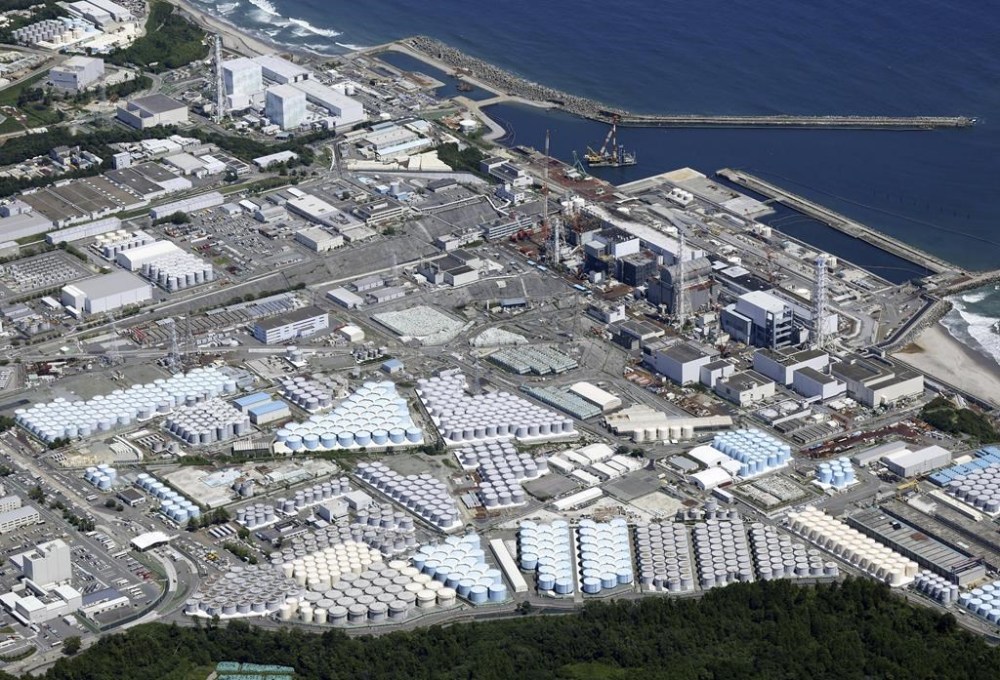
This aerial view shows the Fukushima Daiichi nuclear power plant in Fukushima, northern Japan, on Aug. 22, 2023. Officials plan to start discharging treated radioactive wastewater from the damaged Fukushima Daiichi nuclear power plant into the Pacific Ocean on Thursday, a contentious step more than 12 years after a massive earthquake set off a battle with ever-growing amounts of cooling water.(Kyodo News via AP)

The water is being treated by what’s called an Advanced Liquid Processing System, which can reduce the amounts of more than 60 selected radionuclides to government-set releasable levels, except for tritium, which officials say is safe for humans if consumed in small amounts.

About 70% of the water held in the tanks still contains cesium, strontium, carbon-14 and other radionuclides exceeding government-set levels. It will be re-treated until the concentrations meet those limits, then diluted by more than 100 times its volume of seawater before it is released. That will bring it way below international safety limits, but its radioactivity won’t be zero.

HOW SAFE IS IT?

IAEA concluded in a report that the plan, if conducted as designed, will have negligible impact on the environment and human health. IAEA chief Rafael Grossi visited the plant in July and said he was satisfied with preparations.

Japan’s government says the release of tritium into the sea is a routine practice by nuclear plants around the world and that the amount will be several times lower than from plants in China and South Korea.

Scientists generally support the IAEA’s conclusion, while some call for more attention to dozens of low-dose radionuclides that remain in the water, saying data on their long-term effects on the environment and marine life are insufficient.
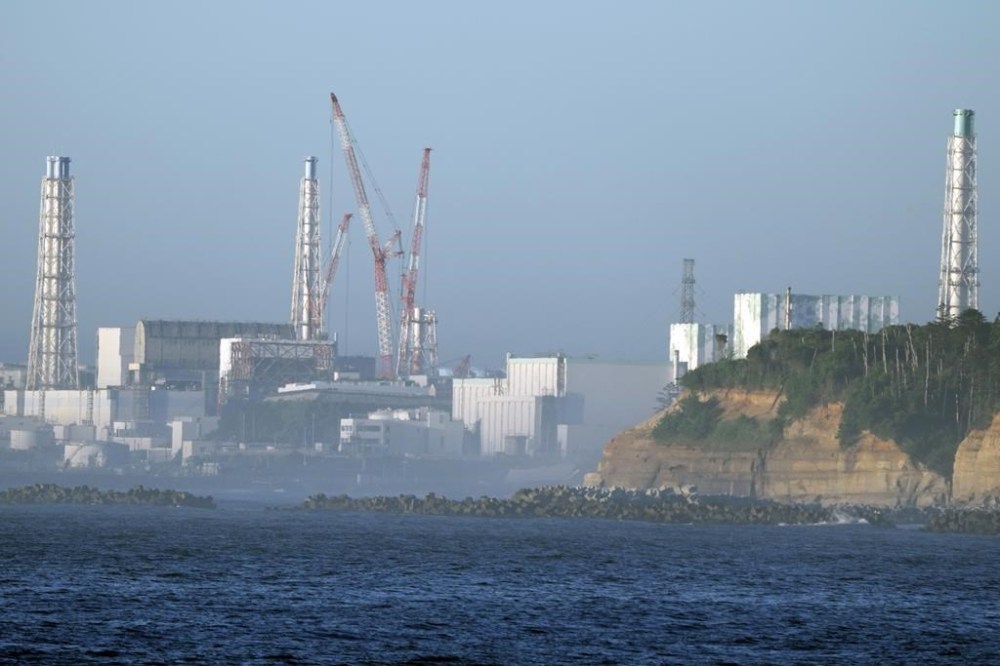
The Fukushima Daiichi nuclear power plant, damaged by a massive March 11, 2011, earthquake and tsunami, is seen from the nearby Ukedo fishing port in Namie town, northeastern Japan, Thursday, Aug. 24, 2023. The Fukushima Daiichi nuclear power plant will start releasing treated and diluted radioactive wastewater into the Pacific Ocean as early as Thursday. (AP Photo/Eugene Hoshiko)

Experts say the release of treated water from Fukushima is much less challenging than the daunting task of removing deadly radioactive debris that remains in the damaged reactors.

HOW IS IT BEING RELEASED?

TEPCO executive Junichi Matsumoto says the release began Thursday with the least radioactive water to ensure safety. After samples are analyzed in final testing, the water is sent through a thin black pipe to a coastal area where it is diluted with hundreds of times its volume in seawater.

The diluted water will enter an undersea tunnel and be discharged a few minutes later from a point 1 kilometer (0.6 mile) off the coast. The release will be gradual and will continue for decades until the decommissioning of the plant is finished, TEPCO officials say. Matsumoto said the slow release will further reduce the environmental impact.

The company plans to release 31,200 tons of treated water by the end of March 2024, which would empty only 10 tanks because of the continued production of wastewater at the plant. The pace will later pick up.
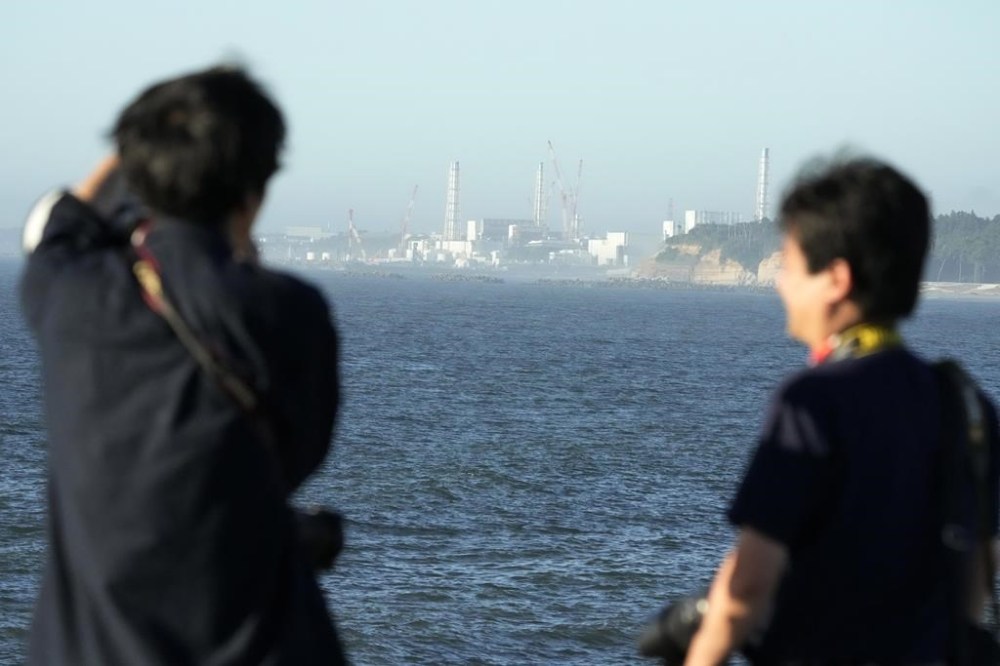
The Fukushima Daiichi nuclear power plant, damaged by a massive March 11, 2011, earthquake and tsunami, is seen from the nearby Ukedo fishing port in Namie town, northeastern Japan, Thursday, Aug. 24, 2023. The Fukushima Daiichi nuclear power plant will start releasing treated and diluted radioactive wastewater into the Pacific Ocean as early as Thursday. (AP Photo/Eugene Hoshiko)

WHY ARE PEOPLE WORRIED?

Fukushima’s fisheries and tourism industries and its economy are still recovering from the 2011 disaster. Fisheries groups worry about a further damage to the reputation of their seafood. Fukushima’s current catch is only about one-fifth its pre-disaster level due to a decline in the fishing population and smaller catch sizes.

The head of the National Federation of Fisheries Cooperatives, Masanobu Sakamoto, said on Monday that “scientific safety and the sense of safety are different.”

Groups in South Korea and China have also raised concerns, turning the release into a political and diplomatic issue. China has stepped up radiation testing of fishery and agricultural products from Fukushima and nine other prefectures, halting exports at customs for weeks, Fisheries Agency officials say.

WHAT IF SOMETHING GOES WRONG?

The Japanese government says potential risks from the release of treated water are limited to reputational damage resulting from rumors, rather than scientific study. It has allocated 80 billion yen ($550 million) to support fisheries and seafood processing and combat potential reputation damage. TEPCO has also promised to deal with reputational damage claims.
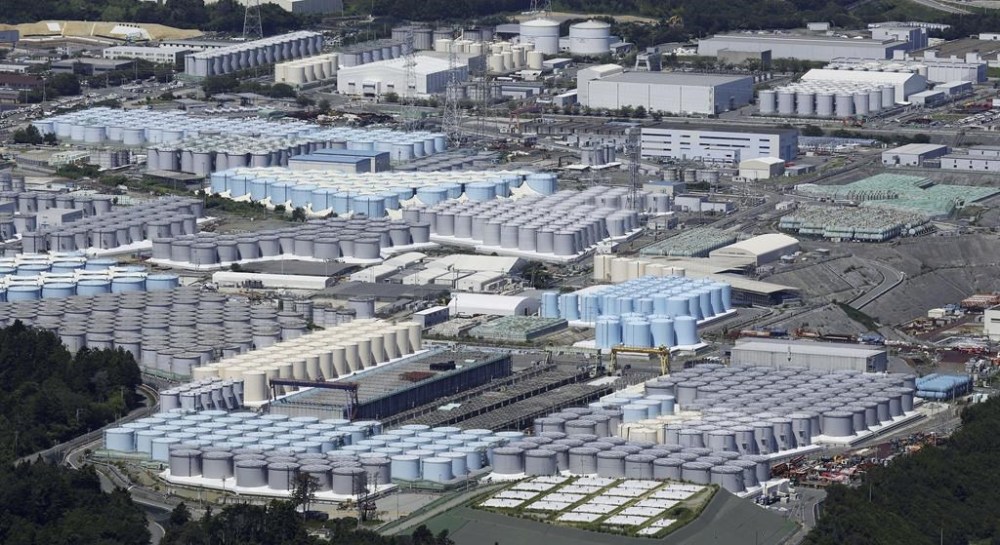
This aerial view shows the tanks containing treated radioactive wastewater at the Fukushima Daiichi nuclear power plant in Fukushima, northern Japan, on Aug. 22, 2023. The operator of the tsunami-wrecked Fukushima Daiichi nuclear power plant will begin releasing the first batch of treated and diluted radioactive wastewater into the Pacific Ocean later Thursday, Aug. 24, 2023, utility executives said. (Kyodo News via AP)

___

Find more of AP’s Asia-Pacific coverage at https://apnews.com/hub/asia-pacific

Report Error Submit a Tip

More Stories

You’re facing double trouble with infatuation

Maureen Scurfield 4 minute read 2:00 AM CDT

DEAR MISS LONELYHEARTS: I started enjoying the company of women in my running group so much that I ran more and more, and dropped 35 pounds over the summer and early fall. And in the summer I became attracted to a bisexual woman in the group.

At first, we claimed we were “doing OK” with the men we married. But now, feelings of all kinds are accelerating between us.

I must say I’ve suspected my husband has had another woman in recent years, but now it doesn’t bother me the same way. I finally understand wanting two people at one time. I tell myself I’m not “cheating” on anybody — because I’m not cheating on my husband with another man. But that’s not even fooling me, anymore. I’m feeling a lot more emotion for my female love interest.

So now what? I don’t want to disrupt my whole family, so should I keep it a secret for everyone’s sake? I must say the female object of my affection isn’t thinking of leaving her husband and family. I could be wrong, but I suspect she’s just having a fun time experimenting.

Trees, birds and climate change matter in this election

Alison Conrad 4 minute read 2:00 AM CDT

“Trees don’t matter – we have bigger problems to worry about.”

This is what I read on Facebook after someone posted about the importance of voting for municipal candidates who care about Winnipeg’s trees.

I think everyone can agree that our city has many challenges. But I think what is missing in the narrative about this election is that voting with nature in mind isn’t important just because we love our neighbourhood elm tree or enjoy birdwatching.

Nature — in this case, I am referring to trees, birds and climate change — does not exist in a vacuum. Voting for candidates who value our urban canopy, want to have a bird-friendly city and seek to reduce the impacts of climate change is a key way of solving some of those “bigger problems.” According to a recent Abacus Data poll, Winnipeg has been given a failing grade by residents on transit, street maintenance and parks. Not only this, but one half of Winnipeggers think their city is going in the wrong direction.

Theatre goes goblin mode

Ben Waldman 5 minute read Preview

Theatre goes goblin mode

Ben Waldman 5 minute read 2:01 AM CDT

Although they star in an upcoming local production of the Scottish Play, goblin thespians Wug, Kragva and Moog left it to director Rebecca Northan to handle publicity and interviews.

Were they also scared to utter the real title — saying “Macbeth” inside a theatre is believed to be bad luck — aloud?

“The goblins don’t know anything about our superstitions,” says Northan, an actor-writer-improv artist who last season performed and directed Murder-on-the-Lake, an immersive murder-mystery, for the Shaw Festival.

Northan, who co-created Goblin:Macbeth with Bruce Horak and Ellis Lalonde, can’t speak for her folkloric co-workers, but says the Halloweenish trio were inspired to mount the show after being impressed by Shakespeare’s firm grasp on the realm of fantasy.

Read
2:01 AM CDT

Clay Stevenson credits therapeutic side of hockey in learning to live with mother’s suicide

Mike McIntyre 7 minute read Preview

Clay Stevenson credits therapeutic side of hockey in learning to live with mother’s suicide

Mike McIntyre 7 minute read Monday, Oct. 19, 2026

Hockey has always been more than just a game to Clay Stevenson. That was especially true after he suffered the biggest loss of his life: his mother, Holly, died by suicide seven years ago.

Read
Monday, Oct. 19, 2026

Surprising announcement opens door slightly for accountability in police HQ saga

Dan Lett 5 minute read Preview

Surprising announcement opens door slightly for accountability in police HQ saga

Dan Lett 5 minute read Monday, Oct. 19, 2026

Early Monday afternoon, it looked as if former Mayor Sam Katz, former chief administrative officer Phil Sheegl and contractor Armik Babakhanians were going to finally and successfully escape the long arm of the law for their roles in the Winnipeg Police Service headquarters scandal.

Read
Monday, Oct. 19, 2026

Be careful with old flame’s power games

Maureen Scurfield 4 minute read Yesterday at 2:00 AM CDT

DEAR MISS LONELYHEARTS: I just ran into the short-haired girl I was crazy in love with back in high school. She wore all black clothes, kind of looked like a guy, but used dark lipstick and dyed her hair different weird colours. She always looked like a scary, powerful woman and she loved to tease me, because I was shy back then.

She was standing there in the sun, and I liked her new look — blue-black hair, dressed in a black suit, hot-looking and powerful as ever! But after we started talking, she suggested we go catch up over a drink and lunch.

After eating and drinking a lot on my tab, she was a bit tipsy and confessed she already has a boyfriend she quite likes, because he doesn’t bow down to her.

To get even, I told her I had a girlfriend, “but that could change.” Then I paid the tab. She finally liked something about me!