Climate change and the shift to cleaner energy push Southeast Asia to finally start sharing power
Advertisement
Read this article for free:
or
Already have an account? Log in here »
To continue reading, please subscribe:

Digital Subscription
One year of digital access for only $205*
- Enjoy unlimited reading on winnipegfreepress.com
- Read the E-Edition, our digital replica newspaper
- Access News Break, our award-winning app
- Play interactive puzzles
*First annual payment billed as $205.00 + GST for one year. This annual subscription will automatically renew at $233.00 + GST every 52 weeks (10% off the regular annual price of $259.35). Offer available to new and qualified returning subscribers only. Cancel any time.
To continue reading, please subscribe:
Add Free Press access to your Brandon Sun subscription for only an additional
$1 for the first 4 weeks*
- Enjoy unlimited reading on winnipegfreepress.com
- Read the E-Edition, our digital replica newspaper
- Access News Break, our award-winning app
- Play interactive puzzles
*Your next Brandon Sun subscription payment will increase by $1.00 and you will be charged $17.95 plus GST for four weeks. After four weeks, your payment will increase to $24.95 plus GST every four weeks.
Read unlimited articles for free today:
or
Already have an account? Log in here »
Hey there, time traveller!
This article was published 26/09/2023 (1091 days ago), so information in it may no longer be current.
Hanoi, VIETNAM (AP) — The urgency for Southeast Asian nations to switch to clean energy to combat climate change is reinvigorating a 20-year-old plan for the region to share power.
Malaysia and Indonesia inked a deal in Bali, Indonesia last month to study 18 potential locations where cross-border transmission lines can be set up.
Those links could eventually generate power roughly equivalent to what 33 nuclear power plants would produce in a year. They are economically and technically feasible, and now are supported by regional governments, said Beni Suryadi a power expert at the ASEAN Centre for Energy in Jakarta, Indonesia.
The Association of Southeast Asian Nations or ASEAN is a political and economic gathering of 10 countries across a vast region, from tiny Brunei and Singapore to military-controlled Myanmar and fast-rising economic power Vietnam.
Experts describe imports by Singapore of hydroelectric-generated power from Laos via transmissions through Thailand and Malaysia as a “pathfinder” project, marking the first time that four countries in the region have agreed to trade electricity.
Cross-border power purchases accounted for just 2.7% of the region’s capacity in 2017, according to the Global Interconnection Journal. But those were between two countries, such as Thailand and Laos. Now, more countries are looking at power sharing as a way to wean their economies off coal and other fossil fuels. Vietnam would like a regional grid so it could sell clean energy, such as from offshore wind, to its neighbors while the Malaysian province of Sarawak is looking to sell its hydropower to neighboring Indonesia.
The plan for a regional grid between the 10 members of the Association of Southeast Asian Nations was conceived two decades ago, but progress has been stalled by various problems including technical barriers and political mistrust.
The region now recognizes it must move faster. Climate change could reduce the region’s economic potential by more than a third by the middle of the century, according to a report presented at the 2021 U.N. climate conference in Glasgow, Scotland. Demand for electricity is rising, and governments have realized the transition away from fossil fuels requires an interconnected grid, Suryad said.
“It has become a crucial need for every country,” he said.
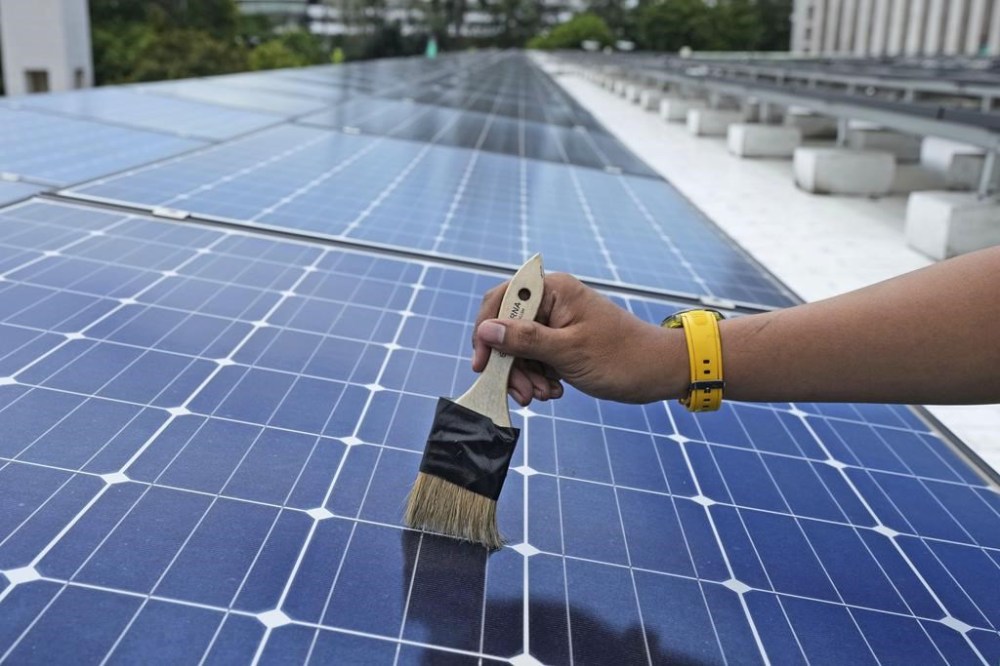
In the past, countries in the region were focused more on energy security, relying heavily on fossil fuels and often building more capacity than they needed. But renewable energy costs are falling, making hydroelectric, solar and wind power more affordable. And all ASEAN countries apart from the Philippines have pledged to stop adding carbon to the atmosphere by 2050.
So, arguments in favor of an interconnected grid appear to be prevailing.
Tiny, landlocked Laos, with a population of only 7 million, has built more than 50 dams in the past 15 years, relying on its status as the “battery of Southeast Asia” to profit from sales of power to Thailand, Vietnam, and China.
It still has surplus power it needs to sell to others in the region.
Singapore — a small city-state of 6 million with nearly no natural resources — must import clean energy to meet its renewable energy goals.
Regional grids can help bridge gaps between where power is needed and where it can be generated, helping countries adjust to outside shocks like big jumps in oil prices. They also can help cut costs: In 2021, for instance, Europe saved $36 billion by trading power, European regulators have estimated.
Interconnected grids can also deliver reliable electricity to communities in remote regions like West Kalimantan, on the island of Borneo. A life punctuated by rolling blackouts that forced shops to shutter and people to use diesel generators was the norm until a 170-kilometer (105-mile) long cross-border power line coming from neighboring Malaysia’s Sarawak province changed that in 2016.
“This is a no-brainer way to do it … because it’s been done elsewhere and the benefits are obvious,” said Rena Kuwahata, an energy analyst at the Paris-based International Energy Agency.
But issues remain.
One of ASEAN’s core policies is non-interference, which means members tend to shy away from joint projects. Domestic energy priorities are sometimes at odds with the potential benefits of an interconnected grid. Nadhilah Shani, another expert at the ASEAN Center for Energy said that this creates a “dilemma” for countries: they could sell clean energy to neighbors for the region to wean itself off fossil fuels, or they could use those resources towards meeting their own climate targets.
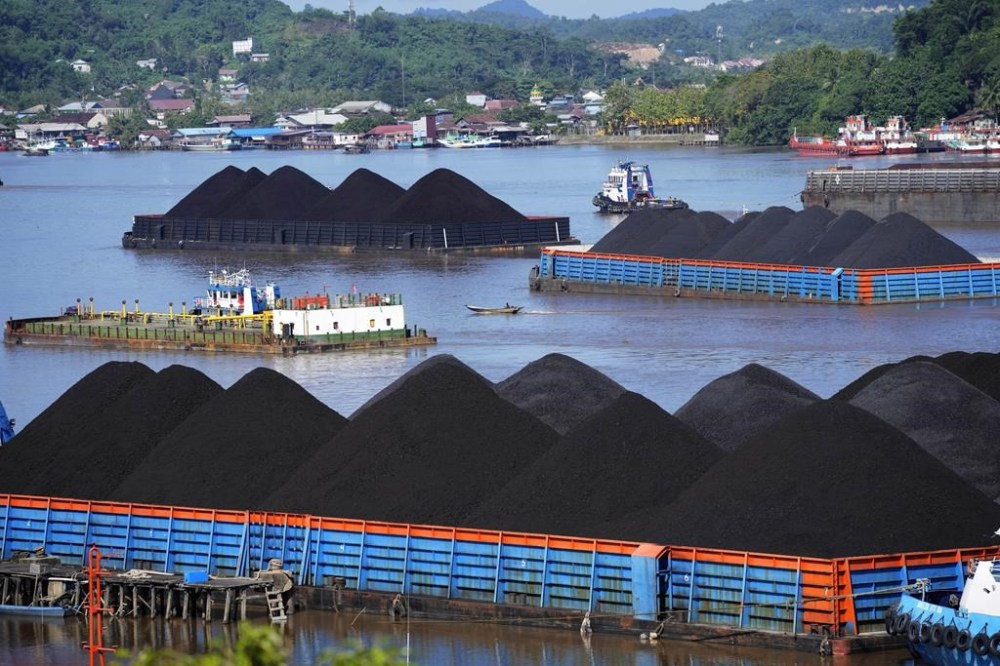
Malaysia gets only 1% of its electricity annually from clean sources. It banned the export of renewables in 2021 to try and develop a domestic clean energy industry. That ban was lifted this year but an Indonesian ban on clean energy exports imposed last year remains in effect.
The region’s lack of a regulatory framework for such things as installing submarine power cables is another stumbling block.
Not all the technical problems have been ironed out. Voltages used by each country can vary, as do the capacities of their grids. Even countries whose grids span borders, like Thailand, need to upgrade them, Harald Link, owner of B.Grimm Power and president of Thailand’s Association of Private Power Producers, said in an interview.
Projections of where power will be needed must be factored in, for example, plans for power-hungry data centers.
“You need a huge amount of electricity— and they want it green. And where do you get it from? For some countries, it is more difficult to make it green,” Link said.
Costs are high: at a minimum some $280 billion in power sector investments are required, according to the ASEAN Center for Energy.
China’s involvement in building much of the region’s energy infrastructure via its Belt and Road Initiative could also be a concern. In 2021, Laos, under pressure from its mounting debts, granted a 25-year concession to operate its power grid to a majority Chinese-owned company.
But despite intermittent tensions between China and some of its neighbors over territorial disputes and other issues, generally Beijing and ASEAN are working on the basis of “mutual interests and benefits,” said Nadhilah Shani, another expert at the ASEAN Center for Energy.
Given how expensive it is to build power grids, the private financing needed to build it can influence how and where projects are built, said Shani. Still, she said, national priorities play a bigger role than Chinese investments in how electricity is transmitted.

“We are in good place in ASEAN to have this kind of collaboration in terms of trading and we have reached a common understanding,” she said.
___
Milko reported from Nusa Dua, Indonesia. Jintamas Saksornchai in Bangkok, Thailand, and Eileen Ng in Kuala Lumpur, Malaysia, contributed to this report.
___
Associated Press climate and environmental coverage receive support from several private foundations. See more about AP’s climate initiative here. The AP is solely responsible for all content.