New York bans facial recognition in schools after report finds risks outweigh potential benefits
Advertisement
Read this article for free:
or
Already have an account? Log in here »
To continue reading, please subscribe:

Digital Subscription
One year of digital access for only $205*
- Enjoy unlimited reading on winnipegfreepress.com
- Read the E-Edition, our digital replica newspaper
- Access News Break, our award-winning app
- Play interactive puzzles
*First annual payment billed as $205.00 + GST for one year. This annual subscription will automatically renew at $233.00 + GST every 52 weeks (10% off the regular annual price of $259.35). Offer available to new and qualified returning subscribers only. Cancel any time.
To continue reading, please subscribe:
Add Free Press access to your Brandon Sun subscription for only an additional
$1 for the first 4 weeks*
- Enjoy unlimited reading on winnipegfreepress.com
- Read the E-Edition, our digital replica newspaper
- Access News Break, our award-winning app
- Play interactive puzzles
*Your next Brandon Sun subscription payment will increase by $1.00 and you will be charged $17.95 plus GST for four weeks. After four weeks, your payment will increase to $24.95 plus GST every four weeks.
Read unlimited articles for free today:
or
Already have an account? Log in here »
Hey there, time traveller!
This article was published 27/09/2023 (1111 days ago), so information in it may no longer be current.
New York state banned the use of facial recognition technology in schools Wednesday, following a report that concluded the risks to student privacy and civil rights outweigh potential security benefits.
Education Commissioner Betty Rosa’s order leaves decisions on digital fingerprinting and other biometric technology up to local districts.
The state has had a moratorium on facial recognition since parents filed a court challenge to its adoption by an upstate district.
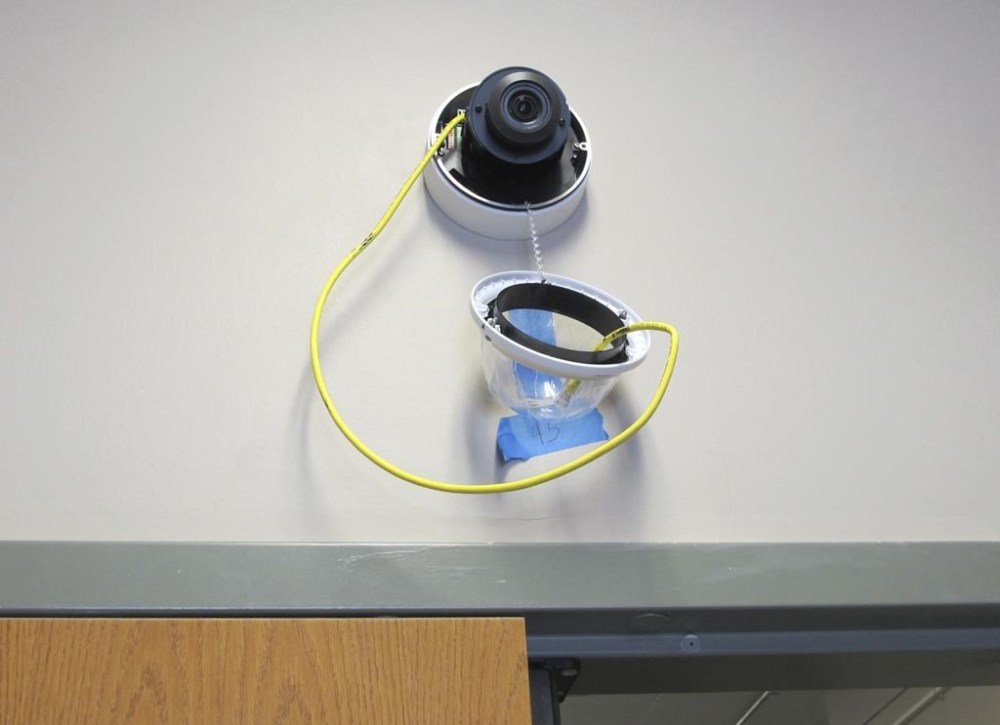
The Lockport Central School District activated its system in January 2020 after meeting conditions set by state education officials at the time, including that no students be entered into the database of potential threats. The district stopped using the $1.4 million system later that year.
The western New York district was among the first in the country to incorporate the technology in the aftermath of deadly mass school shootings that have led administrators nationwide to adopt security measures ranging from bulletproof glass to armed guards. Lockport officials said the idea was to enable security officers to quickly respond to the appearance of disgruntled employees, sex offenders or certain weapons the system was programmed to detect.
But an analysis by the Office of Information Technology Services issued last month “acknowledges that the risks of the use of (facial recognition technology) in an educational setting may outweigh the benefits.”
The report, sought by the Legislature, noted “the potentially higher rate of false positives for people of color, non-binary and transgender people, women, the elderly, and children.”

It also cited research from the nonprofit Violence Project that found that 70% of school shooters from 1980 to 2019 were current students. The technology, the report said, “may only offer the appearance of safer schools.”
Biotechnology would not stop a student from entering a school “unless an administrator or staff member first noticed that the student was in crisis, had made some sort of threat, or indicated in some other way that they could be a threat to school security,” the report said.
The ban was praised by the New York Civil Liberties Union, which sued the state Education Department on behalf of two Lockport parents in 2020.
“Schools should be safe places to learn and grow, not spaces where they are constantly scanned and monitored, with their most sensitive information at risk,” said Stefanie Coyle, deputy director of the NYCLU’s Education Policy Center.
The state report found that the use of digital fingerprinting was less risky and could be beneficial for school lunch payments and accessing electronic tablets and other devices. Schools may use that technology after seeking parental input, Rosa said.